Incidence of azole resistance among clinical isolates of Candida parapsilosis: Results from the French nationwide multicenter prospective study “ReCap” 2022-2024
Arnaud Fekkar, Marion Blaize, Sophie Cassaing, Boualem Sendid, Grégoire Pasquier, Sébastien Imbert, Christophe Hennequin, Françoise Botterel, Florent Morio, Jean Menotti, Solène Le Gal, Eloise Bailly, Marie-Elisabeth Bougnoux, Antoine Huguenin, Christine Bonnal, Milène Sasso

TL;DR
This study reports on the spread of fluconazole-resistant Candida parapsilosis in France, finding high resistance rates and two clusters in the Paris area.
Contribution
The study provides the first nationwide assessment of azole resistance in C. parapsilosis in France and identifies circulating resistant clusters.
Findings
15.1% of C. parapsilosis isolates were resistant to fluconazole, affecting 10% of patients.
Two fluconazole-resistant clusters were identified in the Paris area through genotyping.
62.9% of fluconazole-resistant isolates also showed resistance to voriconazole.
Abstract
Fluconazole-resistant isolates of Candida parapsilosis have emerged worldwide in recent years. Our objectives were to get an overview of the French epidemiology, to determine the incidence of azole resistance and to assess the genetic relationship between isolates. We initiated a prospective national multicenter study (ReCap - Resistance of Candida parapsilosis to azole drugs). All C. parapsilosis isolates routinely identified in 15 French hospital mycology laboratories were included over a period of 6 to 20 months (depending on the center), regardless of the type of specimen and hospitalization unit. Isolates were tested for fluconazole susceptibility using a gradient diffusion method. Non-susceptible isolates (MIC ≥4 mg/L) and a random selection of susceptible isolates were subjected to further analysis (MICs determination by EUCAST method and microsatellite genotyping). Between…
Genes, proteins, chemicals, diseases, species, mutations and cell lines named across the full text — each resolved to its canonical identifier and authoritative record.
Click any figure to enlarge with its caption.
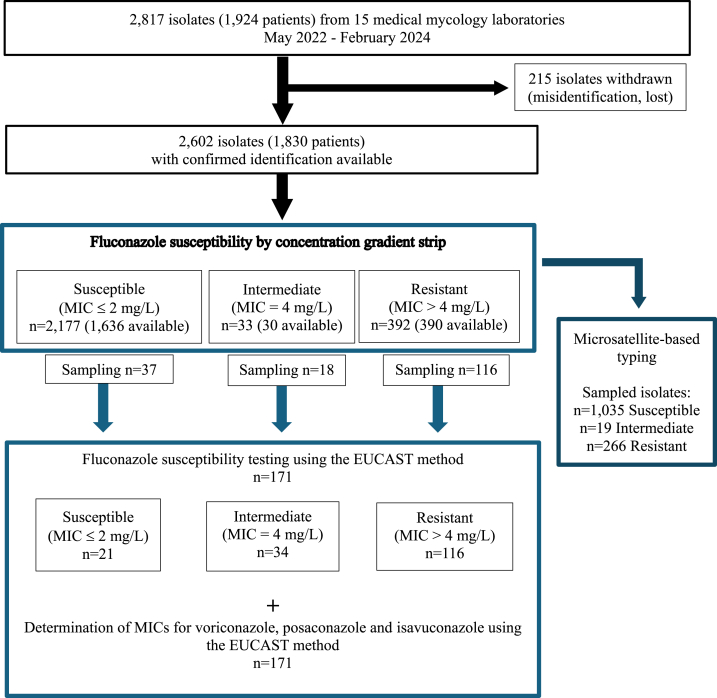 Figure 1
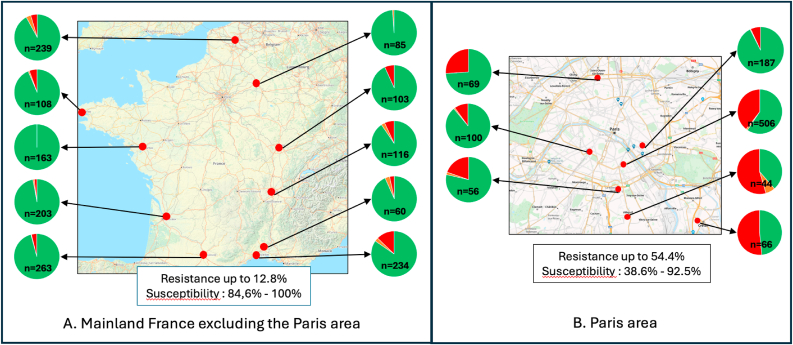 Figure 2
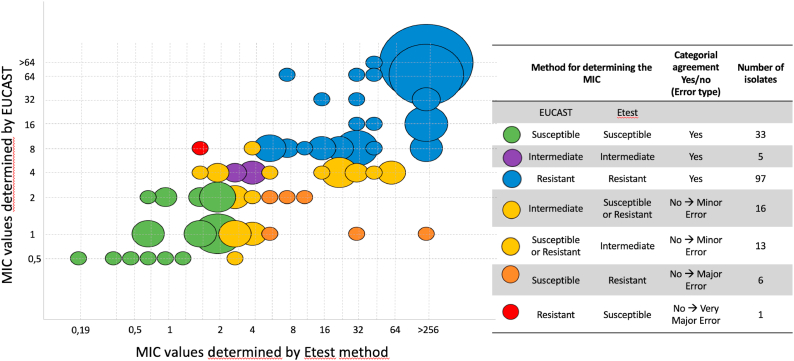 Figure 3
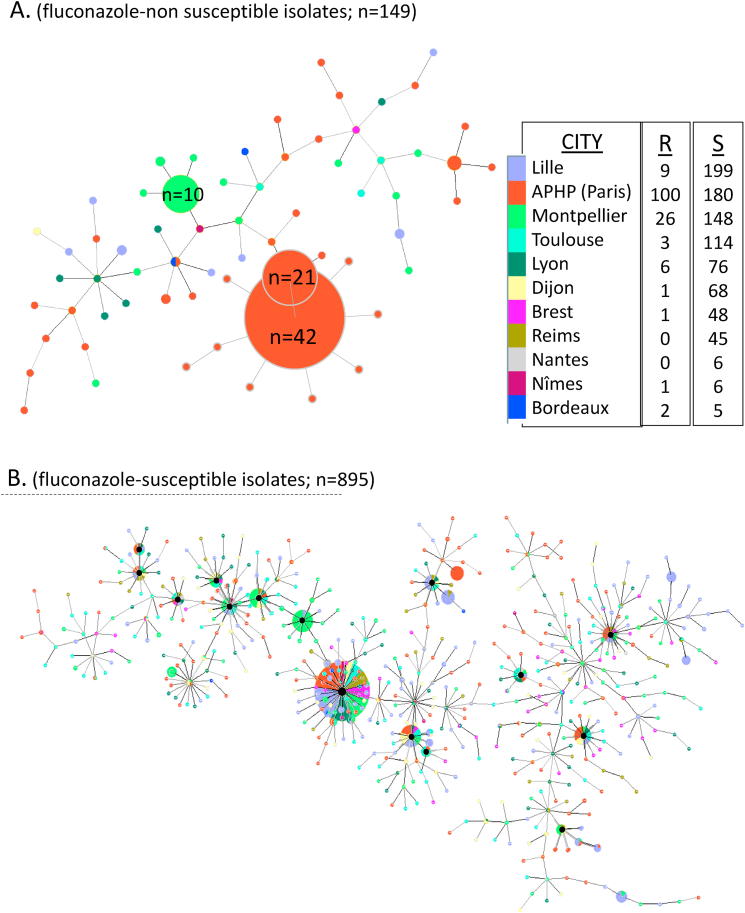 Figure 4
Peer Reviews
No public reviews on file for this paper yet. If you reviewed it on a platform where reviews are public (OpenReview, ICLR, NeurIPS, ICML), you can paste yours below so the community can read it here.
Videos
No videos yet. Explain this paper in a talk, walkthrough, or lecture? Add one.
Taxonomy
TopicsAntifungal resistance and susceptibility · Psoriasis: Treatment and Pathogenesis · Spondyloarthritis Studies and Treatments