Low initial body fat percentage exacerbates skeletal muscle loss and increases the risk of hyperuricemia during high-altitude acclimatization in young men
Yanlin Zhu, Jie He, Shuang Li, Jie Zhang, Huichang Jia, Yongjian Yang, Yi Li, Xianglian Li, Jian Li, Yunming Li, Yue Cheng

TL;DR
Young men with low body fat who move to high altitudes are more likely to lose muscle mass and develop high uric acid levels.
Contribution
This study identifies initial body fat percentage and changes in skeletal muscle mass as predictors of hyperuricemia during high-altitude acclimatization.
Findings
Low initial body fat percentage is associated with greater skeletal muscle mass loss at high altitude.
Decreased skeletal muscle mass and low initial body fat percentage are independent risk factors for hyperuricemia.
Over 60% of young men developed hyperuricemia after one year at high altitude.
Abstract
The incidence of hyperuricemia (HUA) increases significantly after individuals ascend to a high-altitude environment, particularly among young men. Previous studies have shown correlations between skeletal muscle mass, fat mass, and serum uric acid levels. However, whether changes in body composition under high-altitude conditions influence the occurrence of HUA has not been reported. This study aimed to investigate the effects of initial body fat percentage (BF%) and changes in body composition on the development of HUA in young men after 1 year at high altitude. In this prospective observational study, 216 young men who relocated from a plain area to a high-altitude area for 1 year were enrolled. Data on basic information, body composition, and laboratory measurements were collected both before relocation and after the one-year period. After 1 year at high altitude, skeletal muscle…
Genes, proteins, chemicals, diseases, species, mutations and cell lines named across the full text — each resolved to its canonical identifier and authoritative record.
Click any figure to enlarge with its caption.
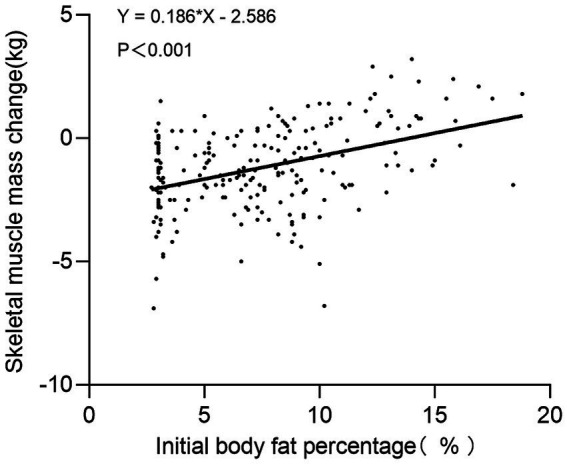 Figure 1
Peer Reviews
No public reviews on file for this paper yet. If you reviewed it on a platform where reviews are public (OpenReview, ICLR, NeurIPS, ICML), you can paste yours below so the community can read it here.
Videos
No videos yet. Explain this paper in a talk, walkthrough, or lecture? Add one.
Taxonomy
TopicsHigh Altitude and Hypoxia · Travel-related health issues · Exercise and Physiological Responses