Bridging the Gap: Optimizing OPAT Transitions to Skilled Nursing Facilities
Meera Mehta, Carissa Tedeschi, Jack Zhang, Sejal Morjaria, Jessica Johnson

TL;DR
The study shows that patients on OPAT transitioning to skilled nursing facilities often face medication errors and need close monitoring to ensure safety.
Contribution
The study highlights the prevalence of discharge medication errors and interventions in OPAT transitions, emphasizing the need for structured oversight.
Findings
36% of patients had at least one documented discharge medication error.
A total of 44 medication errors were identified across 89 patients.
Common OPAT-related interventions included lab monitoring and therapeutic adjustments.
Abstract
We evaluated patients discharged to skilled nursing facilities for outpatient parenteral antimicrobial therapy (OPAT). Among 89 patients, discharge medication errors and OPAT-related interventions were common, including laboratory monitoring, therapeutic adjustments, and adverse event management; 32 patients (36%) experienced at least 1 documented discharge medication error, with a total of 44 errors identified across the cohort. These findings highlight transition-of-care vulnerabilities and underscore the importance of structured OPAT oversight to improve patient safety.
Genes, proteins, chemicals, diseases, species, mutations and cell lines named across the full text — each resolved to its canonical identifier and authoritative record.
Click any figure to enlarge with its caption.
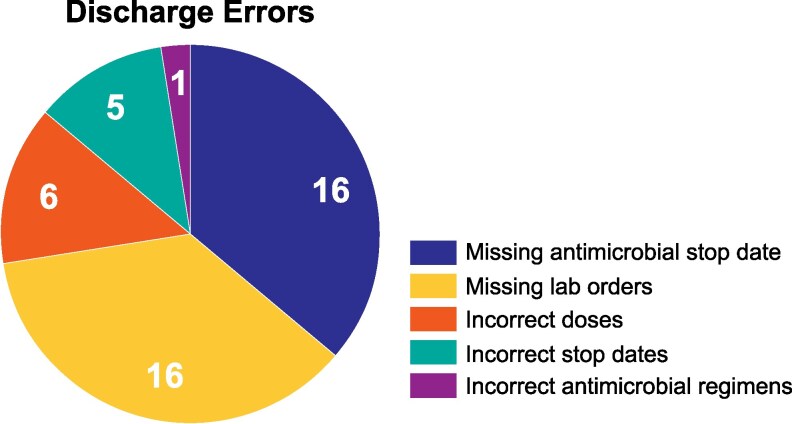 Figure 1
Peer Reviews
No public reviews on file for this paper yet. If you reviewed it on a platform where reviews are public (OpenReview, ICLR, NeurIPS, ICML), you can paste yours below so the community can read it here.
Videos
No videos yet. Explain this paper in a talk, walkthrough, or lecture? Add one.
Taxonomy
TopicsPatient Safety and Medication Errors · Safe Handling of Antineoplastic Drugs · Antibiotics Pharmacokinetics and Efficacy