Topology-Aware Generation and Activity-Based Filtering: A Computational-Experimental Framework for Data-Scarce Quaternary Ammonium Compound Discovery
Shiva Ghaemi, Amanda Consylman, Bo Pan, Alice Wu, Ashley Petersen, Gabe Chang, Diana McDonough, Mark Forman, Elise L. Bezold, William M. Wuest, Amarda Shehu, Liang Zhao, Kevin P. C. Minbiole

TL;DR
This paper introduces a new framework combining computational methods and expert evaluation to discover effective quaternary ammonium compounds (QACs) for antimicrobial use.
Contribution
The novel approach uses a topology-aware variational autoencoder with activity-based filtering to improve QAC discovery under data-scarce conditions.
Findings
Workflow 2 increased synthesis-worthy compounds from 9% to 38% and eliminated invalid outputs.
29 compounds were experimentally tested, yielding 11 new QACs with validated antimicrobial activity.
The method enables efficient exploration of chemical spaces with limited data and expert time.
Abstract
Quaternary ammonium compounds (QACs) are widely used antimicrobial disinfectants whose efficacy is threatened by increased bacterial resistance. Artificial intelligence-guided development of novel QACs is constrained by historically sparse structure–activity data and methods to generate novel chemical entities with bioactivity. This paper presents a comparative experimental study of two computational workflows designed to accelerate QAC discovery under data-limited conditions. Both workflows employ a topology-aware variational autoencoder to generate novel candidates. In Workflow 1, generated QAC structures were directly subjected to expert evaluation within a fixed time constraint through the systematic application of chemistry-domain decision criteria. In Workflow 2, generated candidates were first computationally filtered using predictive models trained to anticipate antimicrobial…
Genes, proteins, chemicals, diseases, species, mutations and cell lines named across the full text — each resolved to its canonical identifier and authoritative record.
Click any figure to enlarge with its caption.
 Figure 1
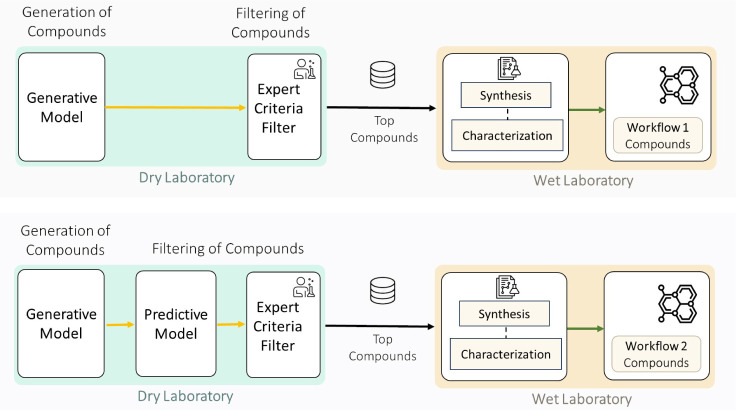 Figure 2
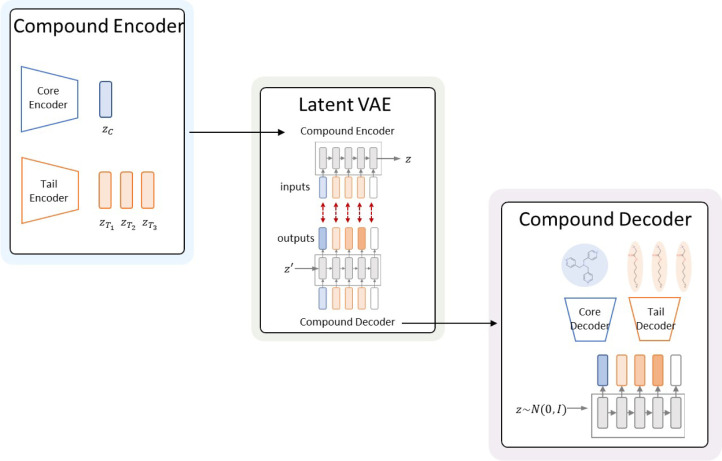 Figure 3
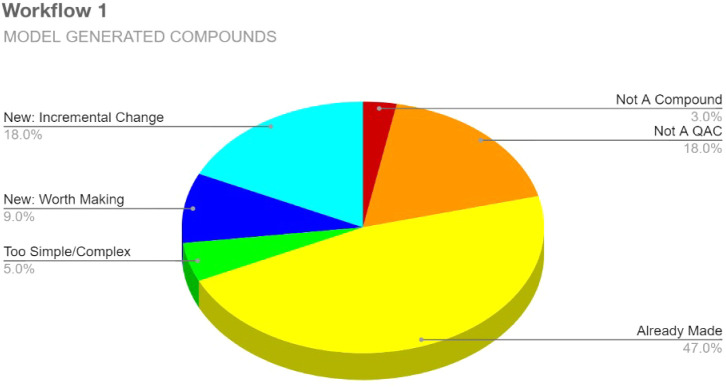 Figure 4
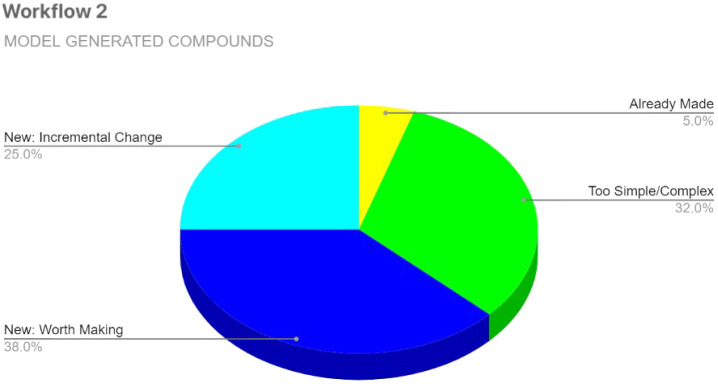 Figure 5
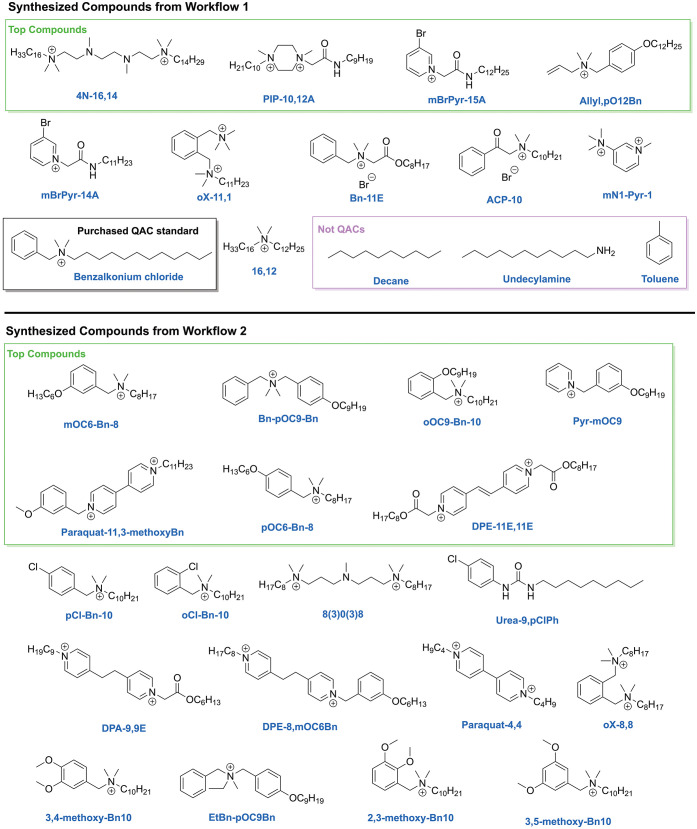 Figure 6
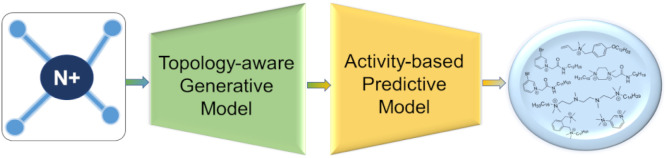 Figure 7
 Figure 8
 Figure 9
 Figure 10
 Figure 11
 Figure 12
 Figure 13
 Figure 14
 Figure 15
 Figure 16
 Figure 17
 Figure 18
 Figure 19
Peer Reviews
No public reviews on file for this paper yet. If you reviewed it on a platform where reviews are public (OpenReview, ICLR, NeurIPS, ICML), you can paste yours below so the community can read it here.
Videos
No videos yet. Explain this paper in a talk, walkthrough, or lecture? Add one.
Taxonomy
TopicsComputational Drug Discovery Methods · Topological and Geometric Data Analysis · Machine Learning in Materials Science