Ligand Versatility and Resistance Mechanism of Monotherapy-Grade HIV‑1 Protease Inhibitor GRL-142 Binding the Multidrug Resistant Variant p51: Insights from 1 μs MD Simulations
Alejandro Arias, Chiara Cappelli, Albeiro Restrepo, Jorge Alí-Torres, Sara Gómez

TL;DR
This study uses molecular simulations to understand how the HIV-1 protease inhibitor GRL-142 interacts with a drug-resistant HIV variant, revealing insights into resistance mechanisms and potential drug optimization.
Contribution
The study reveals a novel binding mode of GRL-142 to a multidrug-resistant HIV protease variant and highlights structural versatility and resistance mechanisms.
Findings
GRL-142 shows a novel binding mode in the resistant p51 variant with higher affinity than the wild-type complex.
The P2′ functional group detachment disrupts key interactions needed for inhibition in the resistant variant.
Fluorine-mediated interactions help stabilize both wild-type and resistant variant complexes with GRL-142.
Abstract
The emergence of HIV-1 highly resistant strains and the prevalence of HIV-associated neurocognitive disorders (HAND), are two of the biggest challenges posed to combination antiretroviral therapy (cART), despite promising advances in treatment. To address these issues, the protease inhibitor GRL-142 (G), an extremely potent and central nervous system (CNS)-penetrating antiretroviral, has recently been experimentally proposed as monotherapy and enhanced cART efficacy against HAND. Using all-atom molecular dynamics (MD) simulations of up to 1 μs, this study elucidates the energetics, dynamics, and bonding interactions that govern the inhibitory mechanism of G against the highly resistant HIV-1 protease, p51, for which it exhibited the lowest experimental potency. Our MD trajectories allow us to capture the complex structural and dynamical interplay between this state-of-the-art inhibitor…
Genes, proteins, chemicals, diseases, species, mutations and cell lines named across the full text — each resolved to its canonical identifier and authoritative record.
Click any figure to enlarge with its caption.
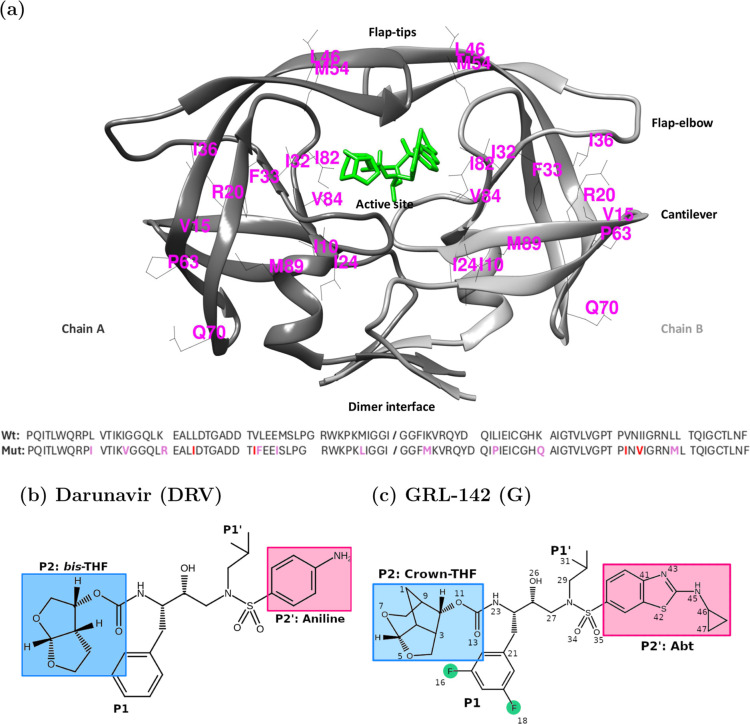 Figure 1
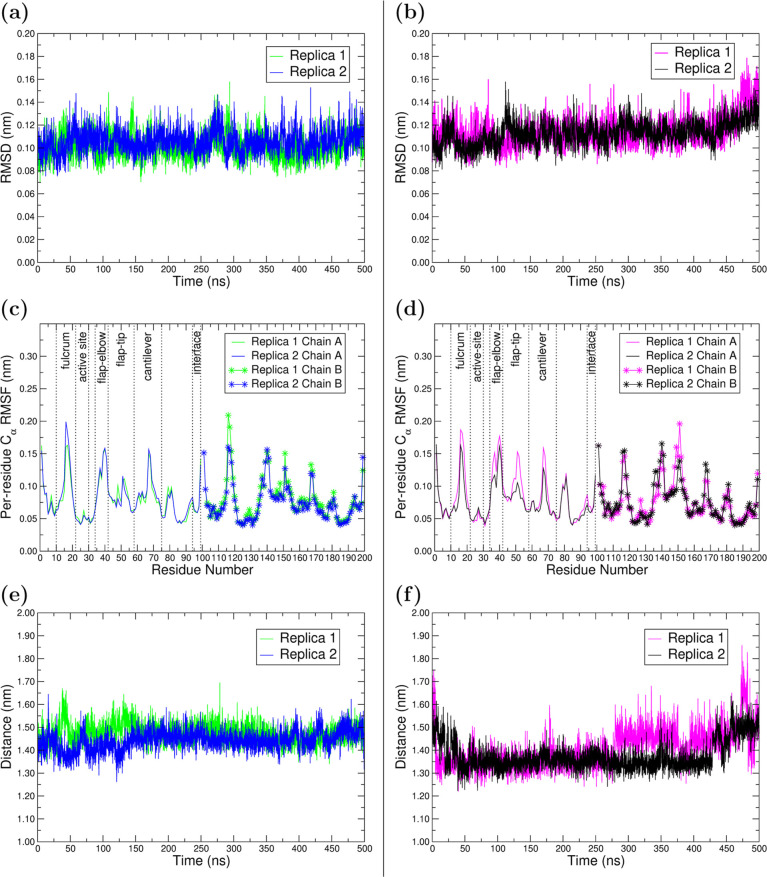 Figure 2
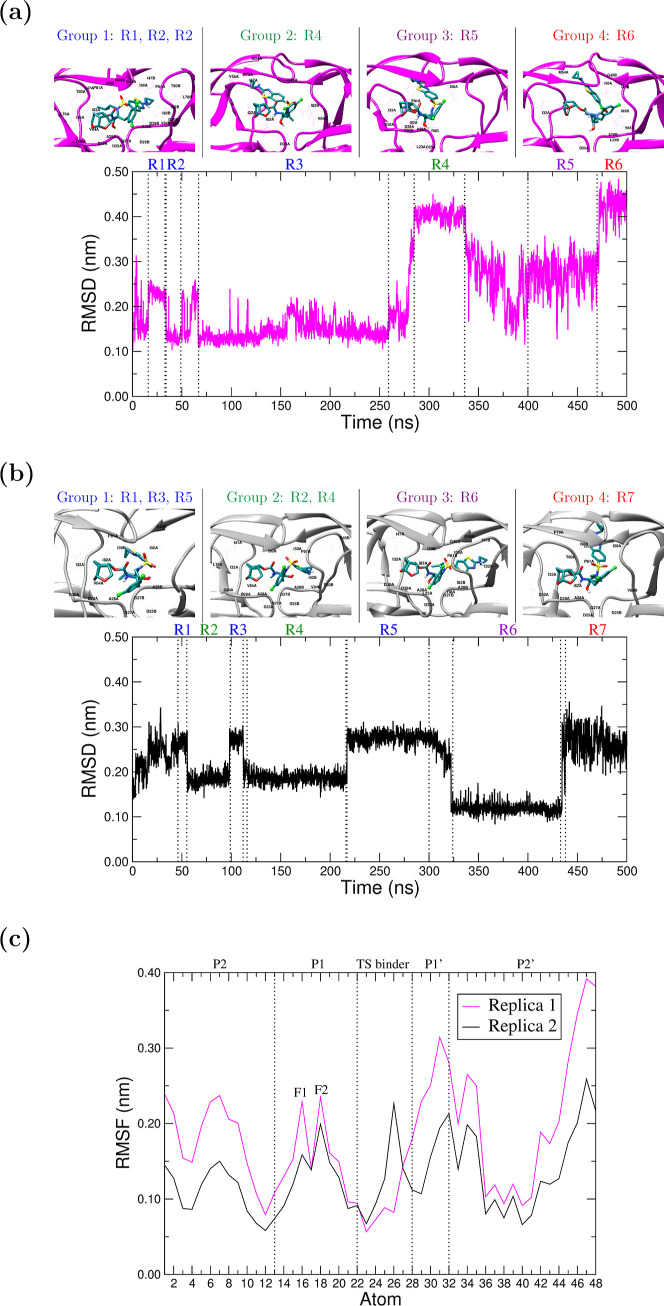 Figure 3
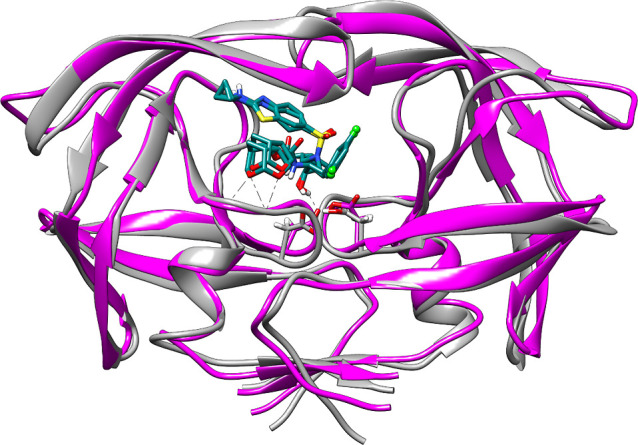 Figure 4
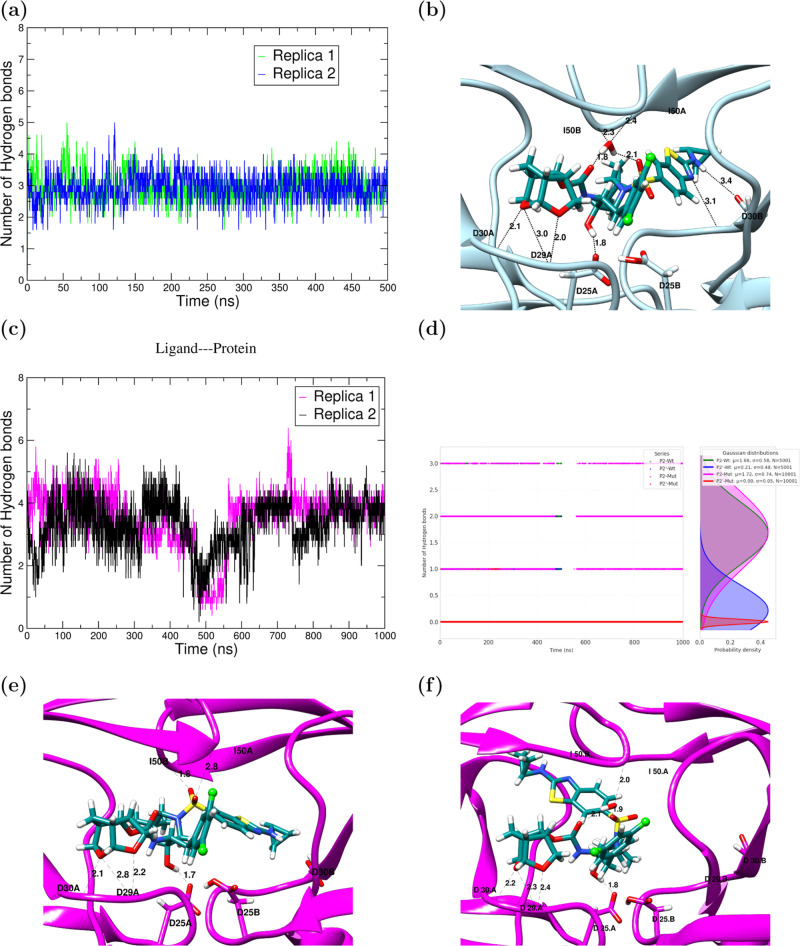 Figure 5
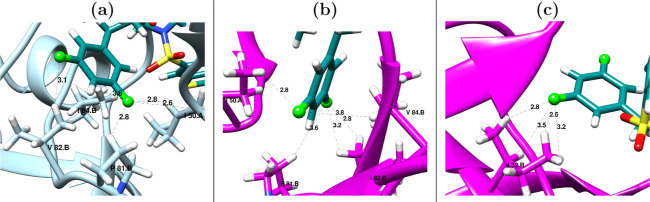 Figure 6
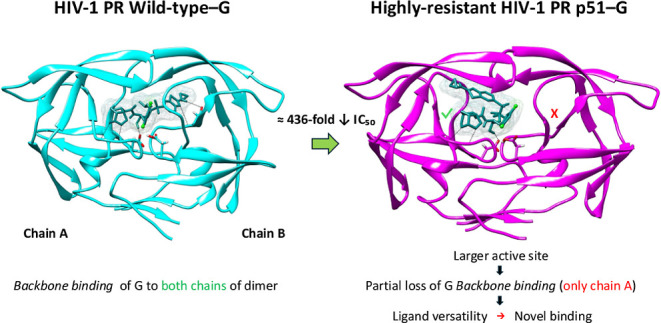 Figure 7
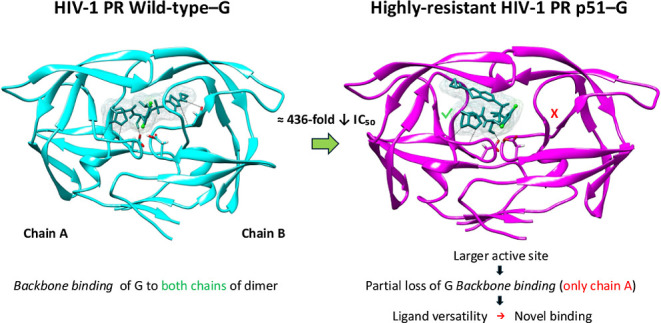 Figure 8
Peer Reviews
No public reviews on file for this paper yet. If you reviewed it on a platform where reviews are public (OpenReview, ICLR, NeurIPS, ICML), you can paste yours below so the community can read it here.
Videos
No videos yet. Explain this paper in a talk, walkthrough, or lecture? Add one.
Taxonomy
TopicsHIV/AIDS drug development and treatment · Cancer-related Molecular Pathways · HIV Research and Treatment