Investigations into linker effects of DNA–VHL ligand conjugates by multiplexed affinity measurements using focal molography
Pascal Raschke, Simona Notova, Volker Gatterdam, Andreas Frutiger, Andreas Brunschweiger

TL;DR
This study uses a high-throughput method to measure how DNA-PROTACs bind to a protein called VHL, finding that linker hydrophobicity strongly affects binding affinity.
Contribution
The study validates multiplexed focal molography for measuring DNA–PROTAC affinity and identifies linker hydrophobicity as a key factor in binding.
Findings
Multiplexed focal molography achieves 20-fold higher throughput than singleplex measurements.
Linker hydrophobicity is the primary driver of DNA–PROTAC affinity to VHL.
Structure–activity correlations with lipophilicity are stronger in multiplexed measurements.
Abstract
The determination of kinetic binding properties of DNA-tagged compounds binding to a target protein is an important step in the development of nucleic acid-based PROTACs. Focal molography (FM) is a recent addition to the toolbox of instruments that allow for measuring kinetic binding data of drugs binding to a target protein with high experimental throughput. Here, we applied focal molography to characterize the binding of DNA–VHL ligand conjugates—these are “DNA–PROTAC” compounds—to VHL. We synthesized two libraries of 20 such compounds with diverse amino acid linkers by solid-phase amide coupling and used FM to measure their affinity to VHL in both singleplex and 20-plex multiplexed measurement formats. Systematic comparison of equilibrium and kinetic fitting approaches reveals strong within-format correlations that preserve compound rankings despite systematic offsets in absolute KD…
Genes, proteins, chemicals, diseases, species, mutations and cell lines named across the full text — each resolved to its canonical identifier and authoritative record.
Click any figure to enlarge with its caption.
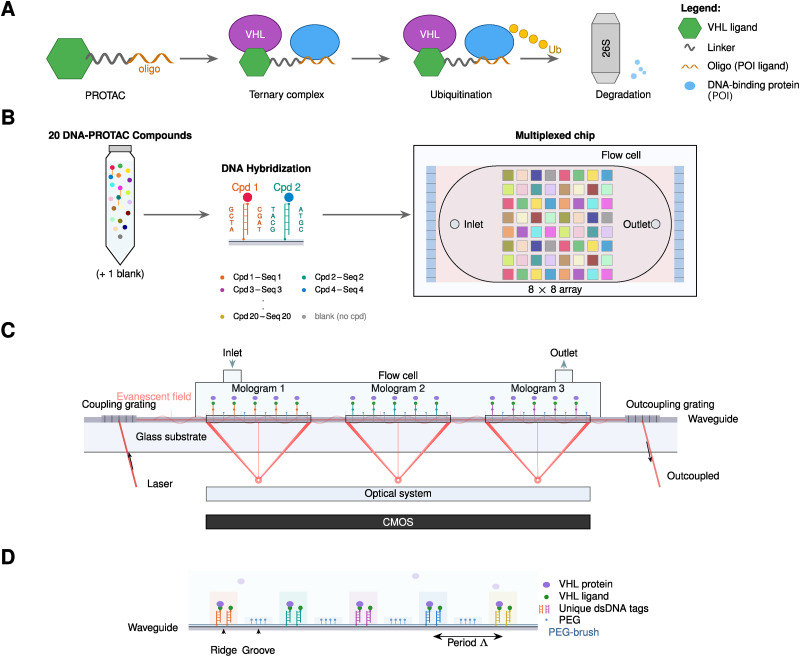 Figure 1
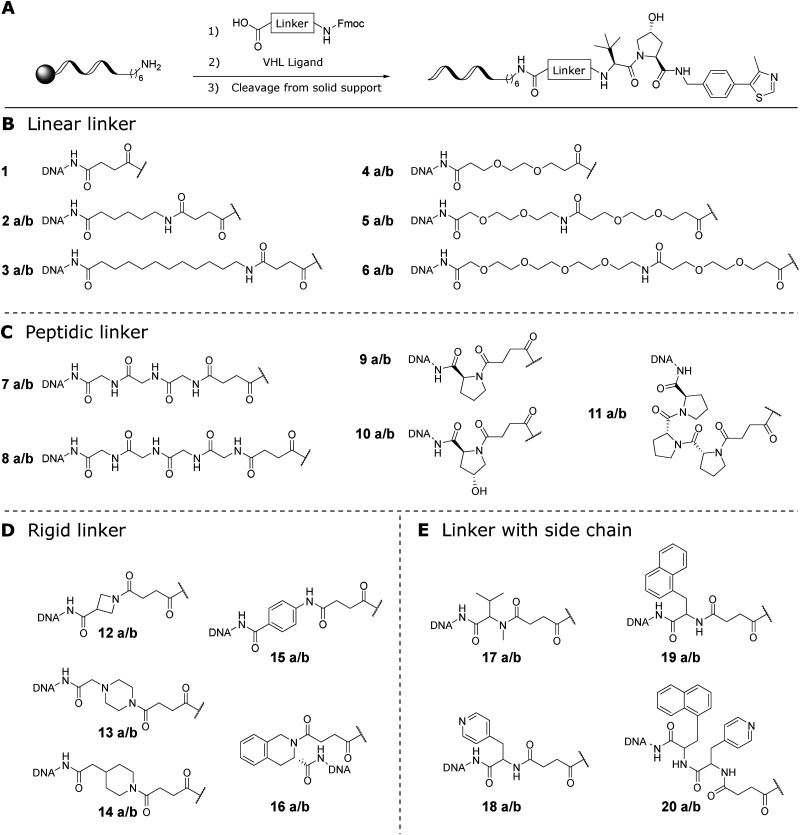 Figure 2
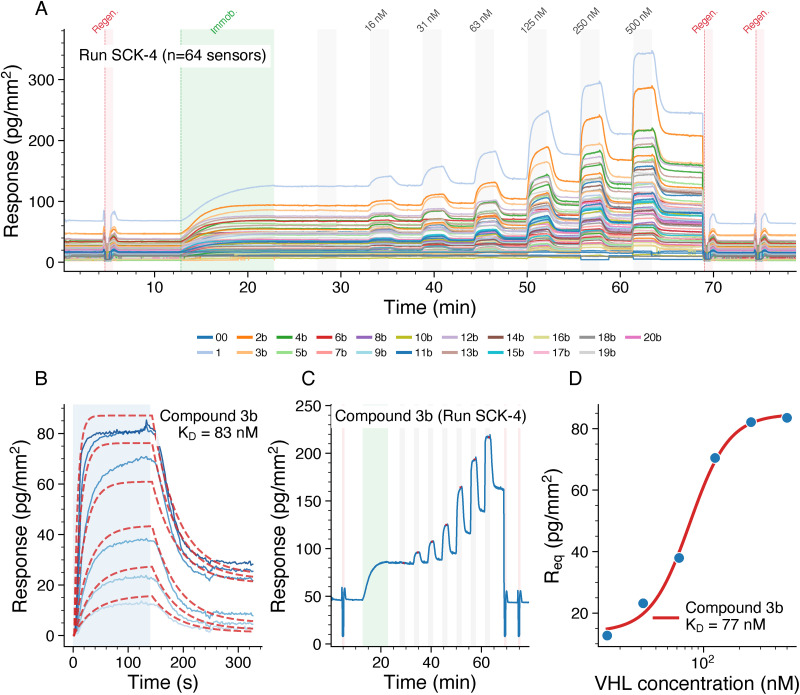 Figure 3
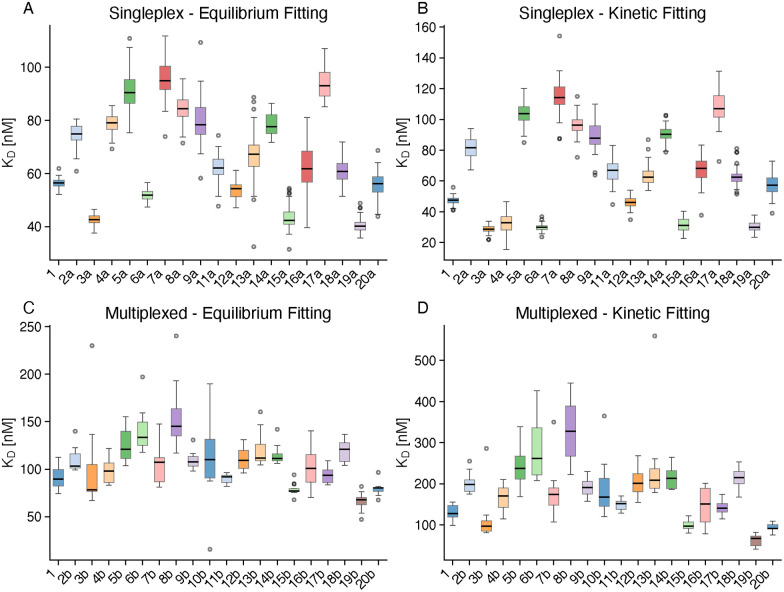 Figure 4
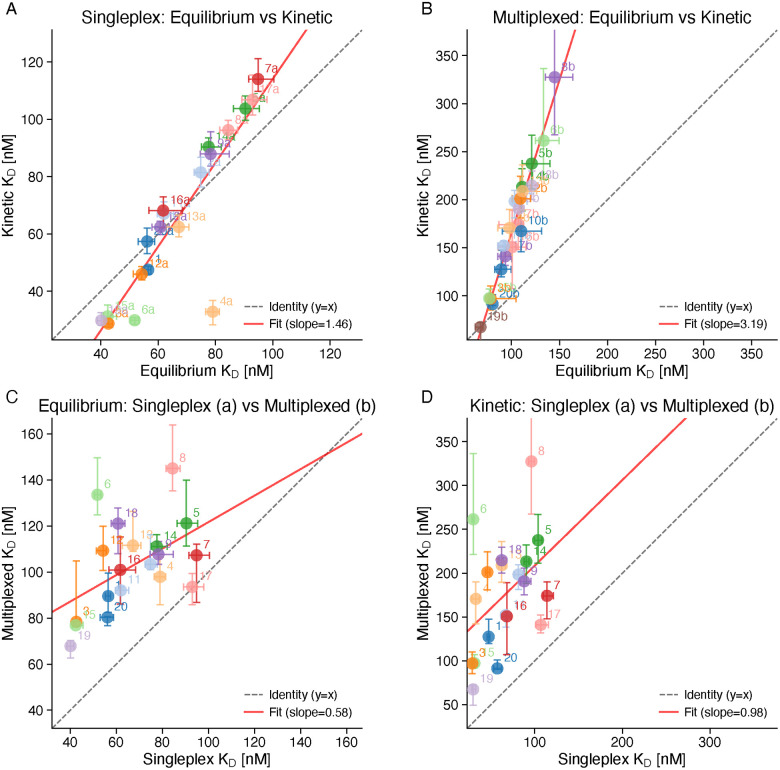 Figure 5
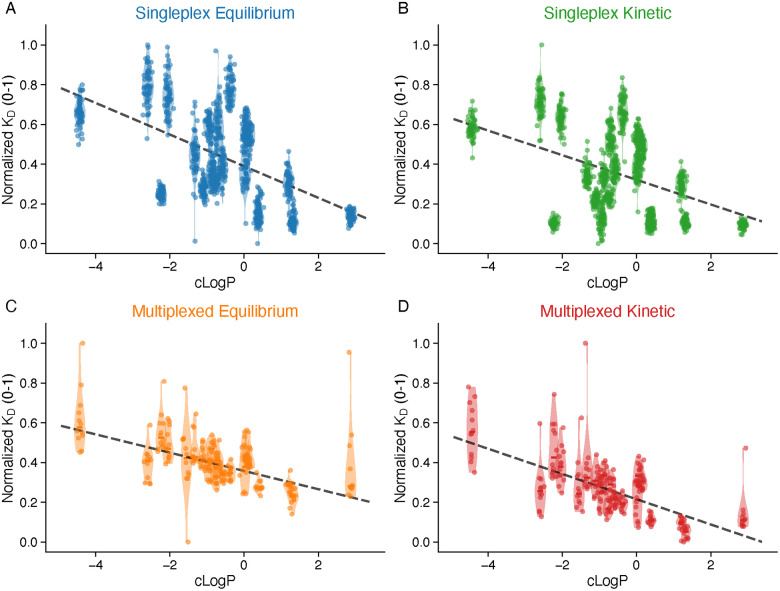 Figure 6
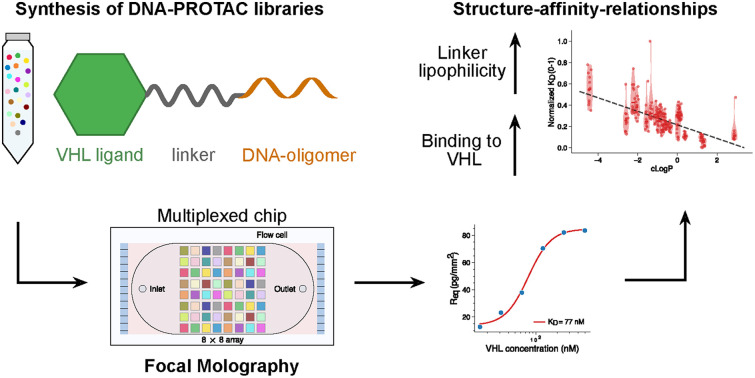 Figure 7
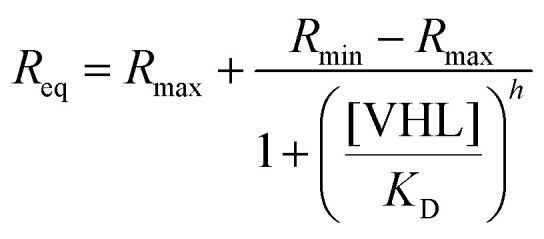 Figure 8
 Figure 9
 Figure 10
 Figure 11
Peer Reviews
No public reviews on file for this paper yet. If you reviewed it on a platform where reviews are public (OpenReview, ICLR, NeurIPS, ICML), you can paste yours below so the community can read it here.
Videos
No videos yet. Explain this paper in a talk, walkthrough, or lecture? Add one.
Taxonomy
TopicsProtein Degradation and Inhibitors · Click Chemistry and Applications · HER2/EGFR in Cancer Research