Improving LIME Stability via Density-Awareness: Evaluation and Comparison of AKDE-LIME
Grigorios Tzionis, Georgia Kougka, Ilias Gialampoukidis, Stefanos Vrochidis, Ioannis Kompatsiaris, Maro Vlachopoulou

TL;DR
This paper introduces AKDE-LIME, a more stable version of LIME for generating reliable local explanations in machine learning models.
Contribution
AKDE-LIME introduces a density-aware weighting scheme to improve the stability of local explanations.
Findings
AKDE-LIME produces significantly more stable explanations than standard LIME across various noise levels.
AKDE-LIME's performance is comparable to or better than TreeSHAP and Anchor in robustness and stability.
The method is effective on diverse tree-based models using real-world data.
Abstract
This paper addresses the critical instability of Local Interpretable Model-agnostic Explanations (LIME). We introduce Adaptive Kernel Density Estimation LIME (AKDE-LIME), a novel approach that enhances local explanation stability by incorporating a density-aware weighting scheme. Unlike LIME’s standard proximity kernel, AKDE-LIME combines distance weighting with a Kernel Density Estimate (KDE) of the local sample distribution, assigning more representative weights to generated perturbations. We conduct a comprehensive evaluation of AKDE-LIME against LIME, TreeSHAP, and Anchor on five diverse tree-based models using a real-world dataset. Assessing performance on Stability and Robustness metrics across a matrix of noise levels (5% to 20%), our results consistently demonstrate that AKDE-LIME produces significantly more stable and robust explanations than standard LIME under all conditions.…
Click any figure to enlarge with its caption.
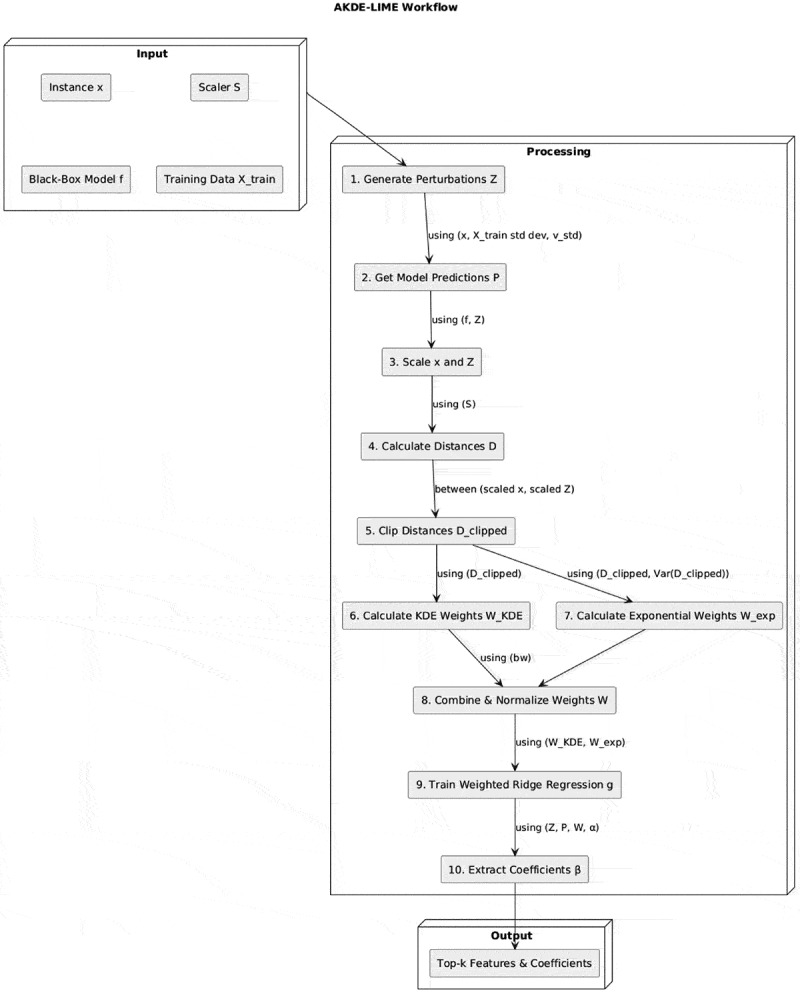 Figure 1
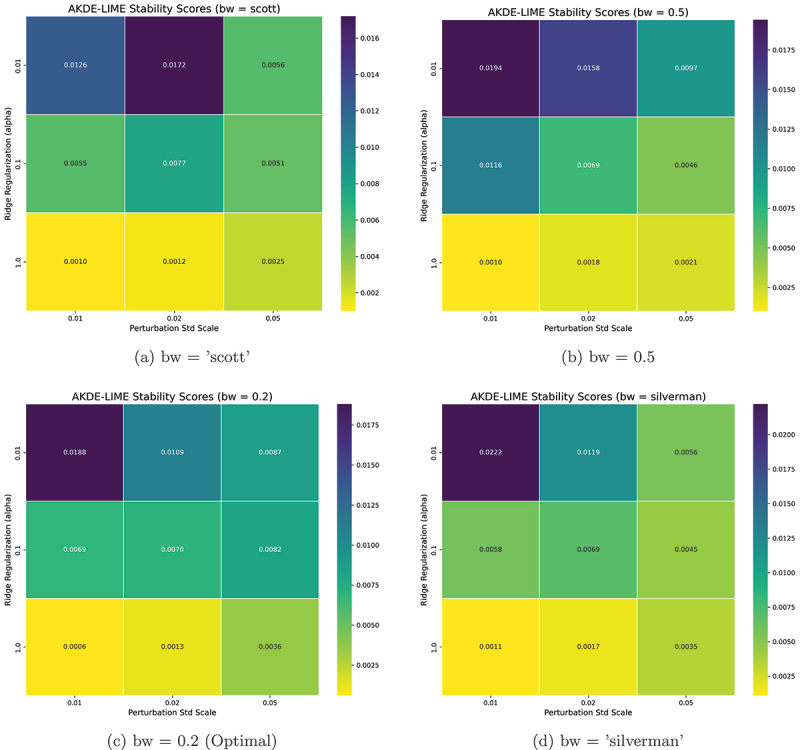 Figure 2
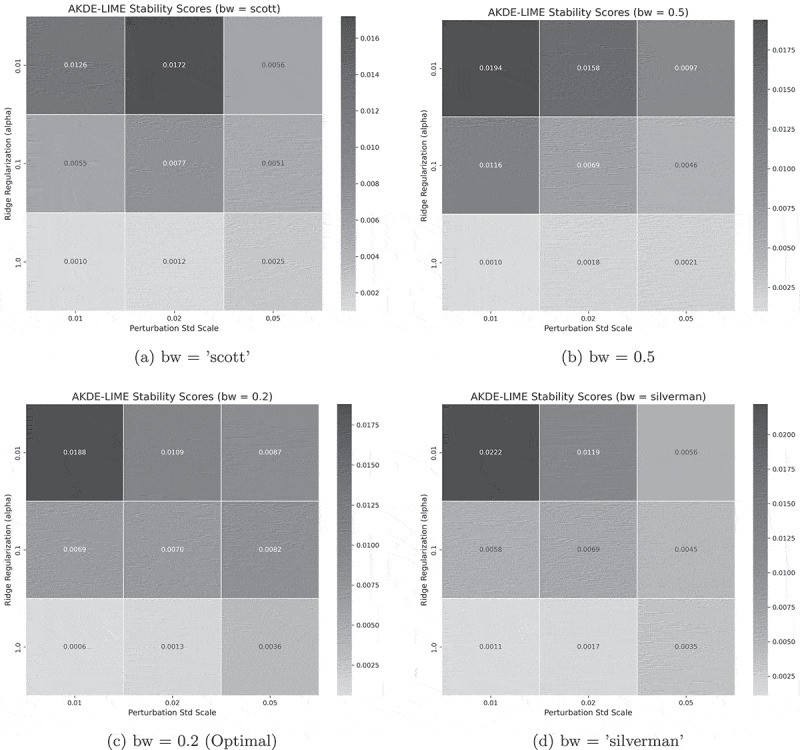 Figure 3
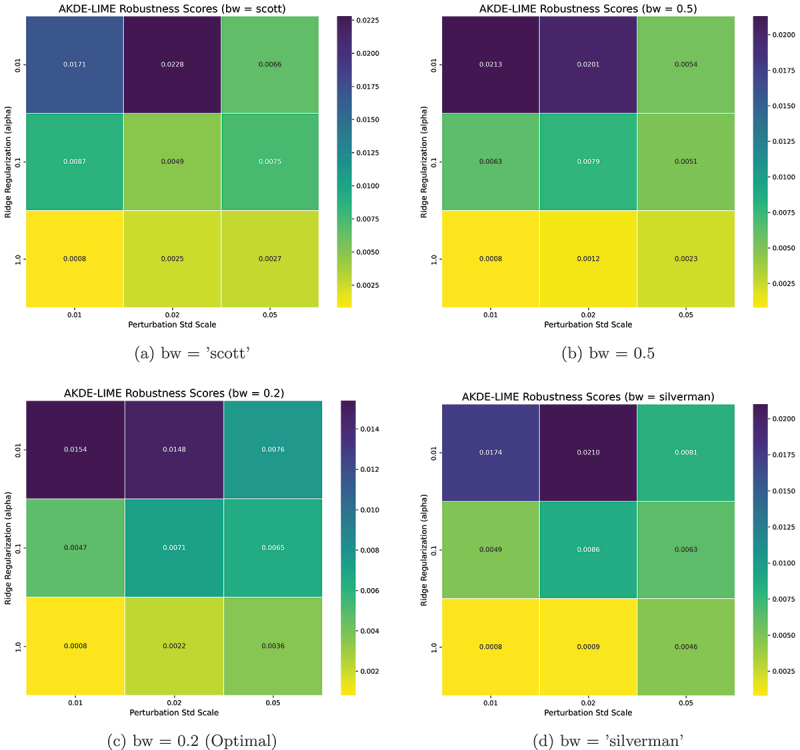 Figure 4
 Figure 5
 Figure 6
 Figure 7
 Figure 8
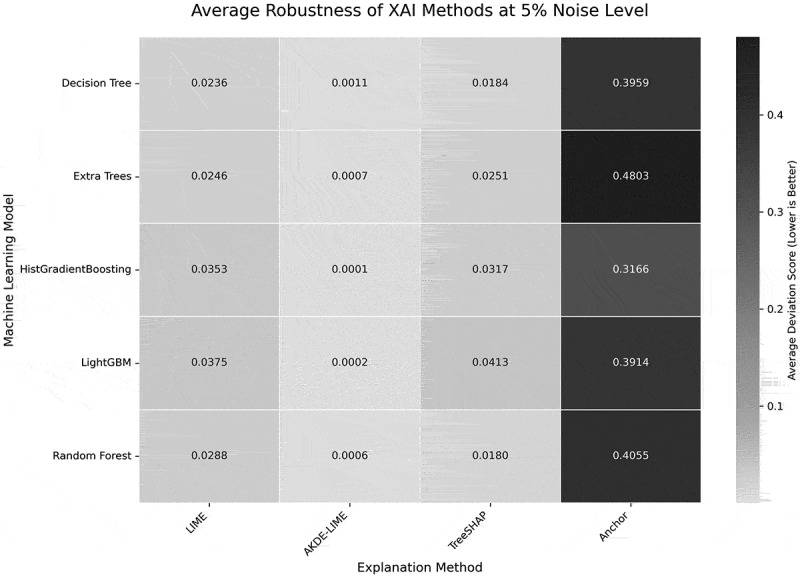 Figure 9
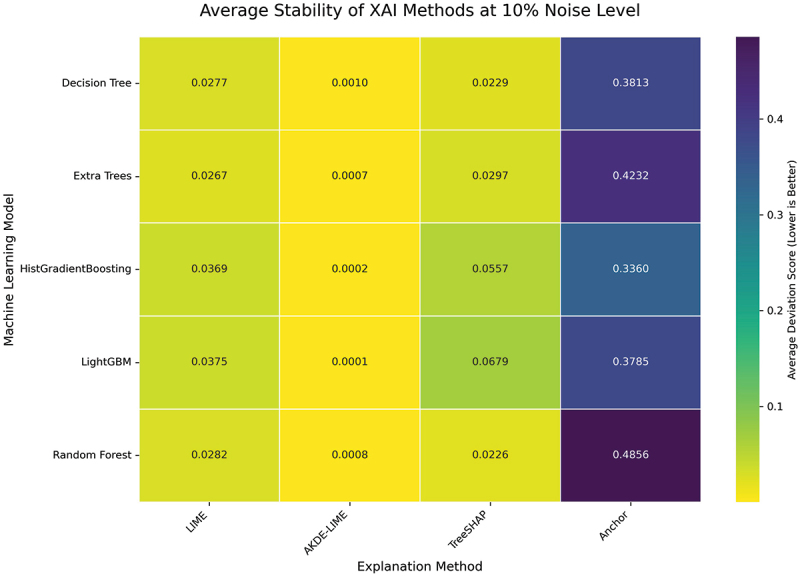 Figure 10
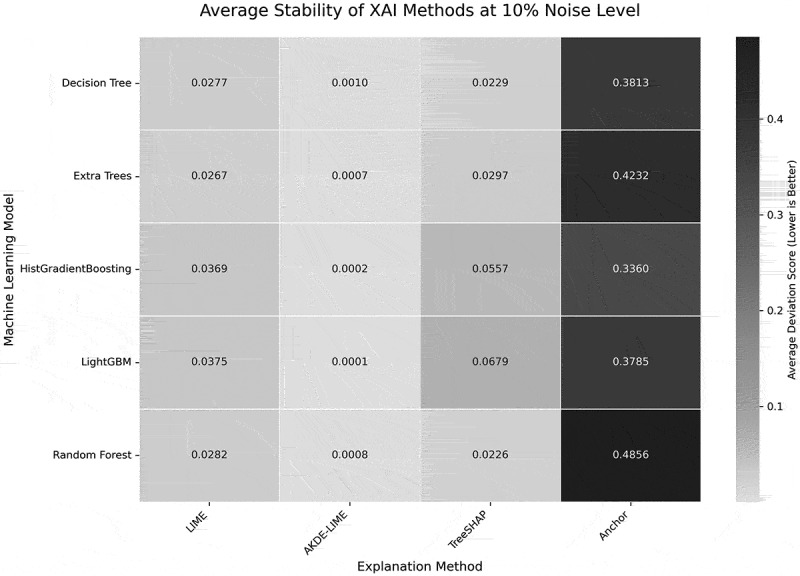 Figure 11
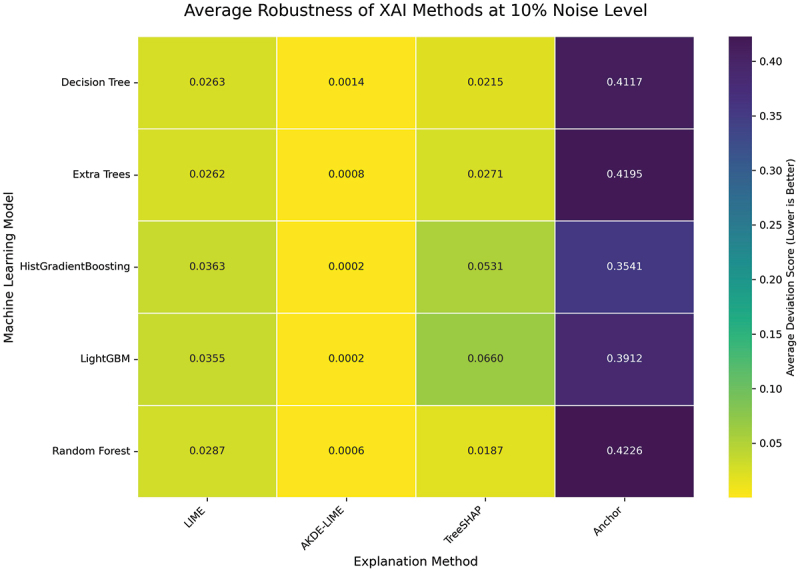 Figure 12
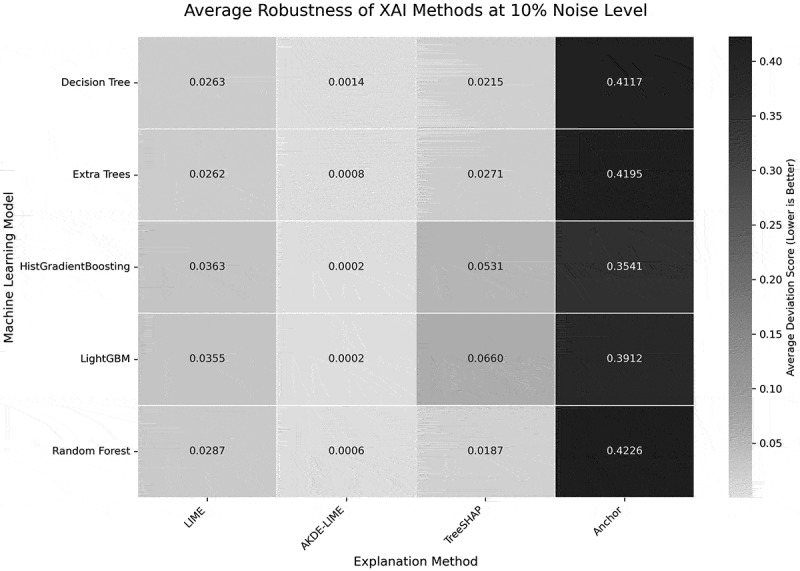 Figure 13
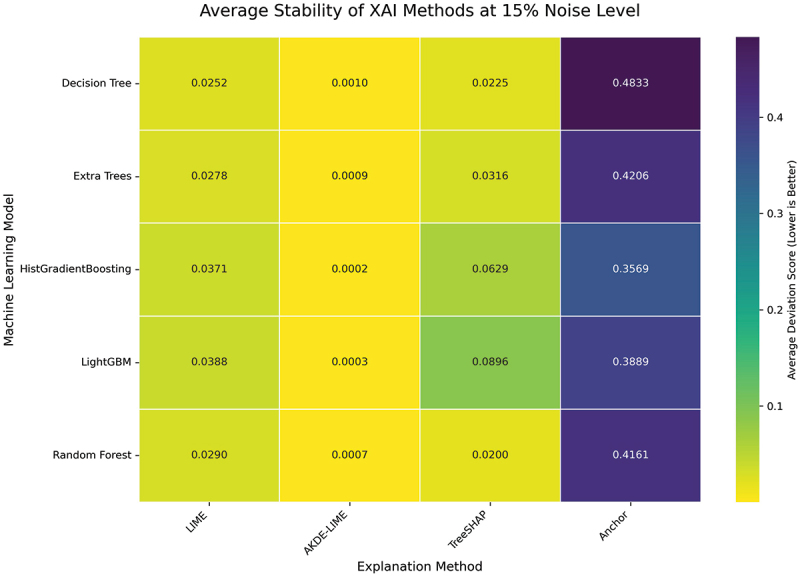 Figure 14
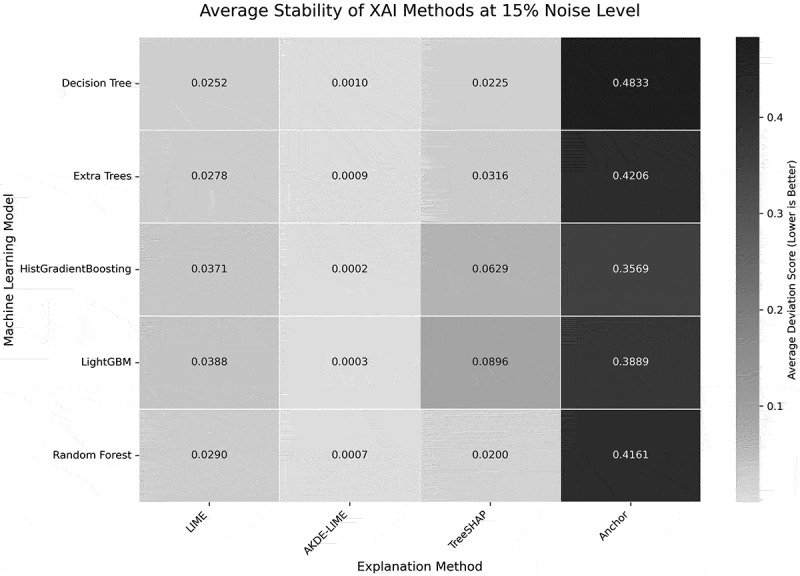 Figure 15
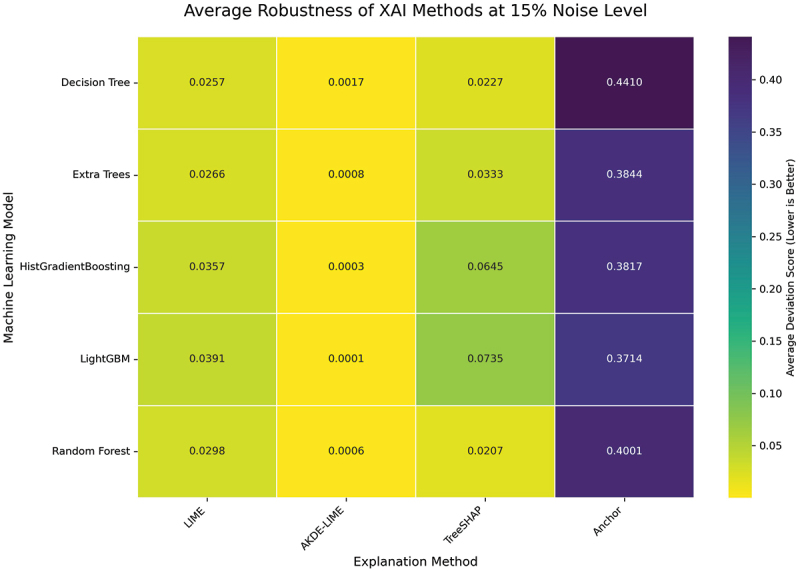 Figure 16
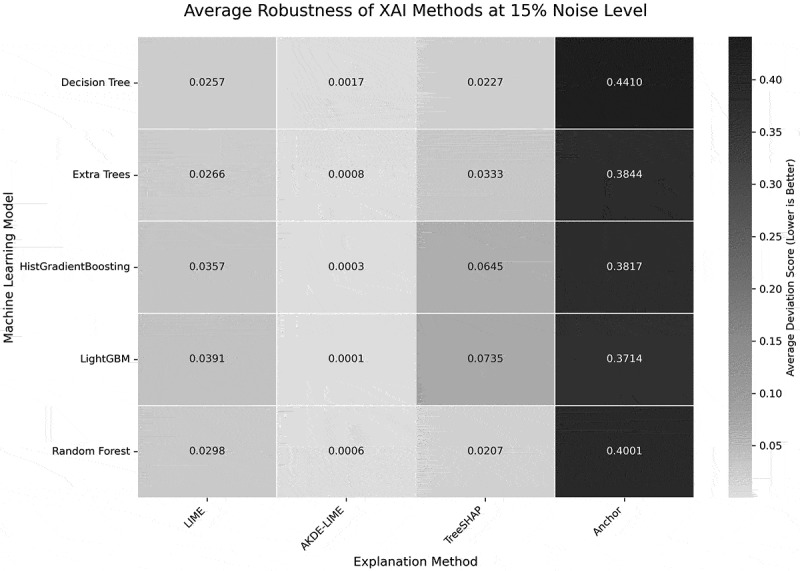 Figure 17
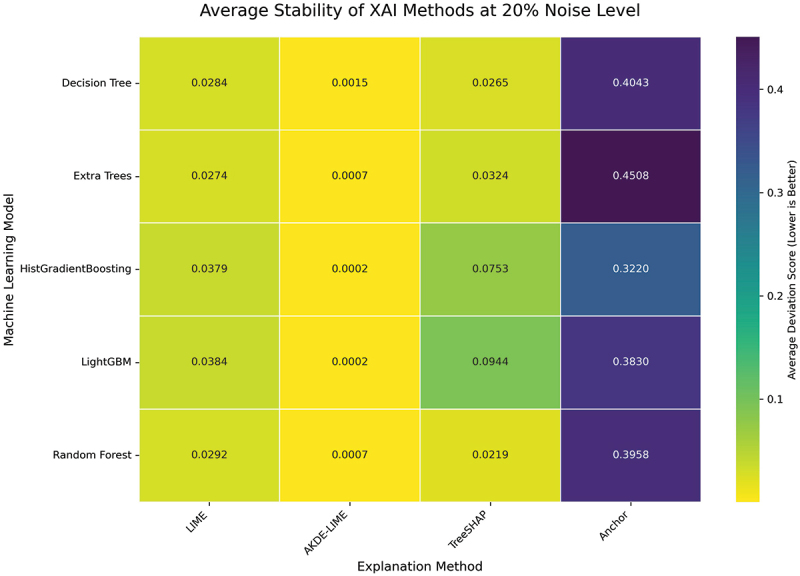 Figure 18
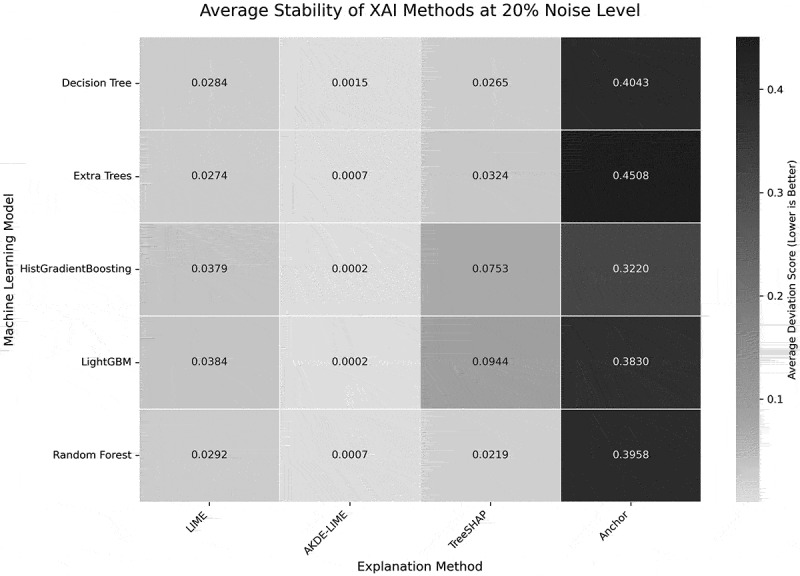 Figure 19
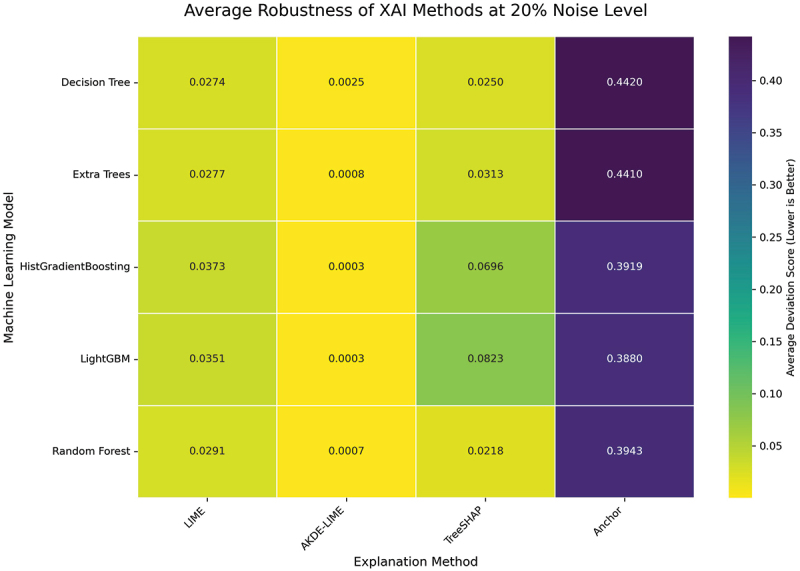 Figure 20
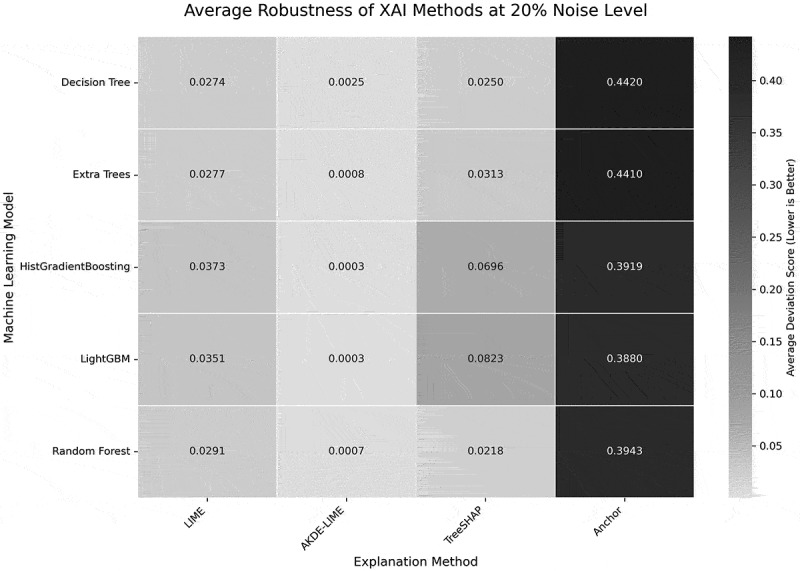 Figure 21
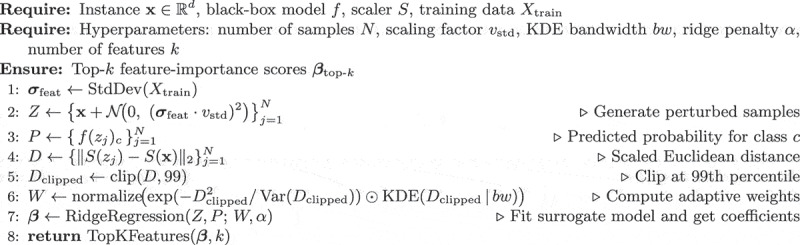 Figure 22
 Figure 23
 Figure 24
 Figure 25
 Figure 26
 Figure 27
 Figure 28
 Figure 29
 Figure 30
 Figure 31
 Figure 32
 Figure 33
 Figure 34
 Figure 35
 Figure 36
 Figure 37
 Figure 38
 Figure 39
 Figure 40
 Figure 41
 Figure 42
 Figure 43
 Figure 44
 Figure 45
 Figure 46
 Figure 47
 Figure 48
 Figure 49
 Figure 50
Peer Reviews
No public reviews on file for this paper yet. If you reviewed it on a platform where reviews are public (OpenReview, ICLR, NeurIPS, ICML), you can paste yours below so the community can read it here.
Videos
No videos yet. Explain this paper in a talk, walkthrough, or lecture? Add one.
Taxonomy
TopicsExplainable Artificial Intelligence (XAI) · Adversarial Robustness in Machine Learning · Advanced Graph Neural Networks