Acoustic prominence: Understanding speech patterns in children with Down syndrome
Delin Deng, Miriam Lense, Stephen Camarata, Julie Mazzone, Doriana Lacitignola, Duane Watson

TL;DR
This study compares how children with Down syndrome and typically developing children use acoustic features like pitch and intensity to emphasize words in speech.
Contribution
The study provides new insights into how children with Down syndrome acoustically mark prominence compared to typically developing children.
Findings
Children with Down syndrome have significantly higher mean f0 and lower intensity compared to typically developing children.
DS children showed less controlled f0 contour patterns compared to TD children when signaling new and given information.
Duration of utterances was not significantly different between the two groups.
Abstract
Prominence in speech refers to the emphasis placed on certain words or syllables in English, making their salience through increased duration, increased intensity, and sometimes f0 dynamics. By marking acoustic prominence, speakers distinguish new from given information in speech. While a large body of relevant literature exists on how acoustic prominence is acoustically realized in typically developing (TD) children, little is known about how children with Down syndrome (DS) mark it. In this study, a “Puppet Show” task was conducted with 22 TD children and ten children with DS, one of whom was excluded because they were unable to produce the required target utterances despite multiple attempts, to compare the acoustic parameters used when distinguishing new and given information, focusing on mean f0, mean intensity, duration, and time-normalized f0. By using linear mixed-effects models…
Genes, proteins, chemicals, diseases, species, mutations and cell lines named across the full text — each resolved to its canonical identifier and authoritative record.
Click any figure to enlarge with its caption.
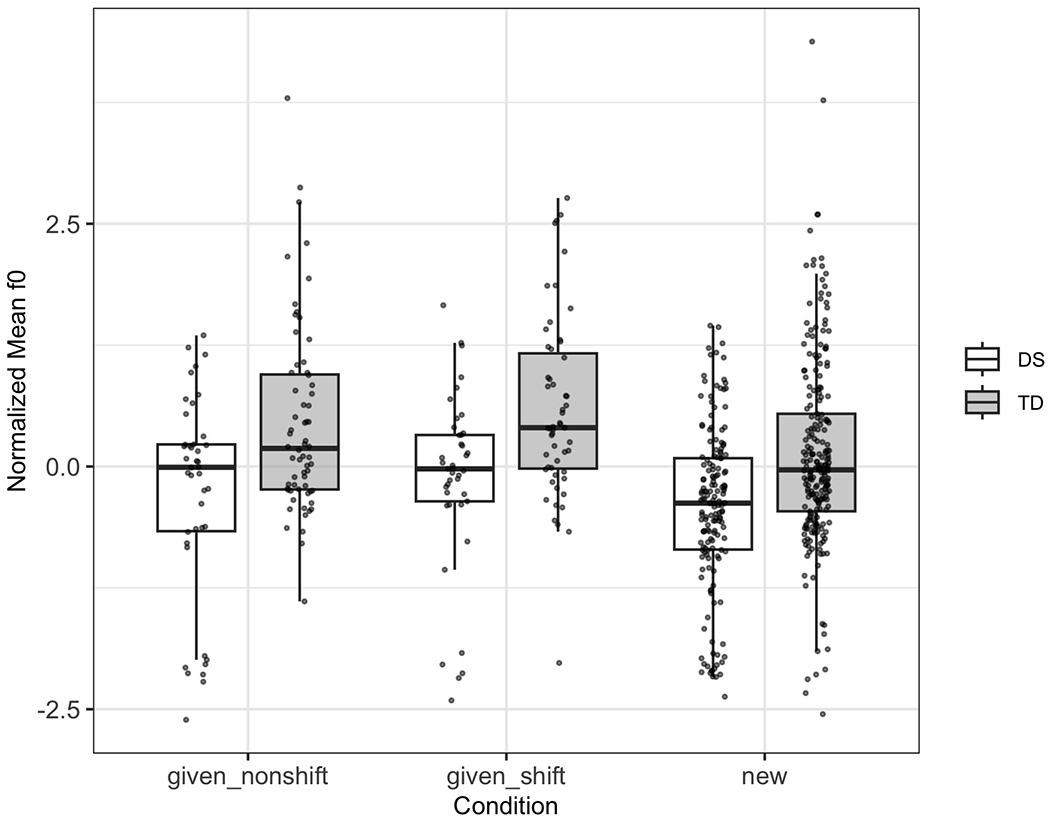 Figure 1
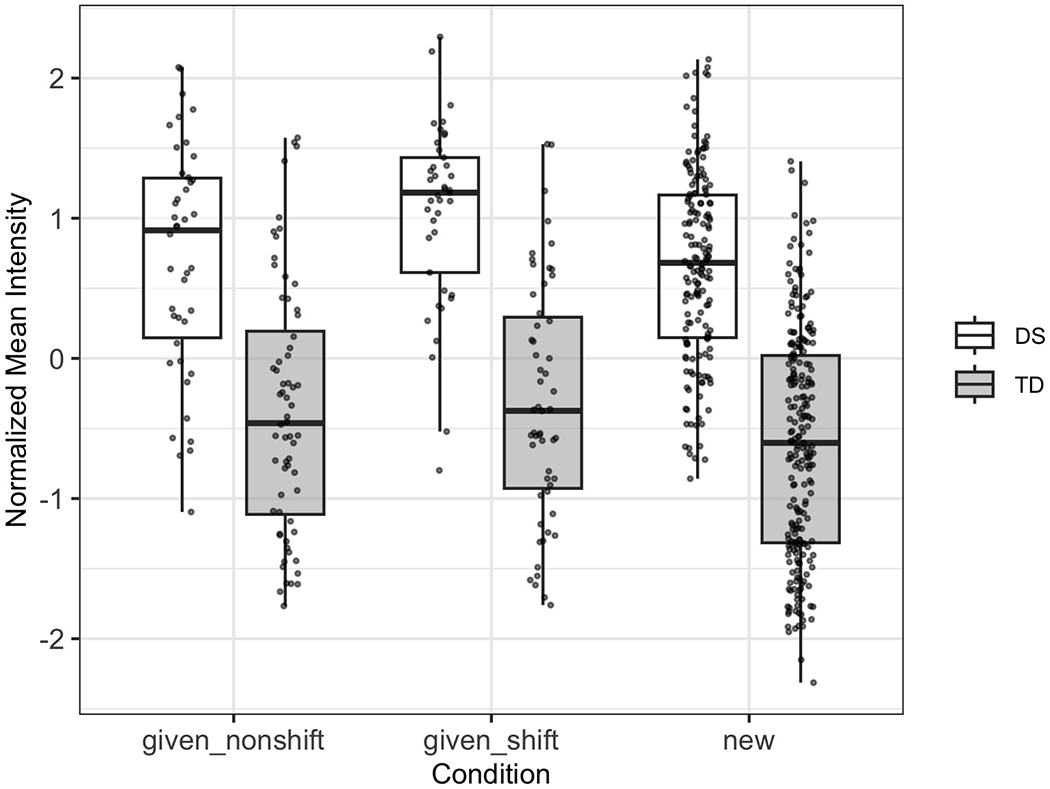 Figure 2
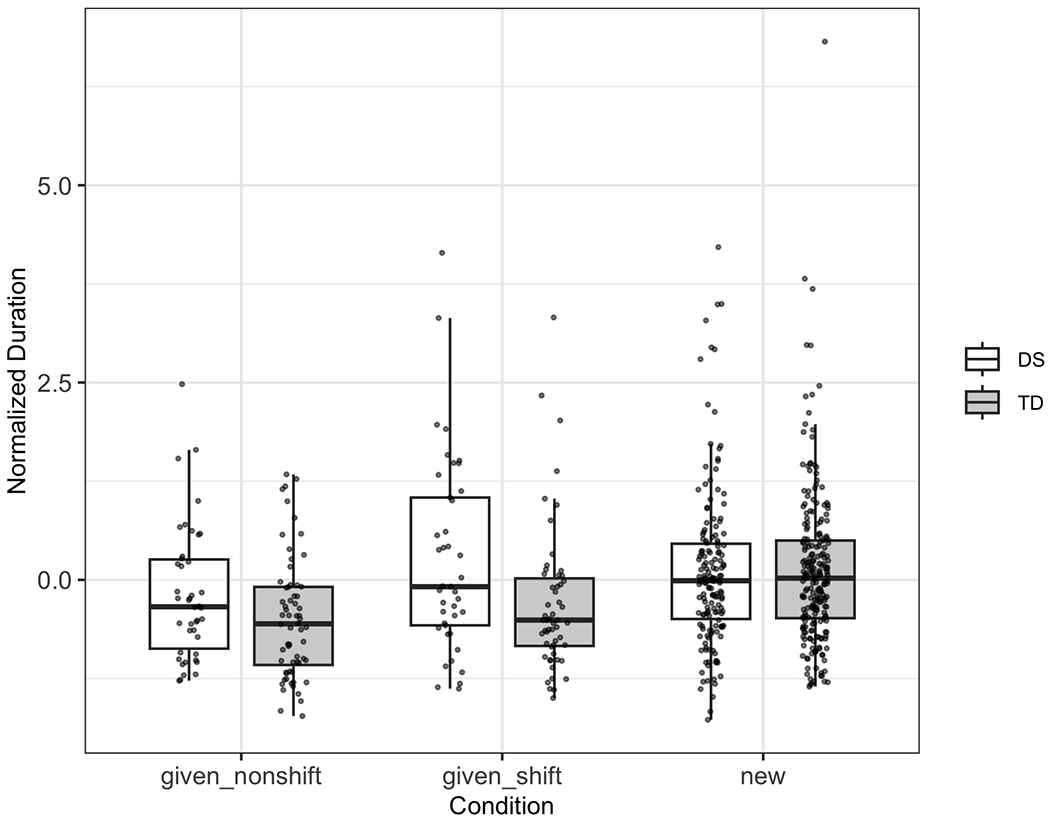 Figure 3
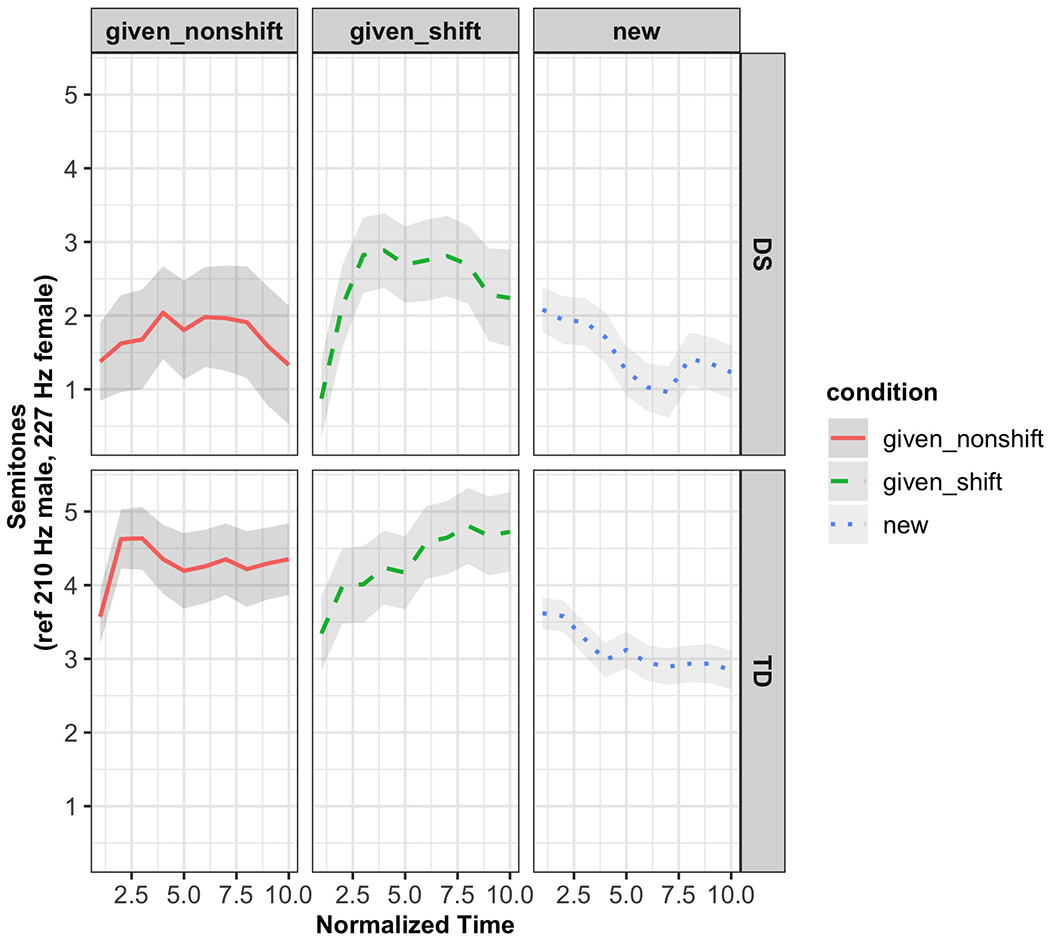 Figure 4
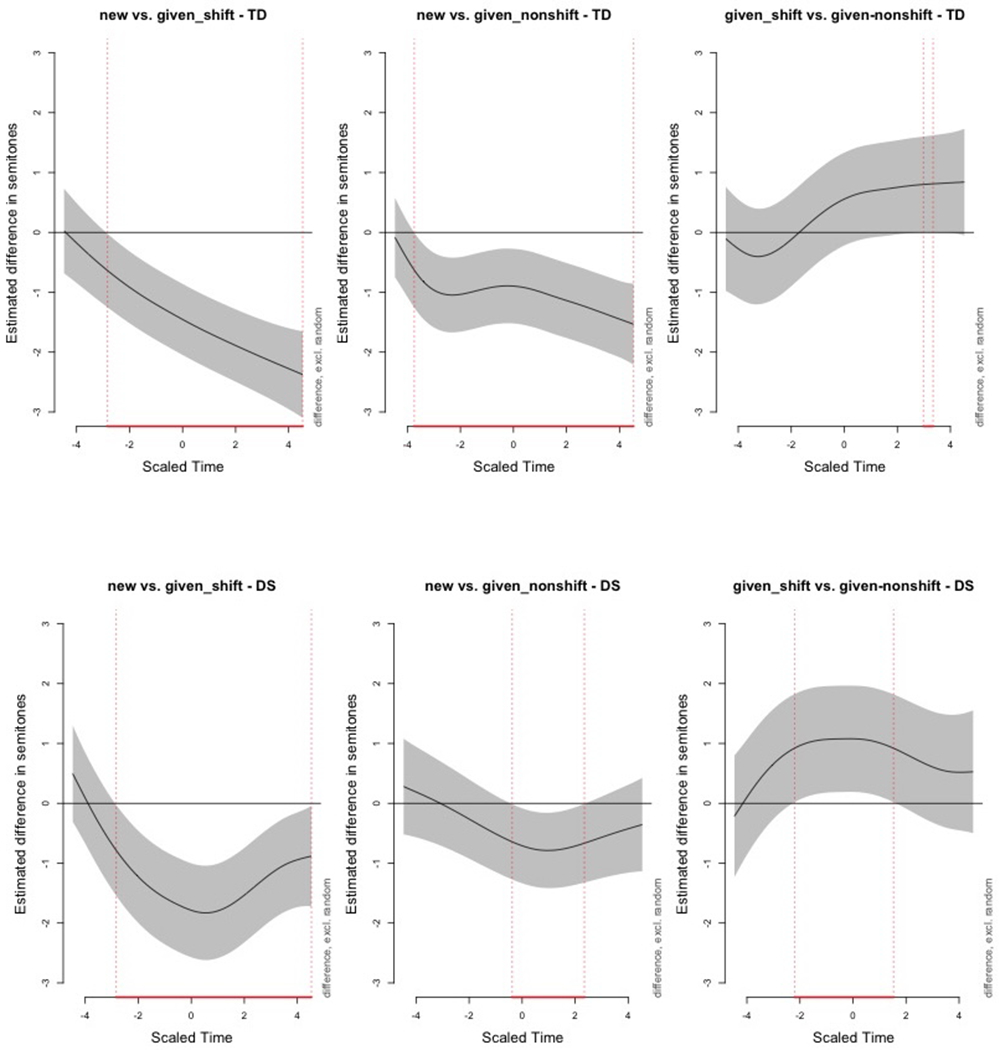 Figure 5
Peer Reviews
No public reviews on file for this paper yet. If you reviewed it on a platform where reviews are public (OpenReview, ICLR, NeurIPS, ICML), you can paste yours below so the community can read it here.
Videos
No videos yet. Explain this paper in a talk, walkthrough, or lecture? Add one.
Taxonomy
TopicsAssistive Technology in Communication and Mobility · Stuttering Research and Treatment