Effects of craniectomy on cerebrospinal fluid pressure gradient in the craniospinal space in different body positions of cats
Marijan Klarica, Gorislav Erceg, Sergej Mihailovič Marasanov, Milan Radoš, Filip Njavro, Darko Orešković, Ivana Jurjević

TL;DR
This study examines how removing part of a cat's skull affects cerebrospinal fluid pressure in different body positions.
Contribution
The study reveals that craniectomy alters intracranial pressure in head-up positions, potentially explaining the trephined syndrome.
Findings
At 90° head-up position, craniectomy caused higher lateral ventricle pressure compared to intact cranium cats.
Hydrostatic pressure gradients remained unchanged despite craniectomy.
In head-down positions, lumbar subarachnoid space pressure became negative while lateral ventricle pressure increased.
Abstract
To assess whether a cranial defect in anesthetized cats alters cerebrospinal fluid (CSF) pressure distribution across the craniospinal axis in different body positions in the setting of intracranial normotension. After standardized parietal craniectomy, intracranial and lumbar CSF pressures were simultaneously measured in eight adult anesthetized (α-chloralose, i.p. 100 mg/kg) cats in different body positions: horizontal (0°), head-up (45°; 90°), and head-down (225°; 270°). CSF pressure gradient represents the difference between CSF pressure values in the lateral ventricle (LV) and lumbar subarachnoid space (LSS) in each body position. At 0°, CSF pressures in the LV and LSS were similar (16.2 ± 0.9 vs 15.8 ± 1.2 cm H2O, respectively). In the 90° head-up position, LV pressure was subatmospheric (−1.5 ± 0.5 cm H2O), while LSS pressure simultaneously increased (31.4 ± 1.0 cm H2O).…
Genes, proteins, chemicals, diseases, species, mutations and cell lines named across the full text — each resolved to its canonical identifier and authoritative record.
Click any figure to enlarge with its caption.
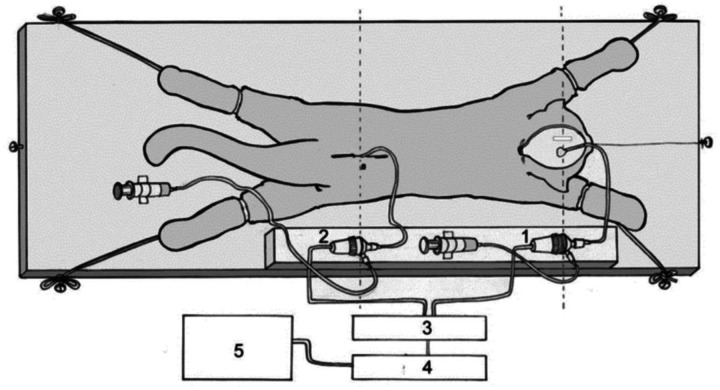 Figure 1
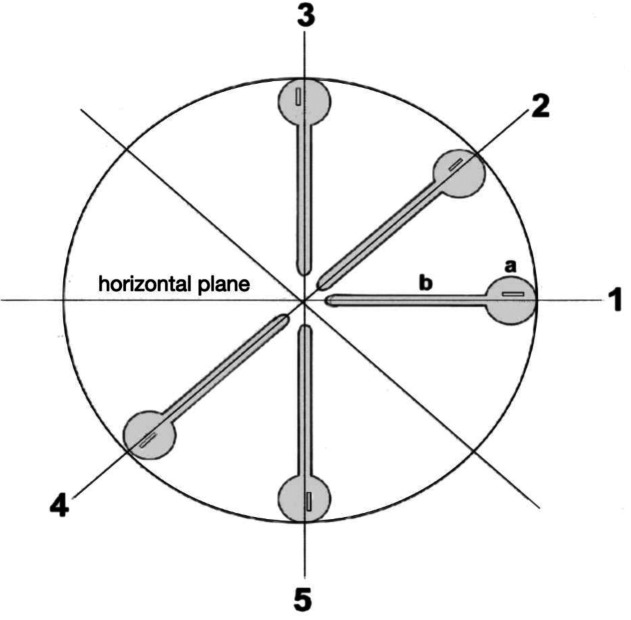 Figure 2
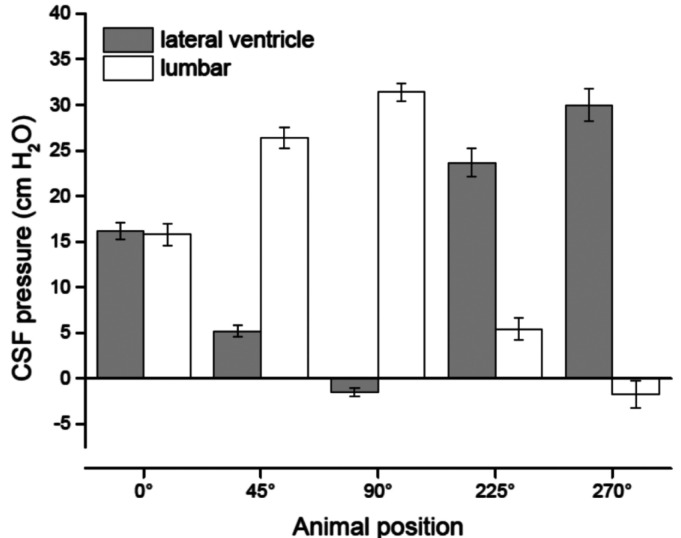 Figure 3
Peer Reviews
No public reviews on file for this paper yet. If you reviewed it on a platform where reviews are public (OpenReview, ICLR, NeurIPS, ICML), you can paste yours below so the community can read it here.
Videos
No videos yet. Explain this paper in a talk, walkthrough, or lecture? Add one.
Taxonomy
TopicsCerebrospinal fluid and hydrocephalus · Traumatic Brain Injury and Neurovascular Disturbances · Veterinary Oncology Research