Stimuli-Responsive Thiele’s Hydrocarbon Derivatives: Potential Inversion, Strong Electronic Coupling, and Influence of Brønsted/Lewis Acids and Bases
Alok Mahata, Nicolás. I. Neuman, Manuel Pech, Jonas Schmidt, Luis I. Domenianni, Peter Vöhringer, Biprajit Sarkar

TL;DR
This paper explores new nitrogen-containing hydrocarbon derivatives that change properties in response to stimuli, offering potential for functional materials.
Contribution
The study introduces new diradicaloid systems with tunable properties and demonstrates their stimuli-responsive behavior.
Findings
Increasing nitrogen atoms in the molecular backbone leads to consistent changes in absorption and redox properties.
Compound 2PhRC is a borderline class II–III mixed-valence species with strong electronic coupling and low thermodynamic stability.
Coordination with acids reversibly alters the optical responses of 2Py and 2Pz.
Abstract
Stimuli-responsive diradicaloid systems often display fascinating and tunable electrochemical, optical, and magnetic properties. Herein, we present the design and synthesis of a series of nitrogen-containing Thiele’s hydrocarbon derivatives (2 Ph , 2 Py , and 2 Pz ), based on phenyl, pyridinyl, and pyrazinyl spacers, with tunable electrochemical, electronic, and optical properties. By systematically increasing the number of nitrogen atoms in the molecular backbone, we observed consistent trends in both their absorption and their redox properties. A detailed investigation on the different oxidation states of 2 Ph , which displays potential inversion, was also performed, including the intermediate radical cationic state (2 Ph RC). This intermediate represents an intriguing example of a mixed-valent species whose thermodynamic stability, as calculated by the comproportionation…
Genes, proteins, chemicals, diseases, species, mutations and cell lines named across the full text — each resolved to its canonical identifier and authoritative record.
Click any figure to enlarge with its caption.
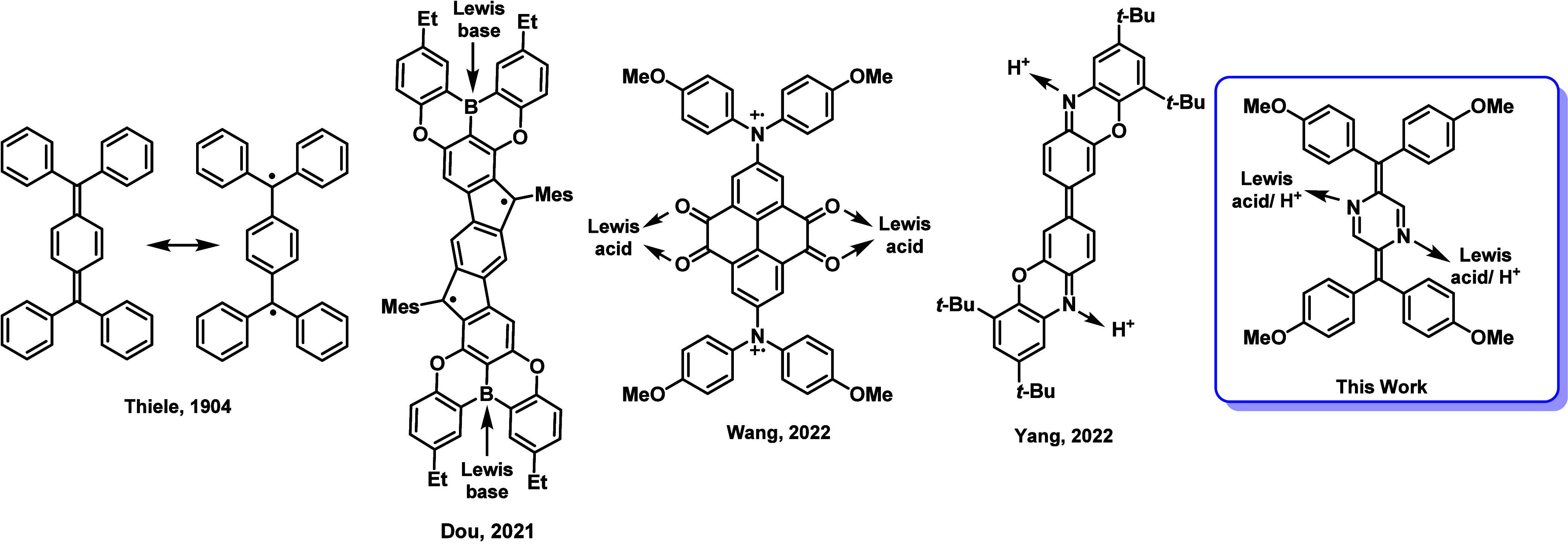 Figure 1
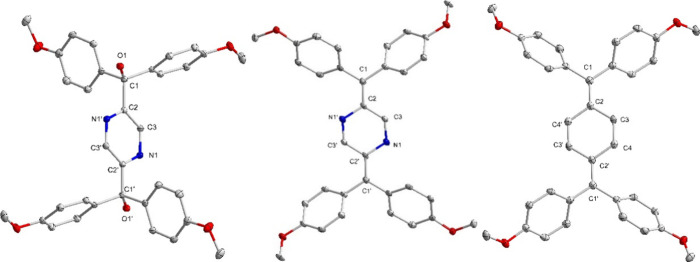 Figure 2
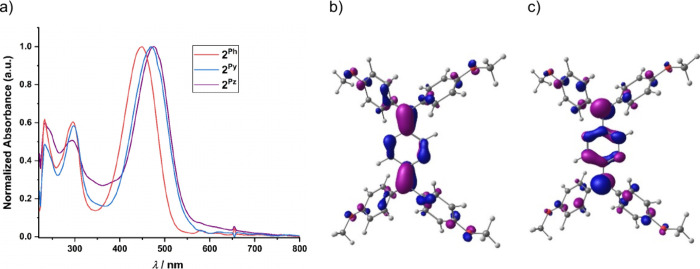 Figure 3
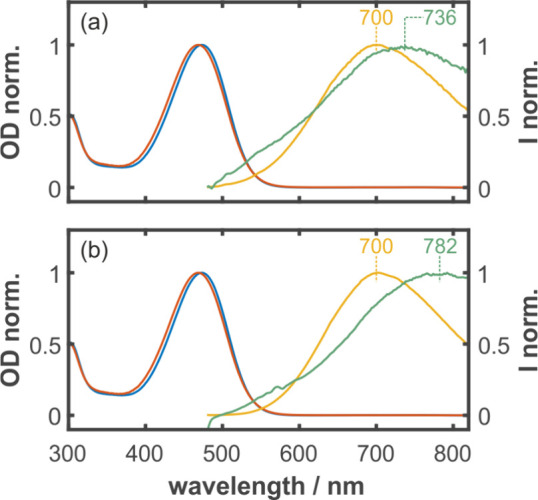 Figure 4
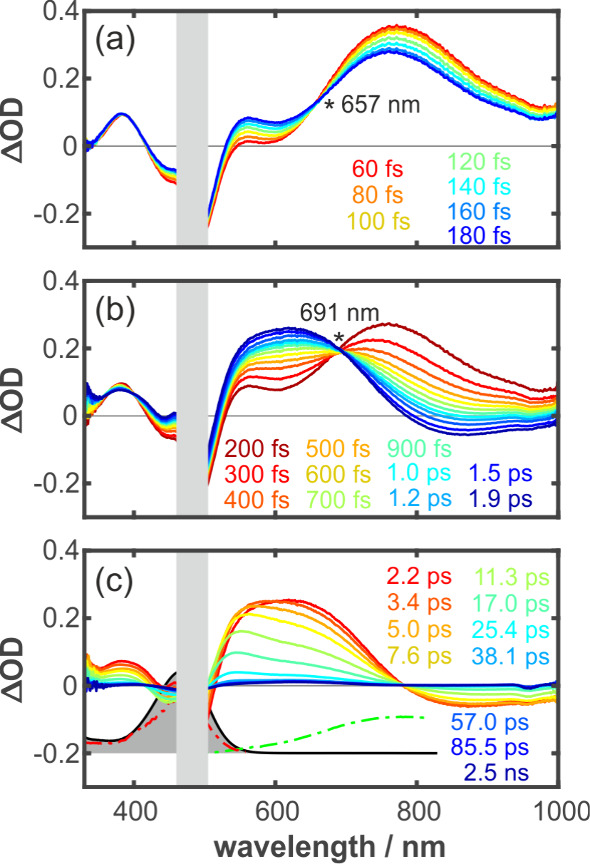 Figure 5
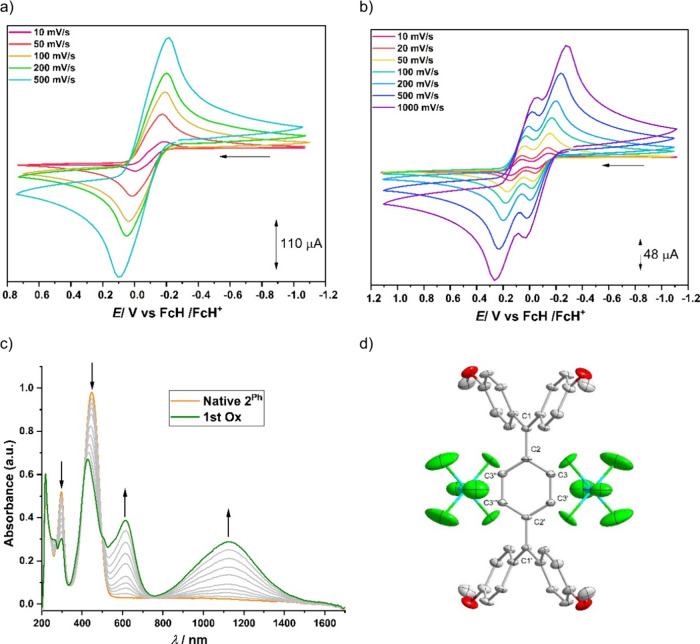 Figure 6
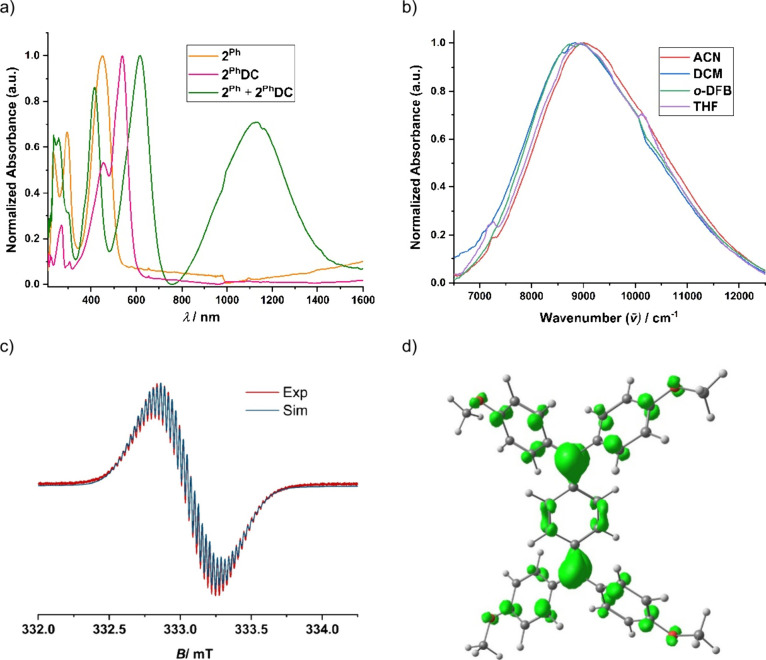 Figure 7
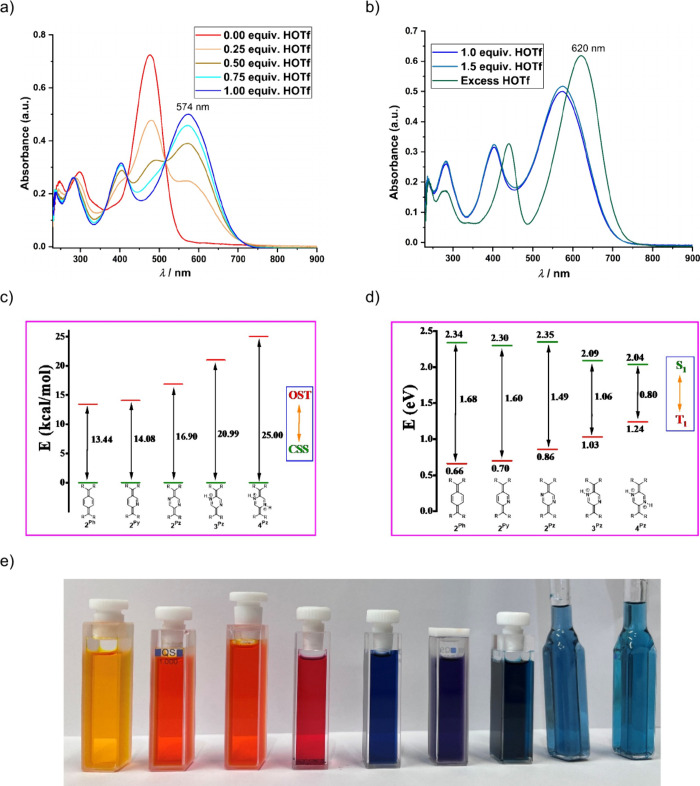 Figure 8
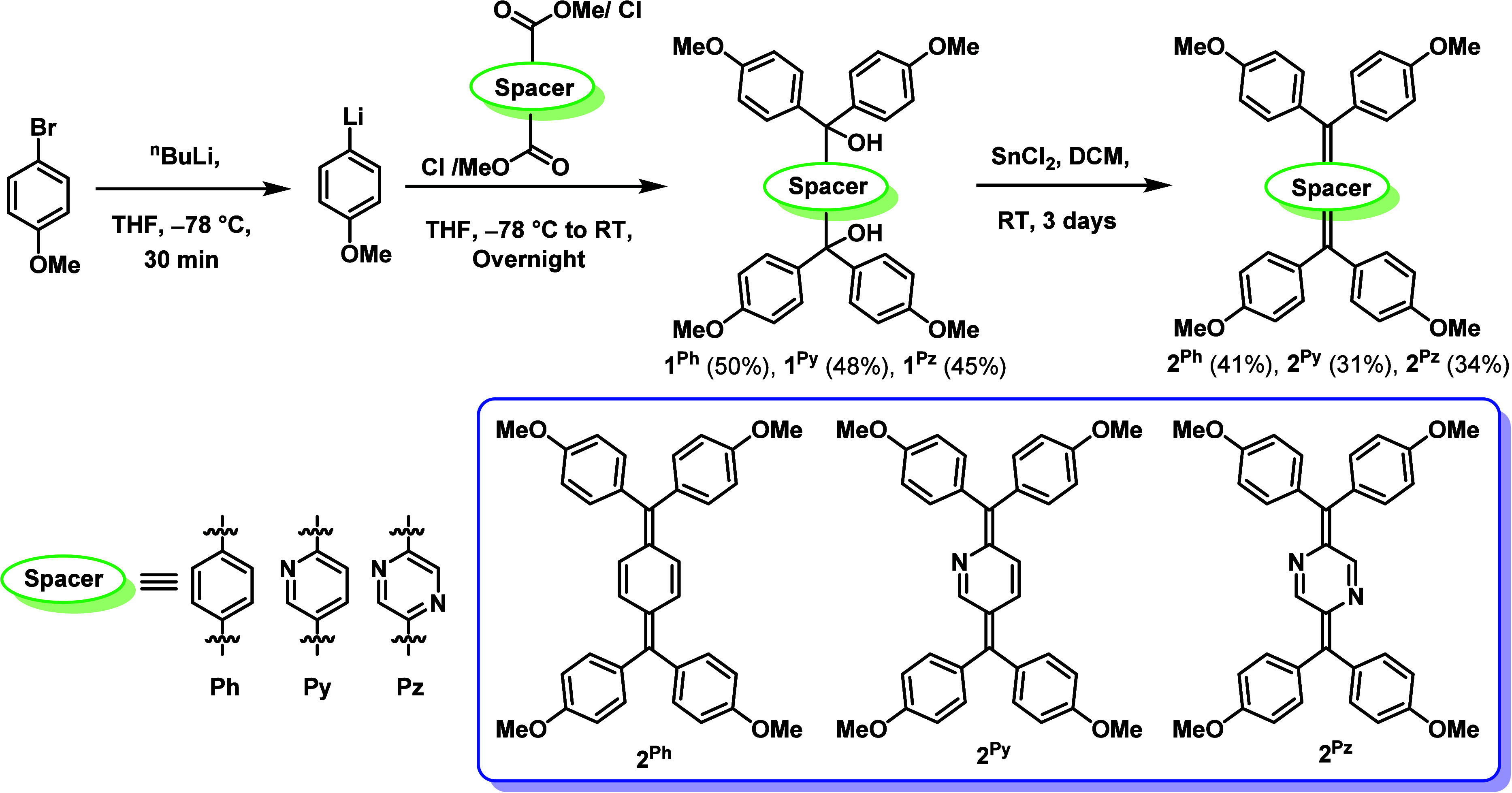 Figure 9
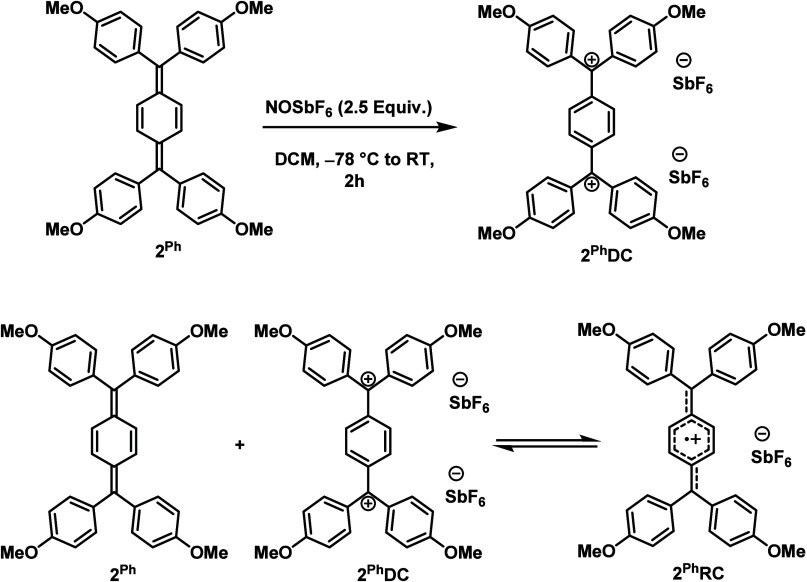 Figure 10
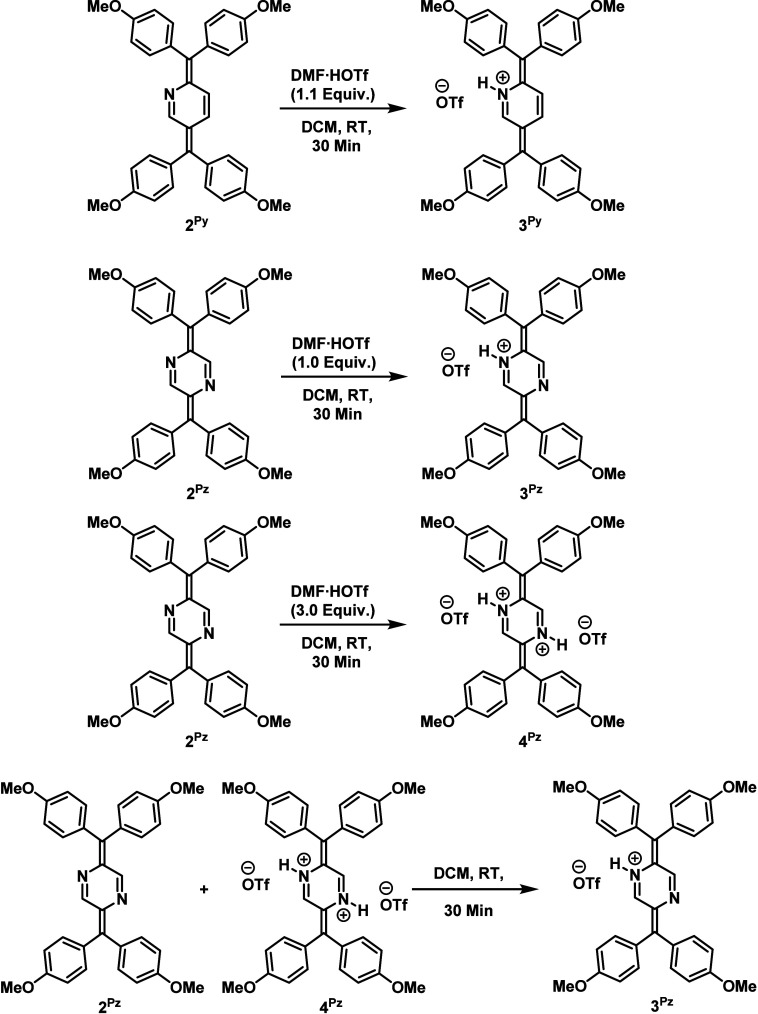 Figure 11
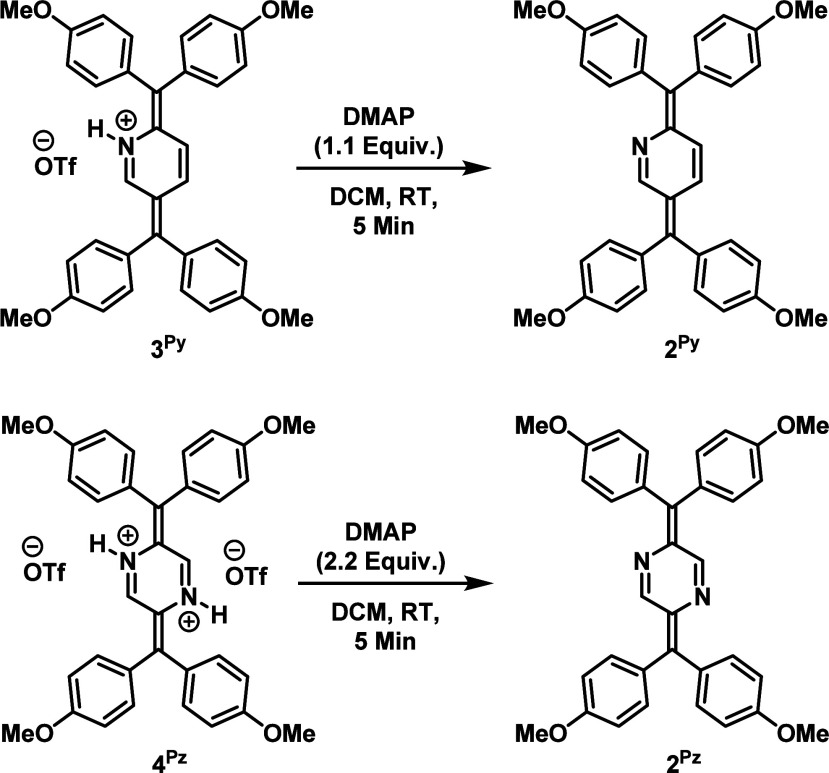 Figure 12
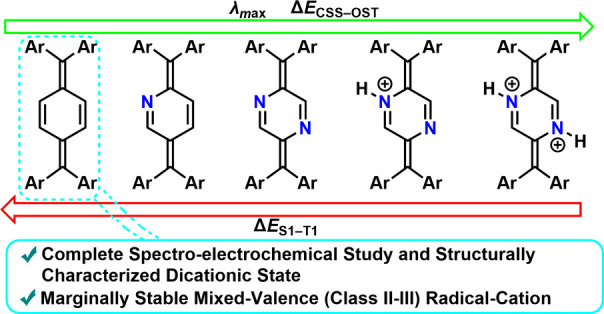 Figure 13
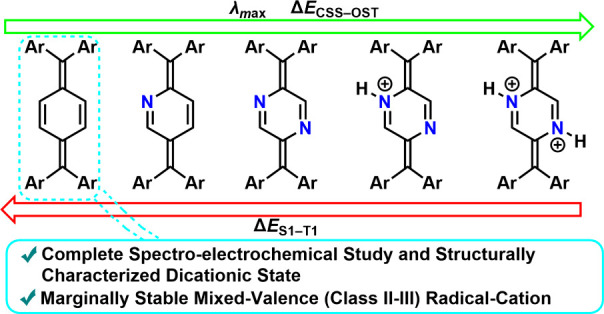 Figure 14
 Figure 15
 Figure 16
 Figure 17
 Figure 18
Peer Reviews
No public reviews on file for this paper yet. If you reviewed it on a platform where reviews are public (OpenReview, ICLR, NeurIPS, ICML), you can paste yours below so the community can read it here.
Videos
No videos yet. Explain this paper in a talk, walkthrough, or lecture? Add one.
Taxonomy
TopicsSynthesis and Properties of Aromatic Compounds · Radical Photochemical Reactions · Magnetism in coordination complexes