Left-Handed Helices in DNA Nanotechnology
Sangeetha Selvam, Johnsi Mathivanan, Arun Richard Chandrasekaran

TL;DR
This paper explores the use of left-handed DNA helices in building nanoscale structures and their potential impact on DNA nanotechnology.
Contribution
The paper highlights the use of left-handed DNA helices, such as Z-DNA and L-DNA, in DNA nanotechnology and their unique structural properties.
Findings
Left-handed helices like Z-DNA and L-DNA can be used in DNA nanotechnology.
Structures with global left-handed helicity but right-handed DNA units are also feasible.
Left-handed helices offer new design possibilities for nanostructures.
Abstract
DNA nanotechnology involves the use of DNA as a material to build nanoscale shapes and structures. This strategy typically uses the conventional right-handed B-form DNA for nanoscale construction. In some cases, alternate nucleic acid structures, such as those that form left-handed helices, are used in the design and assembly of nanostructures. Creation of left-handed helices for nanostructures uses Z-DNA, a left-handed structure, or L-DNA strands that result in the formation of a left-handed duplex. In addition, structures that have a global left-handed helicity but underlying right-handed B-DNA units have also been created. This perspective discusses the left-hand helices used in DNA nanotechnology, their applications, and their future impact.
Click any figure to enlarge with its caption.
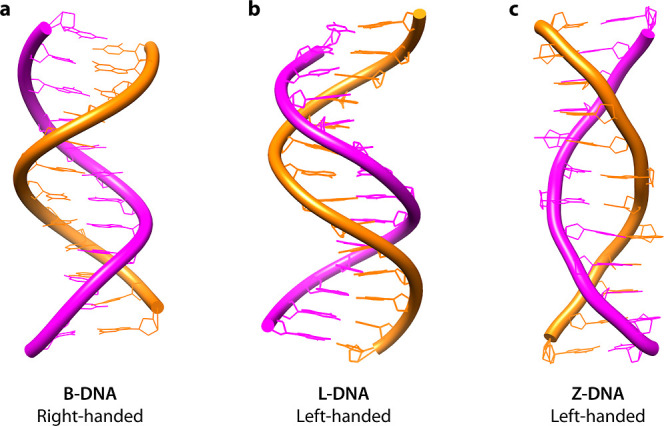 Figure 1
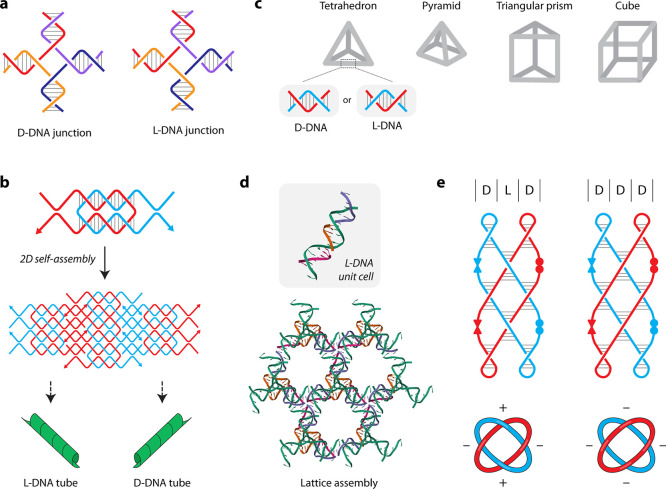 Figure 2
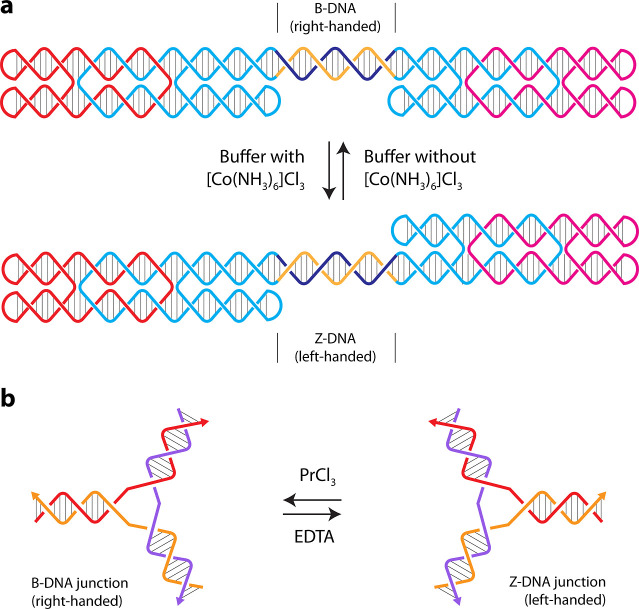 Figure 3
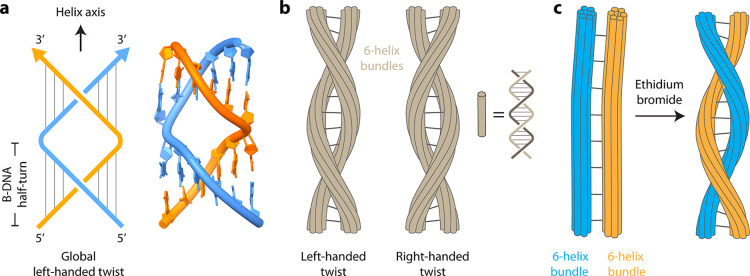 Figure 4
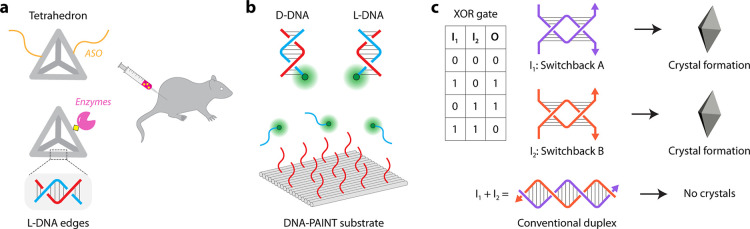 Figure 5
 Figure 6
 Figure 7
Peer Reviews
No public reviews on file for this paper yet. If you reviewed it on a platform where reviews are public (OpenReview, ICLR, NeurIPS, ICML), you can paste yours below so the community can read it here.
Videos
No videos yet. Explain this paper in a talk, walkthrough, or lecture? Add one.
Taxonomy
TopicsAdvanced biosensing and bioanalysis techniques · DNA and Nucleic Acid Chemistry · DNA and Biological Computing