Equivalent efficacy of left versus right hemisphere accelerated intermittent theta burst stimulation for major depressive disorder
Davin K. Quinn, Joel Upston, Thomas R. Jones, Tessa A. Olmstead, Justine Yang, Samuel Reyes, Samuel MacDonald, Adam Littleton, Alexander Win, Dorothy H. Bowers-Wu, Jordan G. Lee, Pearl Huynh, Robert T. DeBurlo, Alyssa Velasco, Ali Nakip, Elizabeth R. Richardson, Justin R. Davis

TL;DR
Stimulating either the left or right side of the brain with a specific type of stimulation reduces depression symptoms equally, but affects brain networks differently.
Contribution
Demonstrates equivalent clinical efficacy of left and right hemisphere accelerated iTBS for depression in older adults.
Findings
Depression, anxiety, and anhedonia symptoms improved similarly with left or right DLPFC aiTBS.
Right DLPFC aiTBS caused significant connectivity changes between brain networks, unlike left DLPFC aiTBS.
Symptom improvement was maintained in patients switched to contralateral stimulation if initial progress was insufficient.
Abstract
Intermittent theta burst stimulation (iTBS) to the dorsolateral prefrontal cortex (DLPFC) for major depression has been FDA-approved in the United States since 2018. Accelerated iTBS (aiTBS) protocols of multiple treatments per day have shown promising response and remission rates for major depression, especially when combined with connectivity-guided targeting. Brain networks associated with emotion regulation demonstrate significant changes in connectivity after effective iTBS. However, these findings have been confined to treatment of the left DLPFC, despite literature suggesting equivalent outcomes with right side stimulation. To date there has not been a direct comparison of clinical outcomes and connectivity changes between left and right DLPFC aiTBS for depression. Forty-four patients aged 50–79 with chronic major depressive disorder underwent open-label accelerated fMRI-guided…
Genes, proteins, chemicals, diseases, species, mutations and cell lines named across the full text — each resolved to its canonical identifier and authoritative record.
Click any figure to enlarge with its caption.
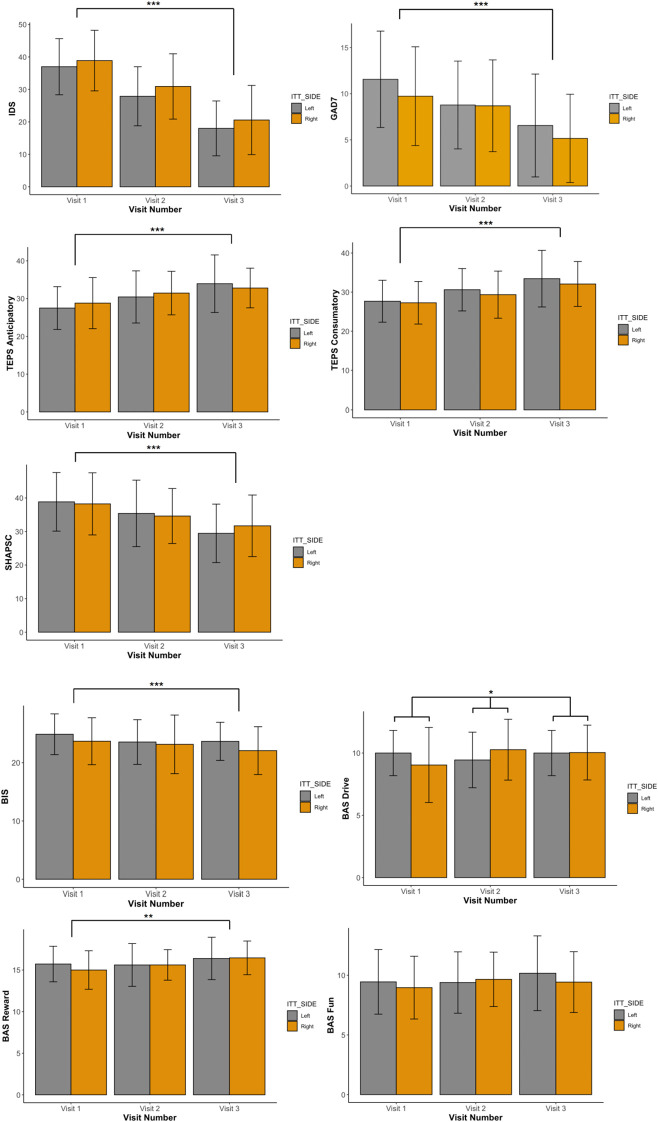 Figure 1
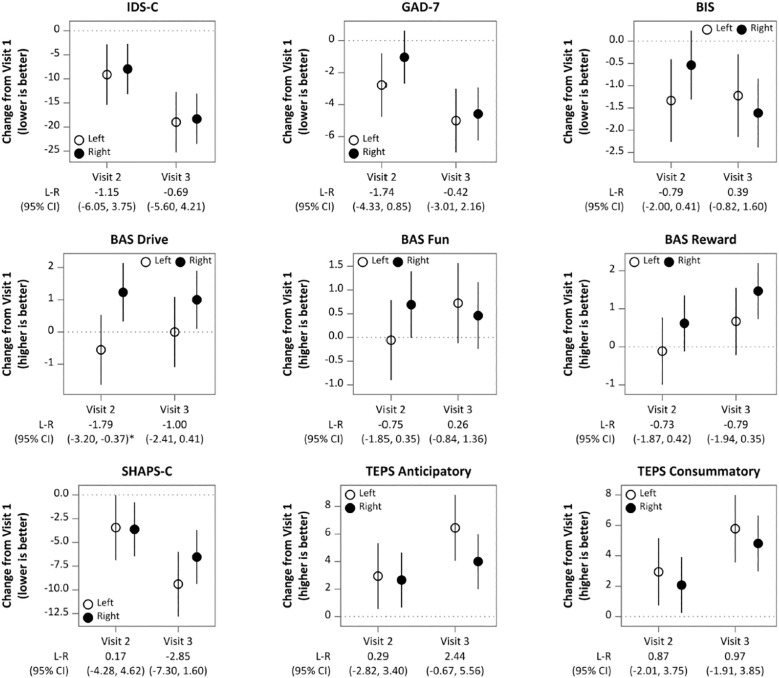 Figure 2
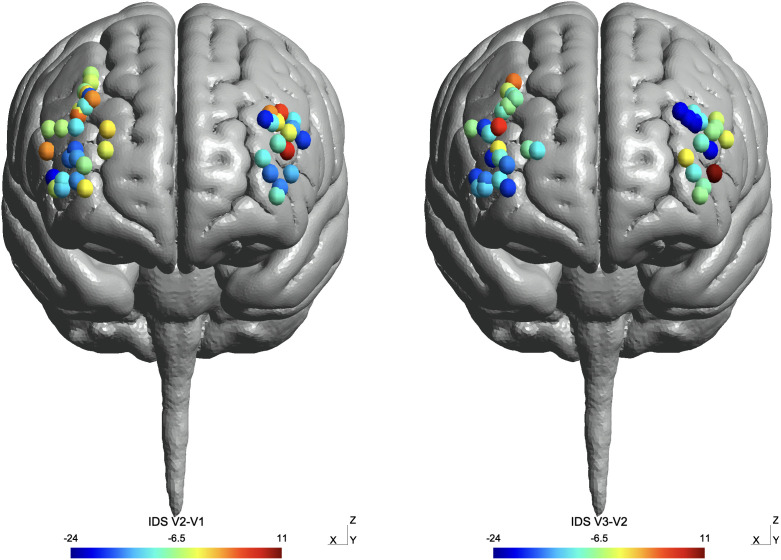 Figure 3
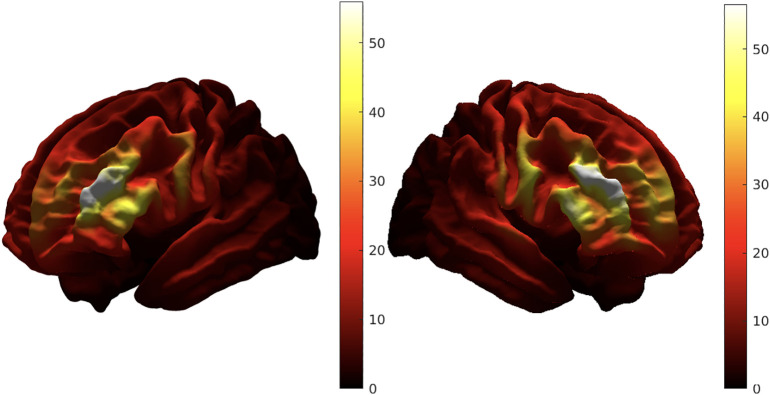 Figure 4
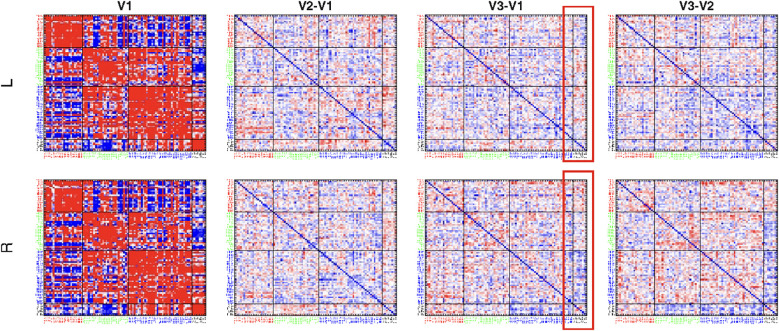 Figure 5
Peer Reviews
No public reviews on file for this paper yet. If you reviewed it on a platform where reviews are public (OpenReview, ICLR, NeurIPS, ICML), you can paste yours below so the community can read it here.
Videos
No videos yet. Explain this paper in a talk, walkthrough, or lecture? Add one.
Taxonomy
TopicsTranscranial Magnetic Stimulation Studies · Functional Brain Connectivity Studies · Pain Management and Treatment