Ultrasound-Responsive Nanoparticles Enable Hydrophobic Antibiotic Release and Deep Penetration for Biofilm Treatment
Maria L. Odyniec, Daniel J. Bell, Benjamin M. Gallant, Rininta Firdaus, Grace Ball, Liam Hughes, Rebecca Oxtoby, Benjamin J. Hewitt, Christopher M. Williams, Asier R. Muguruza, Tim W. Overton, Hung-Ji Tsai, Yu-Lung Chiu, Dominik J. Kubicki, A. Damien Walmsley, Sarah A. Kuehne

TL;DR
This study introduces ultrasound-responsive nanoparticles that effectively deliver hydrophobic antibiotics deep into bacterial biofilms, significantly improving treatment outcomes.
Contribution
The novel design of nonporous silica nanoparticles enables controlled antibiotic release and deep biofilm penetration triggered by low-frequency ultrasound.
Findings
Nonporous silica nanoparticles combined with ultrasound achieved 90% biofilm eradication compared to 20% without ultrasound.
Confocal imaging showed ultrasound enabled nanoparticle penetration through all biofilm layers.
Scanning electron microscopy confirmed nanoparticle presence and ultrasound's dual role in penetration and drug release.
Abstract
Localized delivery of antibiotics is a promising strategy that leads to transformative treatment pathways of bacterial biofilms and increases the effectiveness of their administration in contrast to traditional delivery methods requiring high antibiotic doses. Hydrophobic antibiotics have poor activity against bacterial biofilms due to their limited penetration and are particularly challenging to deliver. Nanoparticles are ideal drug delivery agents to achieve spatially controlled delivery, but commonly their designs are either soft or porous, which limits temporally triggered release, with the result that most of the antibiotic does not reach deeply into the biofilm. In this study, we present designs of nonporous silica nanoparticles that encapsulate a lipophilic antibiotic, rifampicin, with noncovalent interactions and enable controlled release triggered by Low-Frequency Ultrasound…
Genes, proteins, chemicals, diseases, species, mutations and cell lines named across the full text — each resolved to its canonical identifier and authoritative record.
Click any figure to enlarge with its caption.
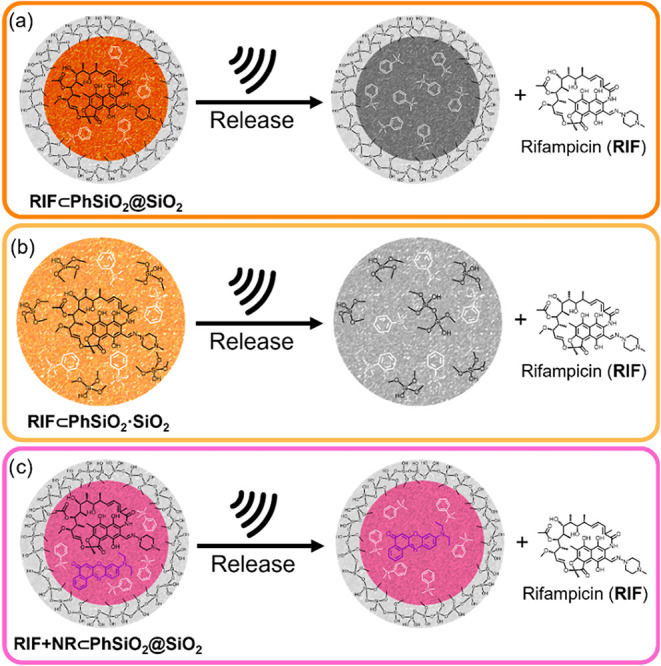 Figure 1
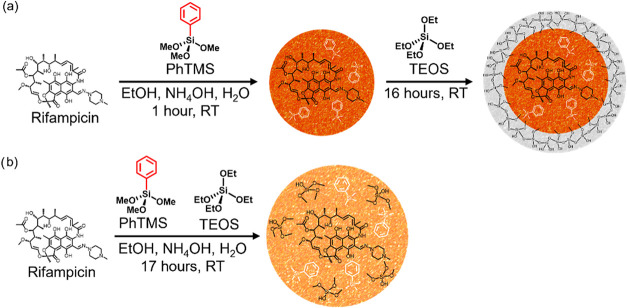 Figure 2
 Figure 3
 Figure 4
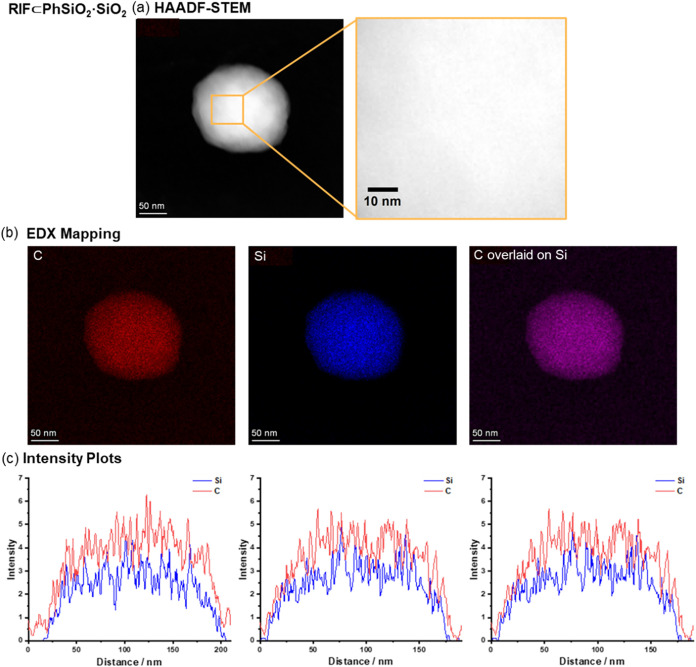 Figure 5
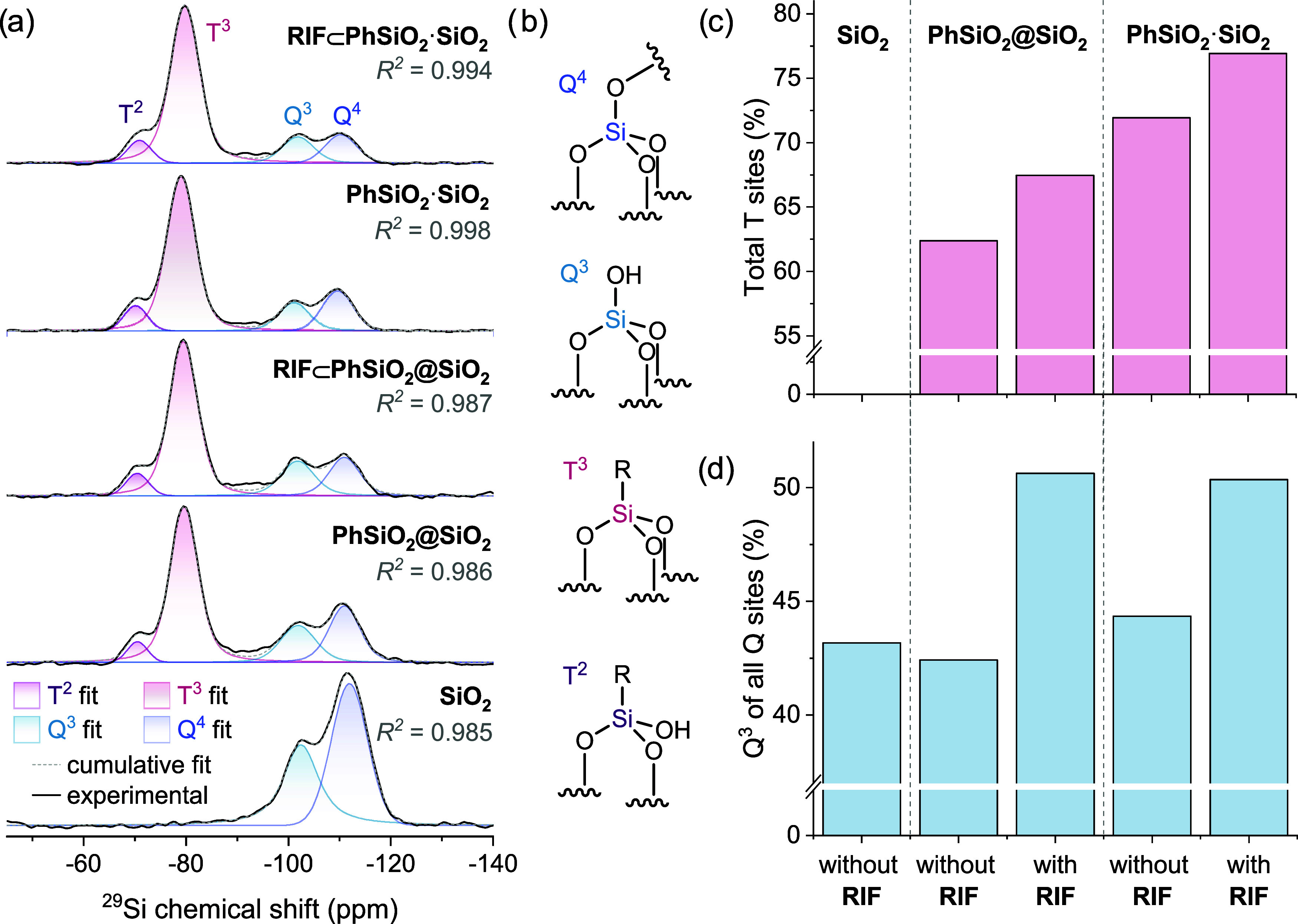 Figure 6
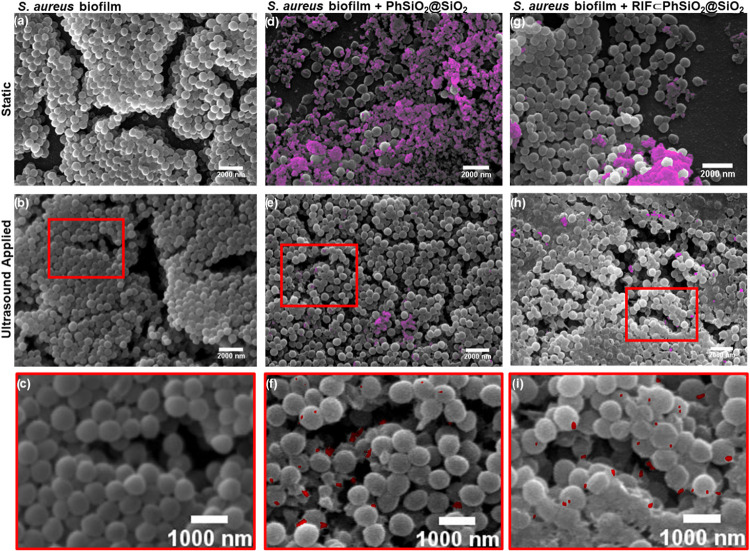 Figure 7
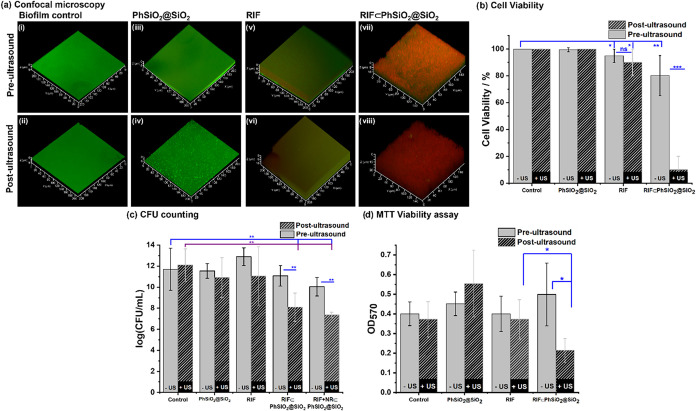 Figure 8
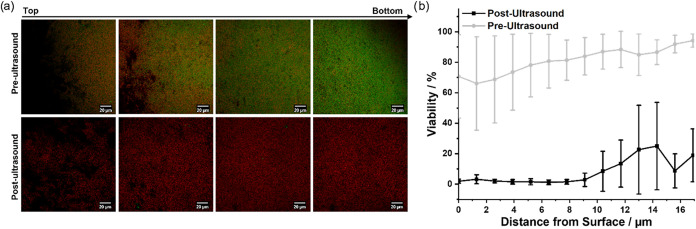 Figure 9
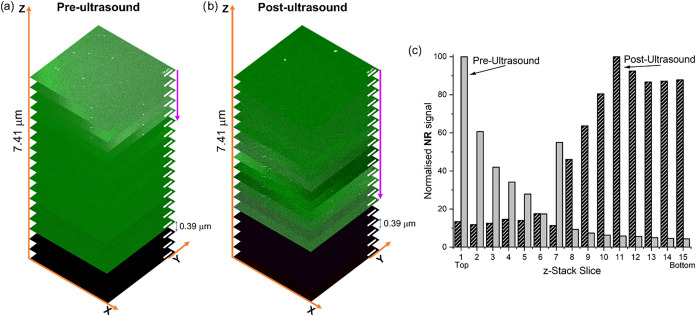 Figure 10
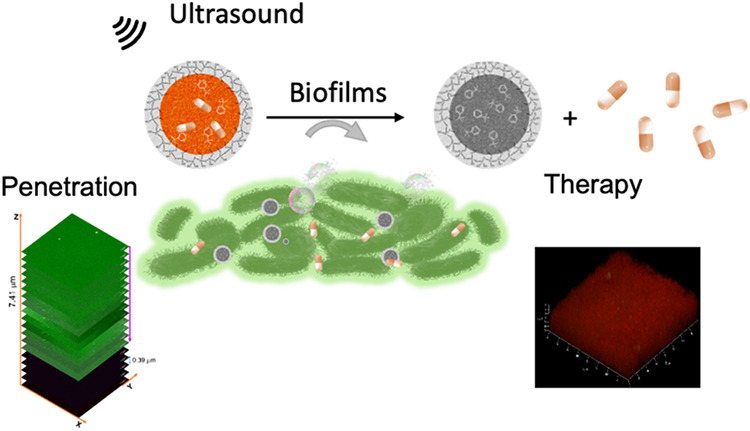 Figure 11
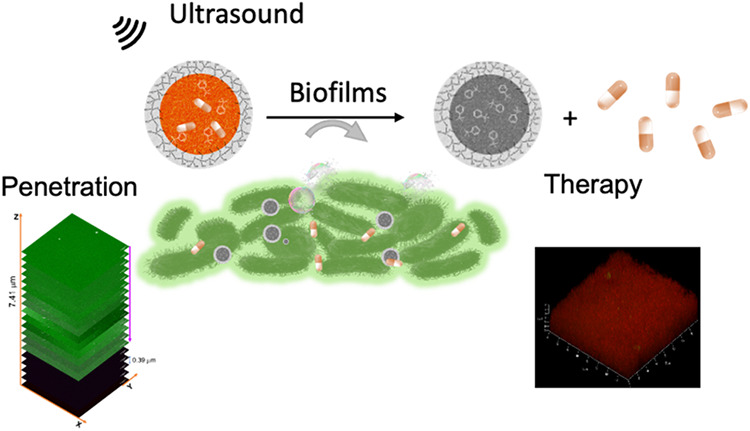 Figure 12
Peer Reviews
No public reviews on file for this paper yet. If you reviewed it on a platform where reviews are public (OpenReview, ICLR, NeurIPS, ICML), you can paste yours below so the community can read it here.
Videos
No videos yet. Explain this paper in a talk, walkthrough, or lecture? Add one.
Taxonomy
TopicsUltrasound and Cavitation Phenomena · Adsorption and biosorption for pollutant removal · Bacterial biofilms and quorum sensing