A Total Synthesis of (−)-Strychnine Using Photoredox Catalysis
Rainer Wiechert, Leander Geske, Jasmin Hammes, Dogus Tuncer, Till Opatz

TL;DR
The paper presents a new and efficient way to synthesize strychnine using light-driven chemical reactions.
Contribution
A novel synthesis route for strychnine using photoredox catalysis and renewable starting materials.
Findings
A photoredox-catalytic C2-cyanomethylation step was successfully used.
A condensation-electrocyclization cascade efficiently linked two fragments.
Photochemical decarboxylation provided access to strychnofluorine.
Abstract
A concise route toward (−)-strychnine is presented. Key steps include the photoredox-catalytic C2-cyanomethylation of Boc-l-Trp-OMe and a condensation-electrocyclization cascade linking two fragments convergently to obtain an advanced intermediate. A photochemical decarboxylation provided convenient access to strychnofluorine, which could be transformed through the Wieland–Gumlich aldehyde to strychnine. All building blocks can be traced back to renewable sources.
Genes, proteins, chemicals, diseases, species, mutations and cell lines named across the full text — each resolved to its canonical identifier and authoritative record.
Click any figure to enlarge with its caption.
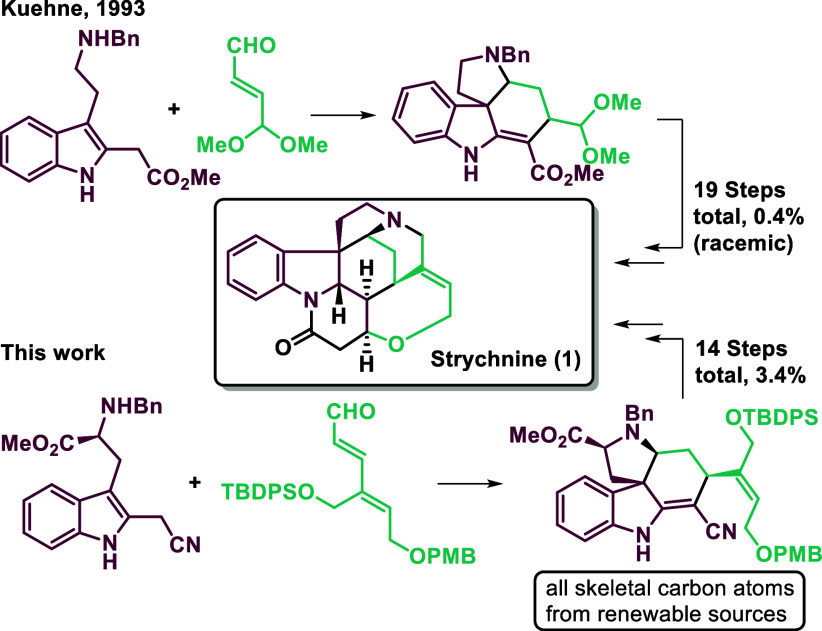 Figure 1
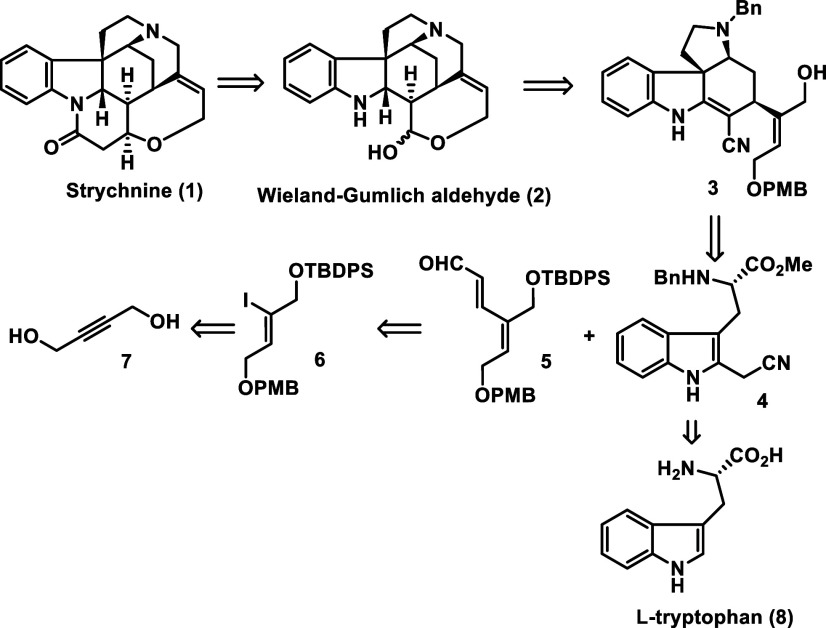 Figure 2
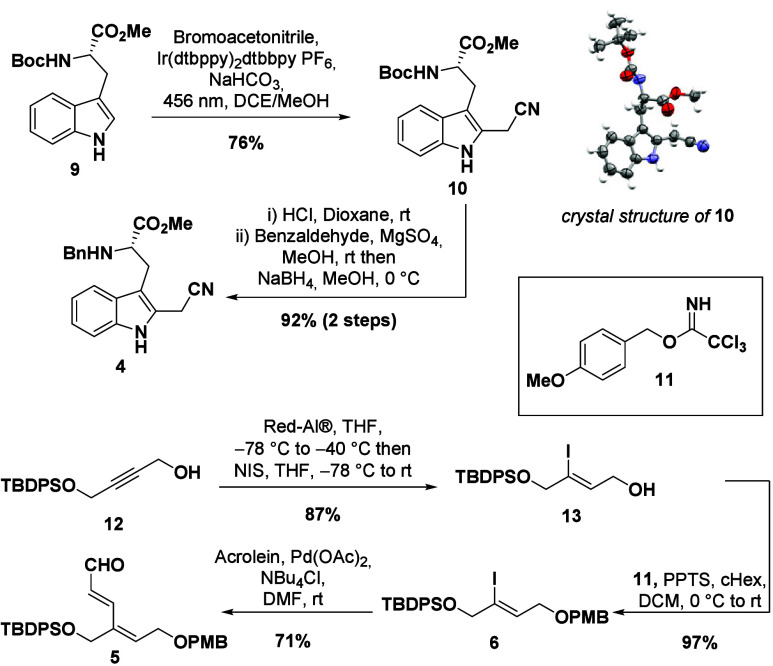 Figure 3
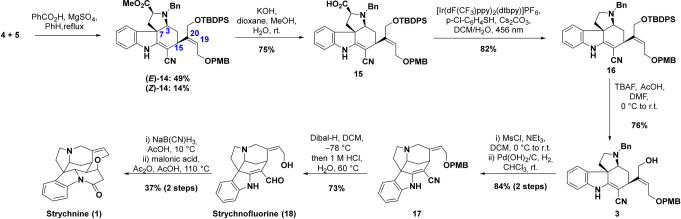 Figure 4
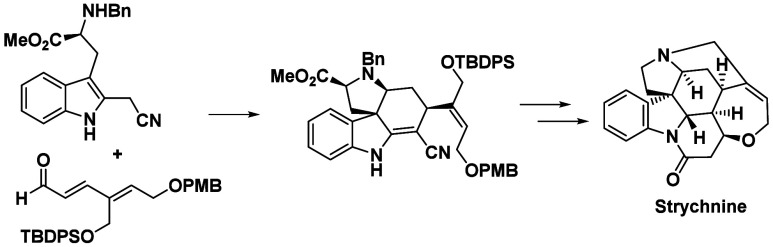 Figure 5
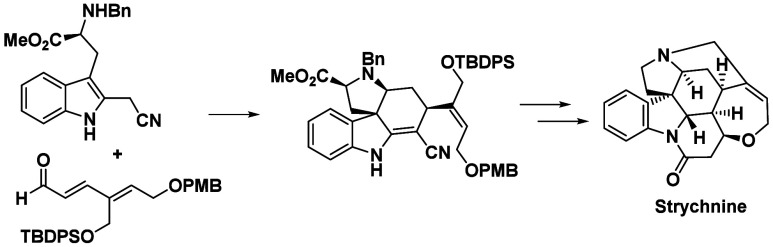 Figure 6
Peer Reviews
No public reviews on file for this paper yet. If you reviewed it on a platform where reviews are public (OpenReview, ICLR, NeurIPS, ICML), you can paste yours below so the community can read it here.
Videos
No videos yet. Explain this paper in a talk, walkthrough, or lecture? Add one.
Taxonomy
TopicsPlant-based Medicinal Research · Advanced Synthetic Organic Chemistry · Radical Photochemical Reactions