Residue-Specific Modulation of Aggregation-Associated Interactions by Spermine in Tau, α‑Synuclein, and Aβ40
Debasis Saha, Xun Sun, Wangfei Yang, Jinghui Luo, Wenwei Zheng

TL;DR
This study shows how spermine affects the structure of three disease-related proteins, either promoting or preventing harmful clumping depending on specific protein regions.
Contribution
The paper reveals residue-specific effects of spermine on IDP aggregation, challenging the assumption that net charge alone determines its influence.
Findings
Spermine disrupts aggregation in Tau by binding near the fourth microtubule-binding repeat.
Spermine enhances α-synuclein aggregation by redistributing contacts in the C-terminal region.
Spermine promotes Aβ40 fibril formation by neutralizing acidic residues near position 22–24.
Abstract
Preventing neurodegenerative diseases associated with intrinsically disordered proteins (IDPs) remains a major challenge due to the lack of a detailed, sequence-level picture of disease-relevant structure formation and the influence of cellular factors that modulate these transitions. Here, we probe spermine (Spm), a +4 charged polyamine abundant in cells, to determine how it reshapes the conformational ensembles and fibril-associated contact propensities of three disease-linked IDPs: the K18 domain of Tau, α-synuclein (αS), and amyloid-β40 (Aβ40). Using long all-atom molecular dynamics simulations across a range of Spm concentrations, we quantify residue-level changes in intrachain contacts relative to native contacts observed in fibrils and corroborate computational predictions with ThT fluorescence assays for Tau constructs. Spm acts in a sequence- and region-specific manner, not…
Genes, proteins, chemicals, diseases, species, mutations and cell lines named across the full text — each resolved to its canonical identifier and authoritative record.
Click any figure to enlarge with its caption.
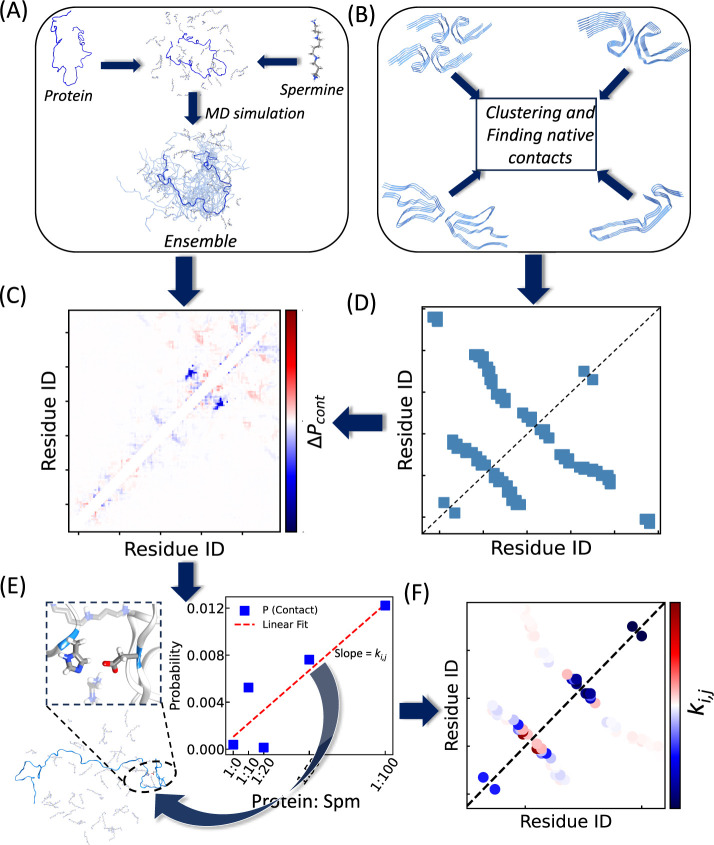 Figure 1
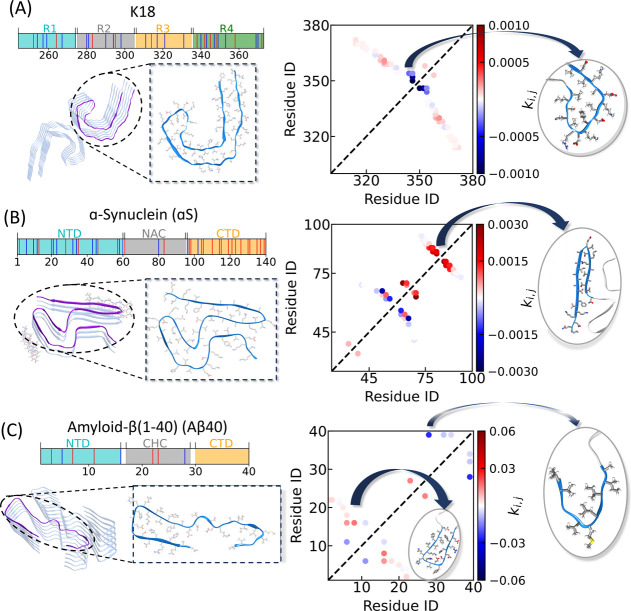 Figure 2
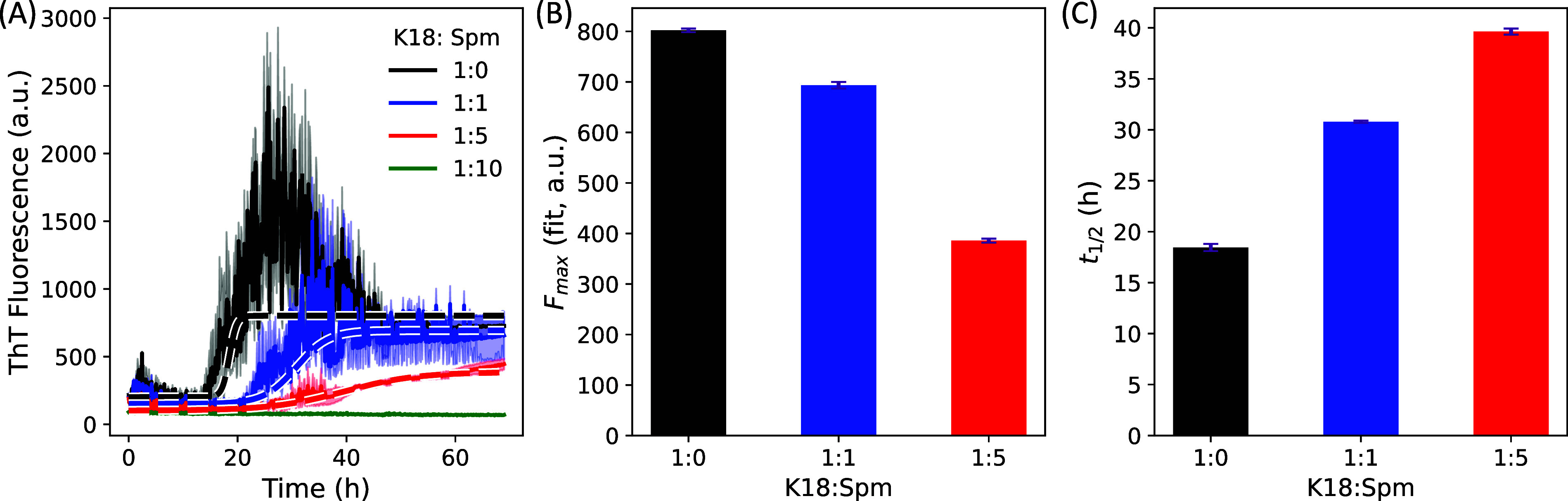 Figure 3
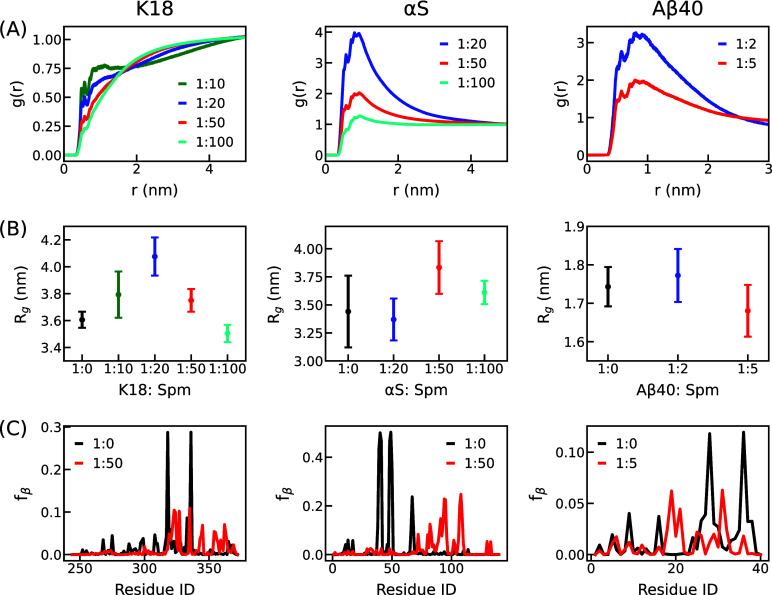 Figure 4
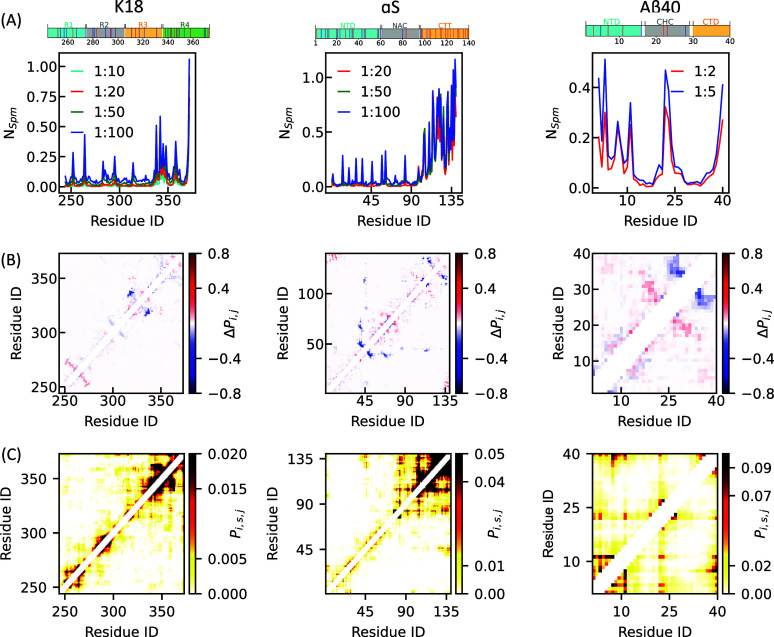 Figure 5
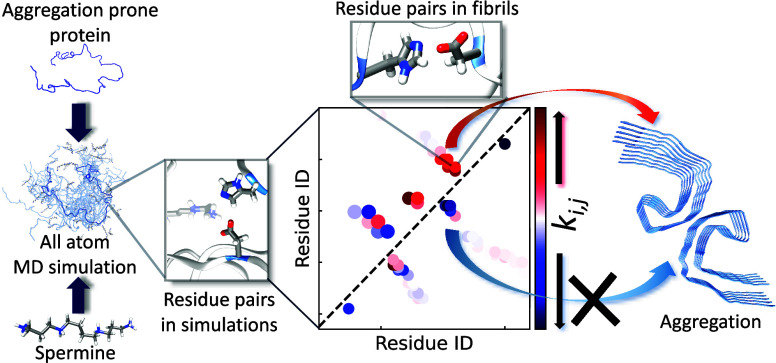 Figure 6
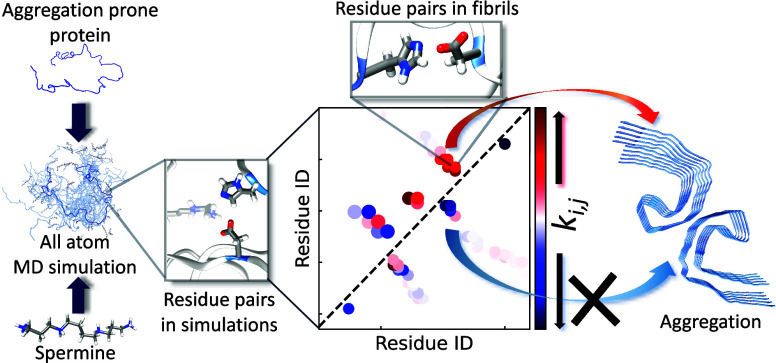 Figure 7
 Figure 8
Peer Reviews
No public reviews on file for this paper yet. If you reviewed it on a platform where reviews are public (OpenReview, ICLR, NeurIPS, ICML), you can paste yours below so the community can read it here.
Videos
No videos yet. Explain this paper in a talk, walkthrough, or lecture? Add one.
Taxonomy
TopicsAlzheimer's disease research and treatments · Parkinson's Disease Mechanisms and Treatments · Genetic Neurodegenerative Diseases