Fusobacterium nucleatum Lipopolysaccharides Disrupt the Interaction of Siglec‑7 to Sialoglycans Expressed on Mammalian Cells
Manasik Gumah Adam Ali, Venetia Psomiadou, Marta Tiemblo Martín, Dimitra Lamprinaki, Ferran Nieto-Fabregat, Klaudia Sobczak, Matthew S. Macauley, June Ereño-Orbea, Cristina De Castro, Alba Silipo, Thomas J. Boltje, Nathalie Juge

TL;DR
This study shows how LPS from Fusobacterium nucleatum disrupts Siglec-7 binding to sialic acids, offering new insights for colon cancer treatments.
Contribution
Fn LPS is identified as a novel ligand for Siglec-7, with carbohydrate-mediated disruption of immune interactions.
Findings
Fn LPS binds to Siglec-7 through the carbohydrate-binding V-set domain.
Fn LPS disrupts Siglec-7 binding to sialic acids on mammalian cells in a carbohydrate-dependent manner.
These findings suggest glycomimetic strategies could help limit colon cancer progression.
Abstract
Sialic acid-binding immunoglobulin-like lectins (Siglecs) are key immune receptors that bind to cell surface sialic acids, leading to modulation of the immune system. Interrupting the Siglec–sialoglycan binding in cancer has been proposed as a potential antitumor response strategy. We previously showed that colon-cancer-associated Fusobacterium nucleatum (Fn) ATCC 51191 interacts with Siglec-7 via its lipopolysaccharide (LPS), revealing Fn LPS as a new ligand for Siglec-7. Here, we used glycoengineered cells carrying sialic acid variants to investigate the capacity of LPS isolated from F. nucleatum strains to disrupt the interaction between sialic acid expressed on mammalian cells and Siglec-7. We first showed that LPS extracted from Fusobacterium polymorphum ATCC 10953, F. nucleatum ssp. animalis ATCC 51191, and F. nucleatum ssp. nucleatum ATCC 25586 strains bound to recombinant…
Genes, proteins, chemicals, diseases, species, mutations and cell lines named across the full text — each resolved to its canonical identifier and authoritative record.
Click any figure to enlarge with its caption.
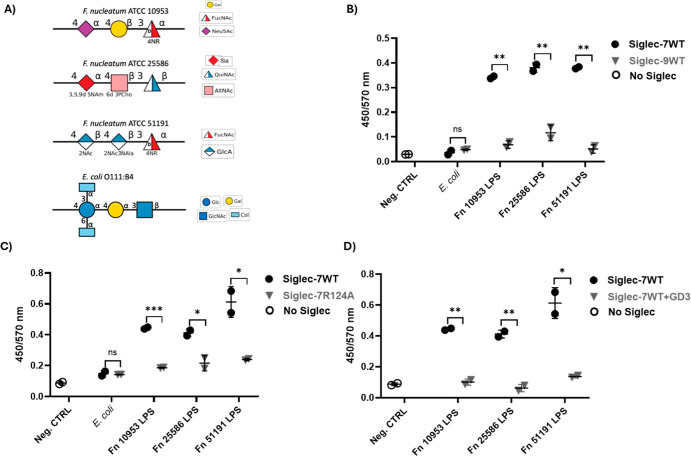 Figure 1
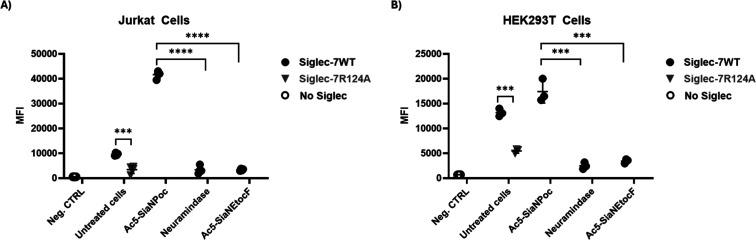 Figure 2
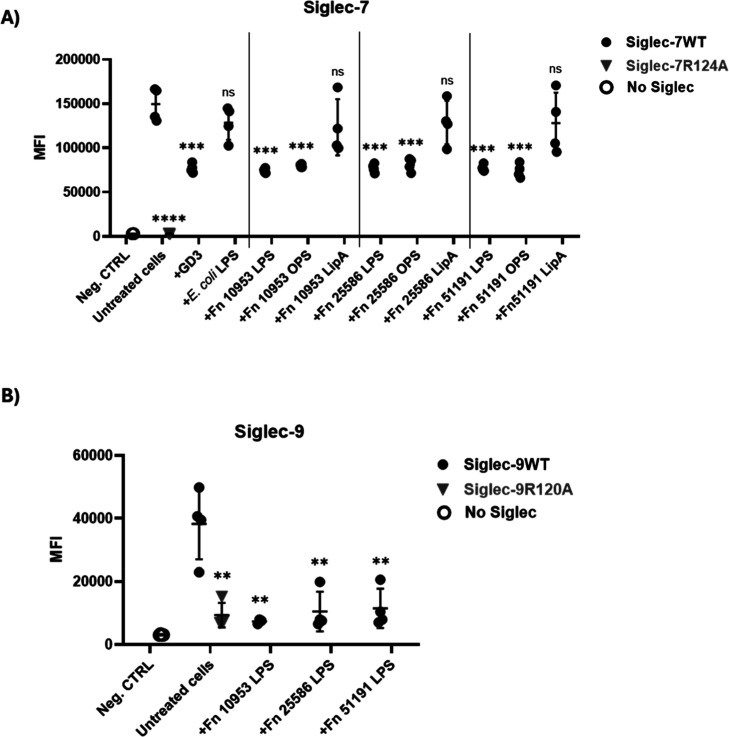 Figure 3
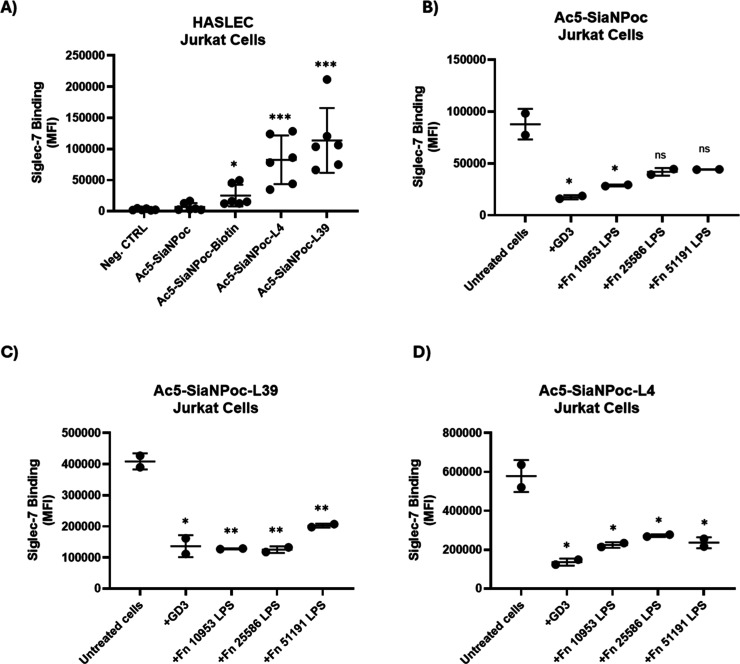 Figure 4
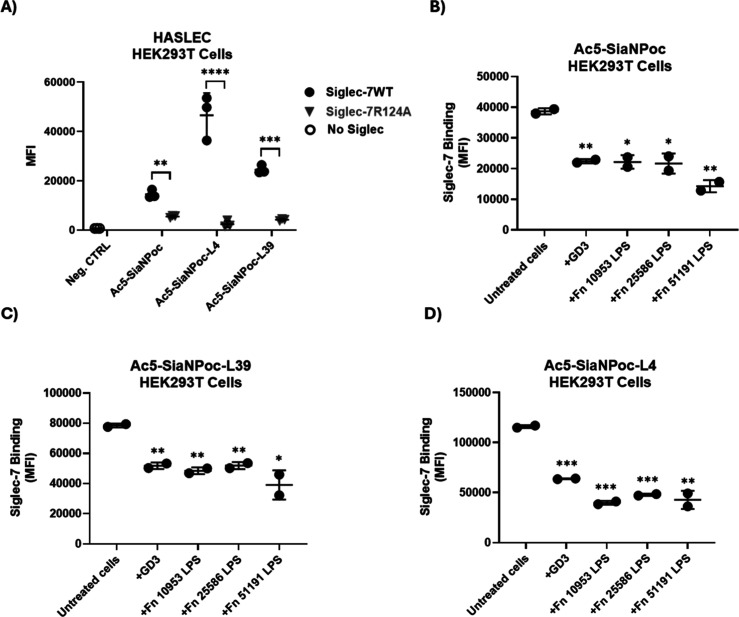 Figure 5
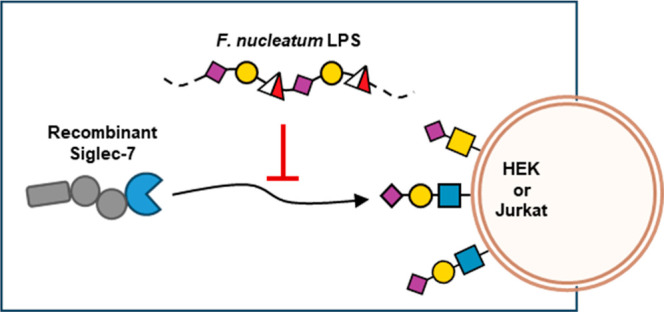 Figure 6
 Figure 7
Peer Reviews
No public reviews on file for this paper yet. If you reviewed it on a platform where reviews are public (OpenReview, ICLR, NeurIPS, ICML), you can paste yours below so the community can read it here.
Videos
No videos yet. Explain this paper in a talk, walkthrough, or lecture? Add one.
Taxonomy
TopicsGlycosylation and Glycoproteins Research · Cancer Research and Treatments · Gut microbiota and health