Characterization of the Immunoglobulin Domain of C. elegans SISS-1/EGF
Jesse G Jones, Cheryl Van Buskirk

TL;DR
This study explores how the immunoglobulin domain of a protein in C. elegans affects sleep and signaling.
Contribution
The study confirms the essential role of the SISS-1 IgD in sleep and tests its impact when added to another EGF.
Findings
The IgD of SISS-1 is critical for its sleep-promoting function in C. elegans.
Adding the SISS-1 IgD to LIN-3 alters its signaling properties.
Ectopic expression of SISS-1 supports the functional importance of its IgD.
Abstract
Immunoglobulin-like domains (IgDs) are widespread among cell surface proteins and participate in cell adhesion and signaling. A subset of Epidermal Growth Factor (EGF) family ligands possess an IgD, with variable impact on EGF signaling. C. elegans SISS-1 is an Ig-EGF released by damaged cells that promotes sleep, and its IgD is necessary for this endogenous function. Here we use SISS-1 ectopic expression to further investigate IgD function, and our data confirm the critical role of the SISS-1 IgD in sleep. We also examine the impact of adding the SISS-1 IgD to another C. elegans EGF, LIN-3 .
Genes, proteins, chemicals, diseases, species, mutations and cell lines named across the full text — each resolved to its canonical identifier and authoritative record.
Click any figure to enlarge with its caption.
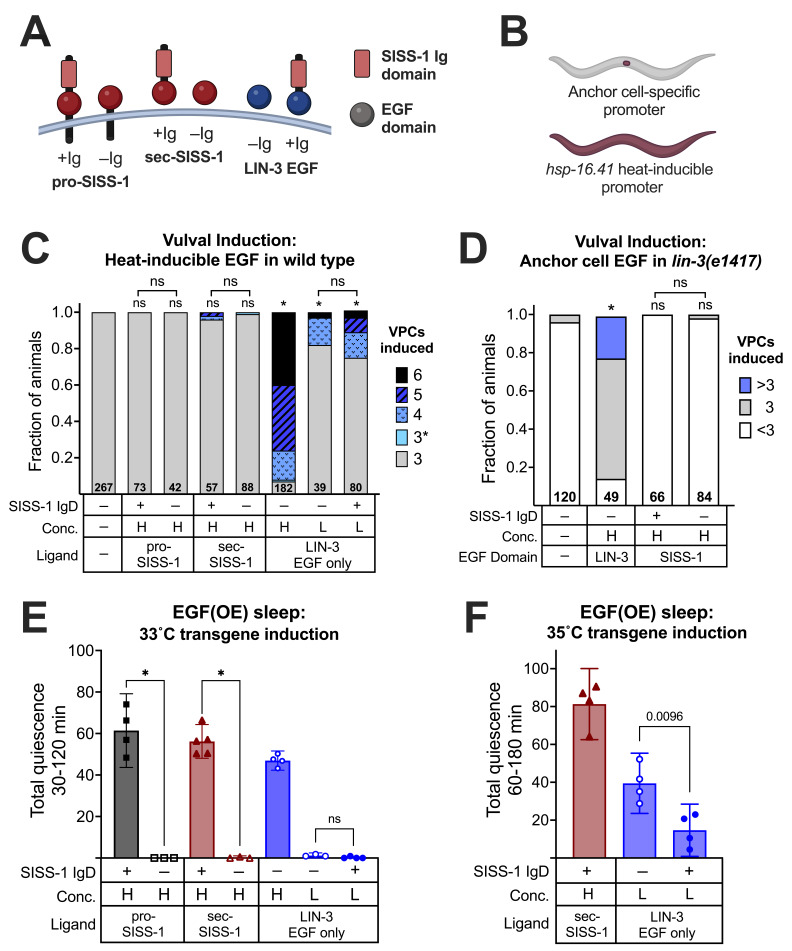 Figure 1
Peer Reviews
No public reviews on file for this paper yet. If you reviewed it on a platform where reviews are public (OpenReview, ICLR, NeurIPS, ICML), you can paste yours below so the community can read it here.
Videos
No videos yet. Explain this paper in a talk, walkthrough, or lecture? Add one.
Taxonomy
TopicsGenetics, Aging, and Longevity in Model Organisms · Circadian rhythm and melatonin · Cellular transport and secretion