Integration of morphologic and genetic data clarifies the evolution and species boundaries within a Nychiodes Lederer, 1853 species complex (Lepidoptera, Geometridae)
Dominic Wanke, Simon Müller, Sajad Noori, Ricardo J. Pereira, Hossein Rajaei, Pasi Sihvonen, Kyung Min Lee

TL;DR
This study uses a combination of physical traits, genetics, and ecology to clarify species boundaries in a complex group of moths.
Contribution
The integration of morphological, genetic, and ecological data resolves taxonomic uncertainties in a closely related moth species complex.
Findings
Ecological niche differentiation was found between morphologically and genetically distinct taxa in Iranian mountain ranges.
Multispecies coalescent analyses supported species distinction based on female genitalia characters despite conflicting gene tree results.
The study demonstrates the importance of combining multiple data types to clarify species boundaries in complex evolutionary contexts.
Abstract
Young species radiations are valuable from an evolutionary perspective, as they can reveal traits involved in species formation, but they are challenging for taxonomists due to discordance among independent lines of evidence. The present study integrates morphologic, ecological, and phylogenetic data to resolve delimitation of species within the geometrid moth genus Nychiodes Lederer, 1853, with a particular focus on the closely related species pair N. divergaria Staudinger, 1892 and N. subvirida Brandt, 1938. Our findings revealed significant ecological niche differentiation across the Iranian mountain ranges between the range of taxa distinguished by morphology and DNA barcodes. While individual gene trees from mtCOI and nuclear loci showed conflicting results regarding species boundaries, our multispecies coalescent analyses support the distinction of taxa with different female…
Genes, proteins, chemicals, diseases, species, mutations and cell lines named across the full text — each resolved to its canonical identifier and authoritative record.
Click any figure to enlarge with its caption.
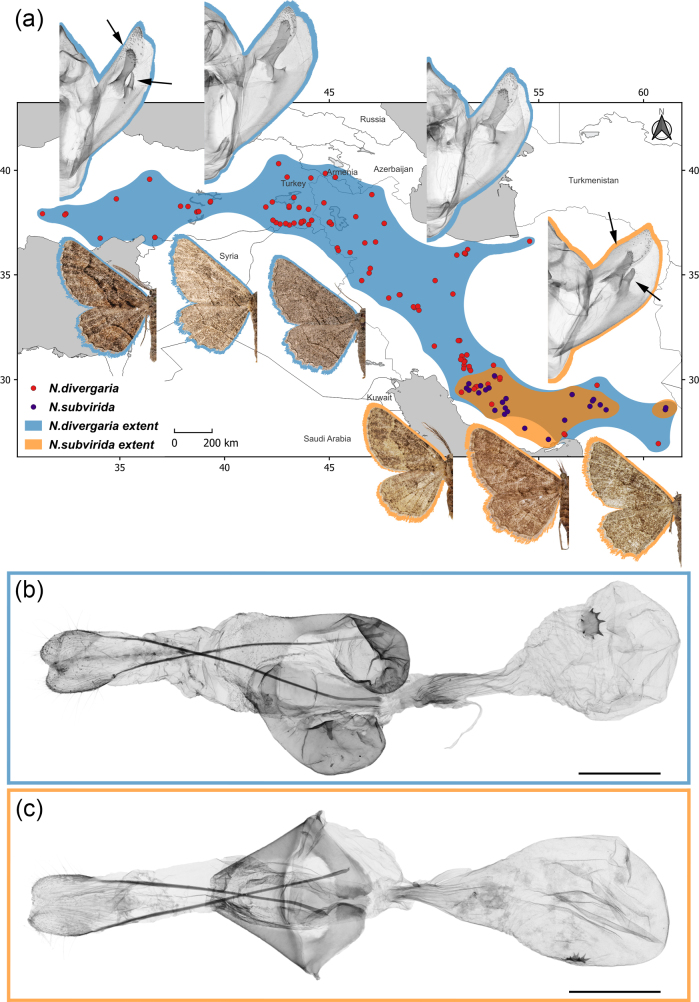 Figure 1
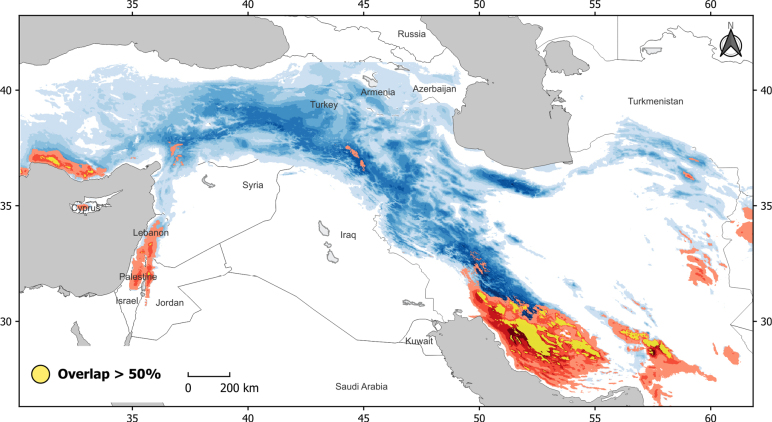 Figure 2
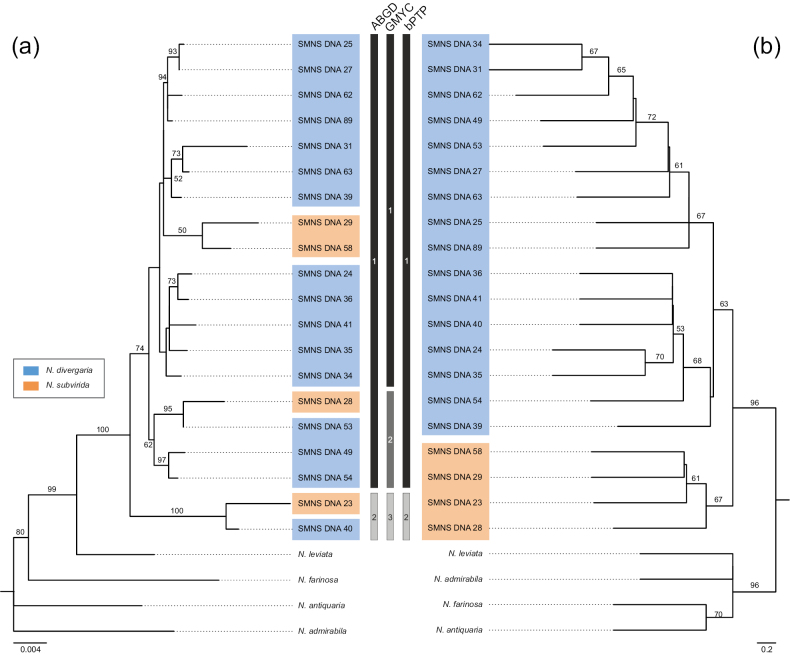 Figure 3
Peer Reviews
No public reviews on file for this paper yet. If you reviewed it on a platform where reviews are public (OpenReview, ICLR, NeurIPS, ICML), you can paste yours below so the community can read it here.
Videos
No videos yet. Explain this paper in a talk, walkthrough, or lecture? Add one.
Taxonomy
TopicsLepidoptera: Biology and Taxonomy · Insect Pheromone Research and Control · Biological Control of Invasive Species