Clinical Outcomes of Ruxolitinib Treatment in Patients With IPSS Intermediate‐1‐Risk Myelofibrosis: Interim Analysis From an Italian, Prospective Study (ROMEI)
Paola Guglielmelli, Massimo Breccia, Francesco Mendicino, Maurizio Martelli, Nicola Di Renzo, Giuseppe A. Palumbo, Monica Crugnola, Maurizio Musso, Silvia Sibilla, Paolo Sportoletti, Elisabetta Abruzzese, Stefana Impera, Alessandra Malato, Sergio Siragusa, Carmine Selleri

TL;DR
This study shows that ruxolitinib improves symptoms and quality of life in patients with intermediate-1 risk myelofibrosis, with manageable side effects.
Contribution
The study provides new clinical evidence on ruxolitinib's efficacy and safety in a specific myelofibrosis risk group.
Findings
42.1% and 43.9% of patients showed symptom improvement at 24 and 48 weeks.
Quality of life scores improved after treatment, with manageable safety and acceptable toxicity.
Abstract
Ruxolitinib (RUX), a JAK1/2 inhibitor, demonstrated treatment benefits for myelofibrosis (MF) in intermediate‐1 (Int‐1)–risk patients with a significant disease burden; however, the evidence is scarce. This interim analysis investigated the efficacy and safety of ruxolitinib in patients with Int‐1‐risk MF. ROMEI, a multicenter, observational, prospective study, enrolled 508 adult patients with MF receiving ruxolitinib according to approved indications. The present interim analysis was focused on 107 eligible patients in the Int‐1‐risk group. Primary endpoints included changes in symptoms response and health‐related quality of life scores. Secondary endpoints included spleen response evaluation, overall survival, and safety including dosing pattern and dose interruptions. Among the 107 Int‐1‐risk patients with a median age of 63 years, 65.5% were highly symptomatic (total symptoms score:…
Genes, proteins, chemicals, diseases, species, mutations and cell lines named across the full text — each resolved to its canonical identifier and authoritative record.
Click any figure to enlarge with its caption.
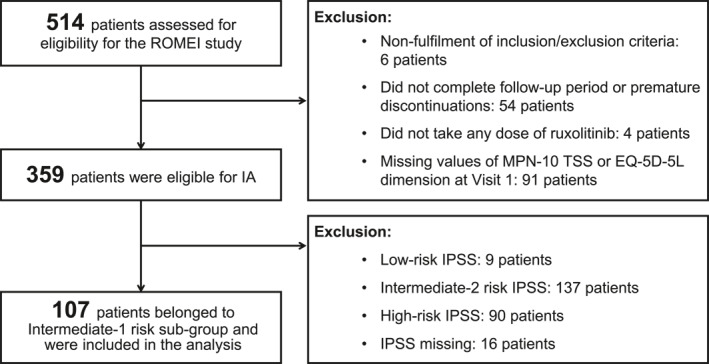 Figure 1
 Figure 2
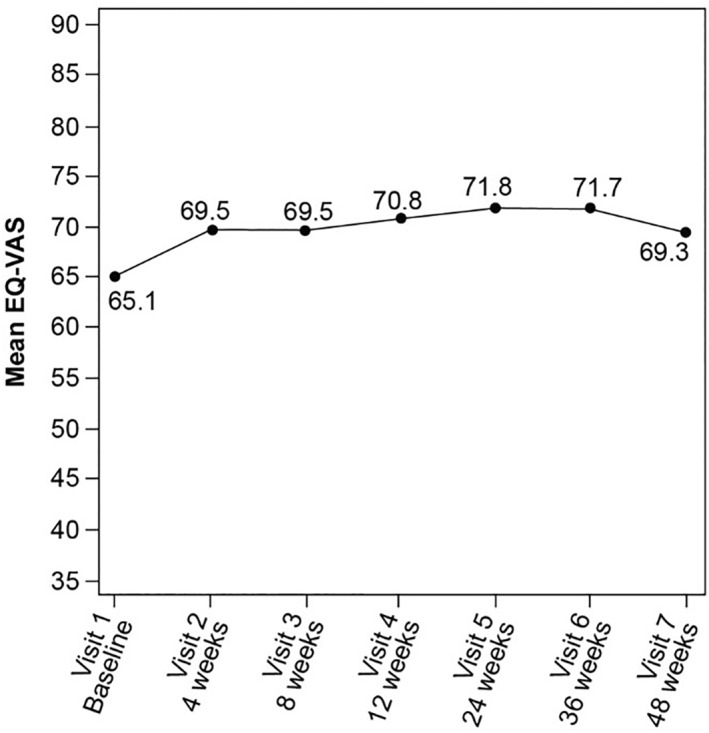 Figure 3
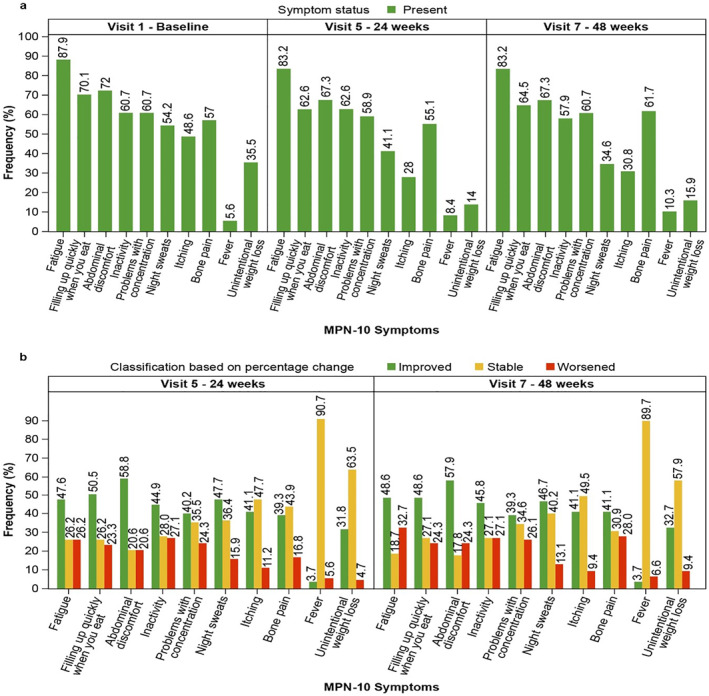 Figure 4
Peer Reviews
No public reviews on file for this paper yet. If you reviewed it on a platform where reviews are public (OpenReview, ICLR, NeurIPS, ICML), you can paste yours below so the community can read it here.
Videos
No videos yet. Explain this paper in a talk, walkthrough, or lecture? Add one.
Taxonomy
TopicsMyeloproliferative Neoplasms: Diagnosis and Treatment · Platelet Disorders and Treatments · Vasculitis and related conditions