Artificial Intelligence Models for Predicting Triage in Emergency Departments: Seven-Month Retrospective Comparative Study of Natural Language Processing, Large Language Model, and Joint Embedding Predictive Architectures
Edouard Lansiaux, Ramy Azzouz, Emmanuel Chazard, Amélie Vromant, Eric Wiel

TL;DR
This study compares AI models for predicting emergency department triage and finds that a large language model performs best but has limitations due to overfitting and data bias.
Contribution
The study introduces and evaluates three novel AI architectures for triage prediction, highlighting the potential and challenges of LLMs in clinical settings.
Findings
URGENTIAPARSE, an LLM-based model, outperformed other AI models and nurse triage in predicting triage levels.
The model showed high F1-score and AUC-ROC but suffered from overfitting and poor validation performance.
The study highlights the need for external validation and bias mitigation before clinical deployment.
Abstract
Triage errors in emergency departments (EDs), including undertriage and overtriage, pose significant risks to patient safety and resource allocation. With increasing patient volumes and staffing challenges, artificial intelligence (AI) integration into triage protocols has gained attention as a potential solution. This study aims to develop and compare 3 AI models—natural language processing (NLP), large language model (LLM), and Joint Embedding Predictive Architecture (JEPA)—for predicting triage outcomes according to the French Emergency Nurses Classification in Hospital (FRENCH) scale and to assess their performance relative to nurse triage and clinical expert consensus. We conducted a retrospective analysis of prospectively collected data from adult patients triaged at Roger Salengro Hospital ED (Lille, France) over 7 months (June-December 2024). Three AI models were developed:…
Genes, proteins, chemicals, diseases, species, mutations and cell lines named across the full text — each resolved to its canonical identifier and authoritative record.
Click any figure to enlarge with its caption.
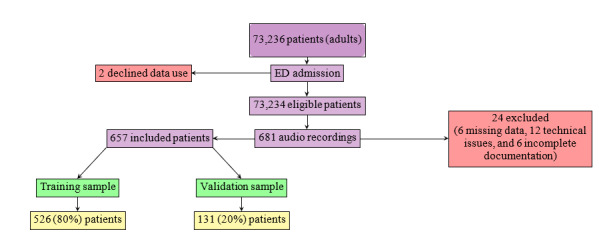 Figure 1
 Figure 10
 Figure 11
 Figure 12
 Figure 13
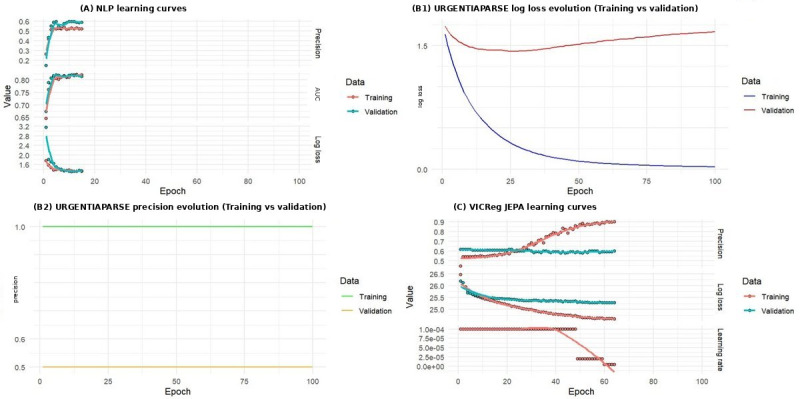 Figure 2
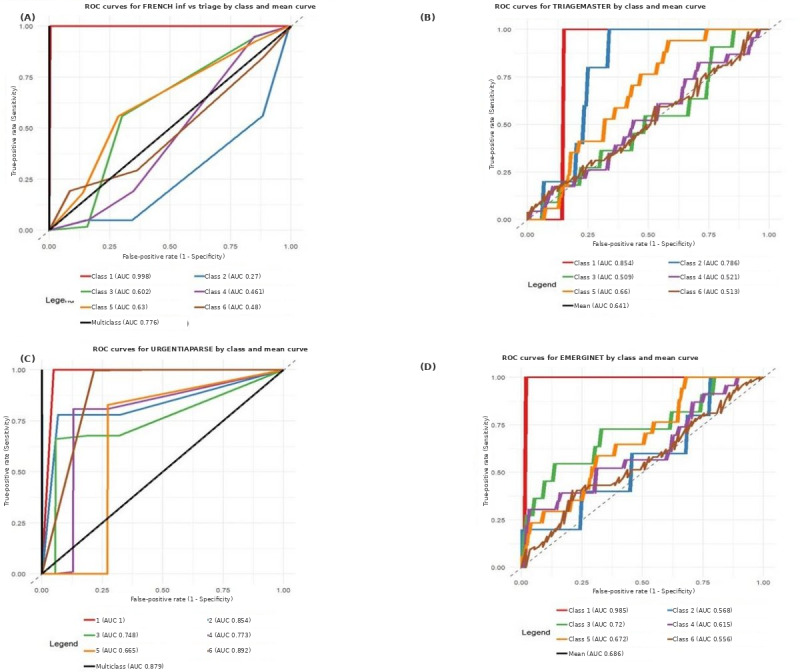 Figure 3
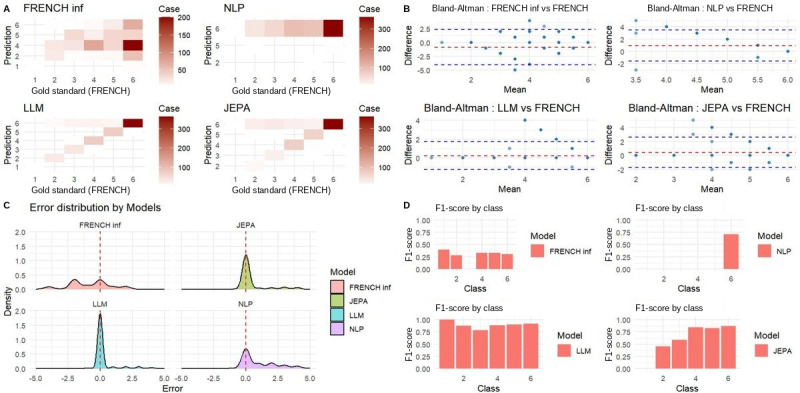 Figure 4
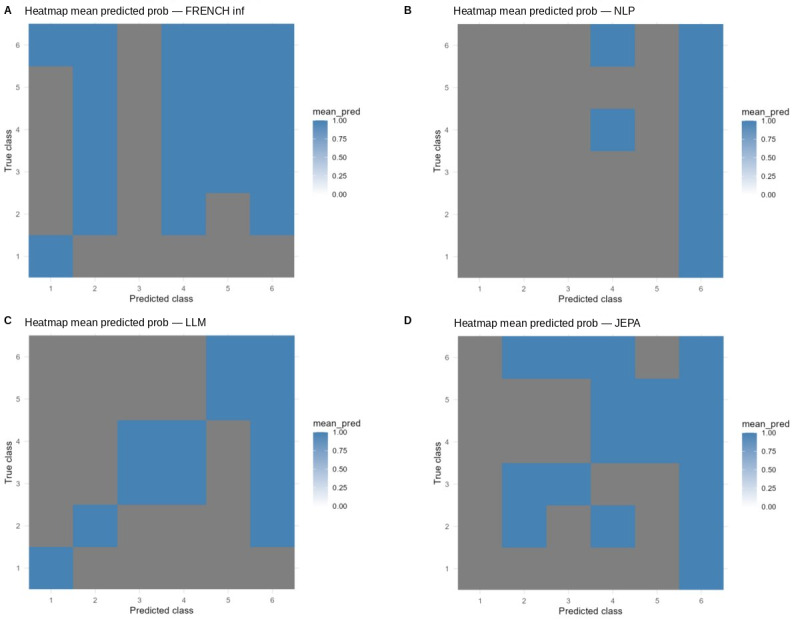 Figure 5
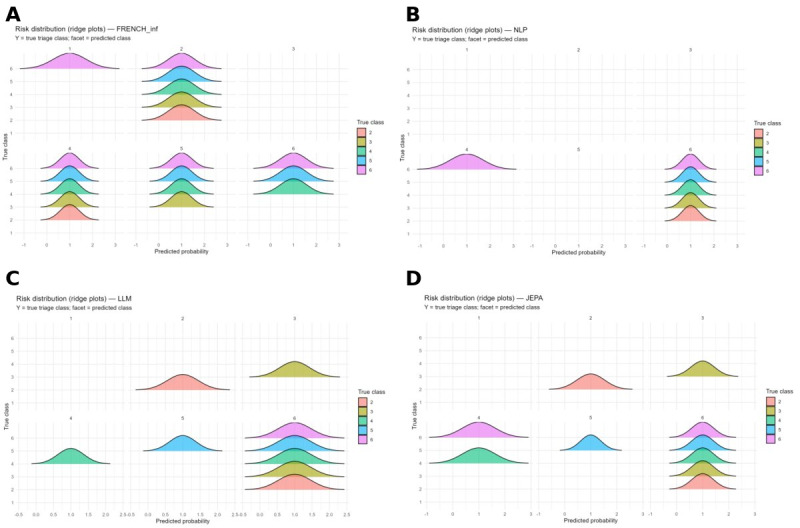 Figure 6
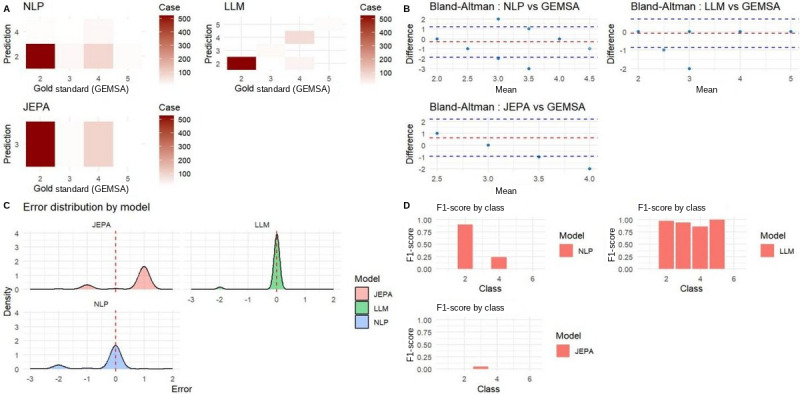 Figure 7
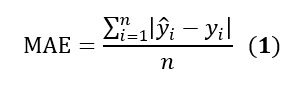 Figure 8
 Figure 9
Peer Reviews
No public reviews on file for this paper yet. If you reviewed it on a platform where reviews are public (OpenReview, ICLR, NeurIPS, ICML), you can paste yours below so the community can read it here.
Videos
No videos yet. Explain this paper in a talk, walkthrough, or lecture? Add one.
Taxonomy
TopicsData Visualization and Analytics · Morphological variations and asymmetry · Data Analysis with R