Comparative analysis of maze complexity: implications for adult hippocampal neurogenesis
Mohamed Hesham Khalil

TL;DR
This study compares the complexity of different rodent mazes to understand their impact on adult hippocampal neurogenesis and suggests a tool for future research.
Contribution
The study introduces the Architectural Spatial Complexity Index (A-SCI) to quantify maze complexity for neurogenesis research.
Findings
The A-SCI effectively differentiates environmental enrichment from standard housing.
Maze-based and object-based enrichment show no significant difference in complexity.
Rodent maze architectures vary significantly in spatial complexity.
Abstract
Adult hippocampal neurogenesis persists throughout the lifespan in mammals and can be enhanced by environmental enrichment, including spatial complexity. Whilst maze-based enrichment has been suggested to increase neurogenesis in rodents, the relative complexity of different maze architectures has not been quantified, limiting translational research to human environments. This study used the Architectural Spatial Complexity Index (A-SCI), a novel tool, to compare spatial complexity across 16 rodent maze configurations, including mazes suggested to increase neurogenesis. Results confirm that the A-SCI significantly differentiates environmental enrichment from standard housing, whilst post-hoc analysis suggests no significant difference between maze-based and object-based enrichment, consistent with previous research reporting almost similar effects on cortical thickness. Comparative…
Genes, proteins, chemicals, diseases, species, mutations and cell lines named across the full text — each resolved to its canonical identifier and authoritative record.
Click any figure to enlarge with its caption.
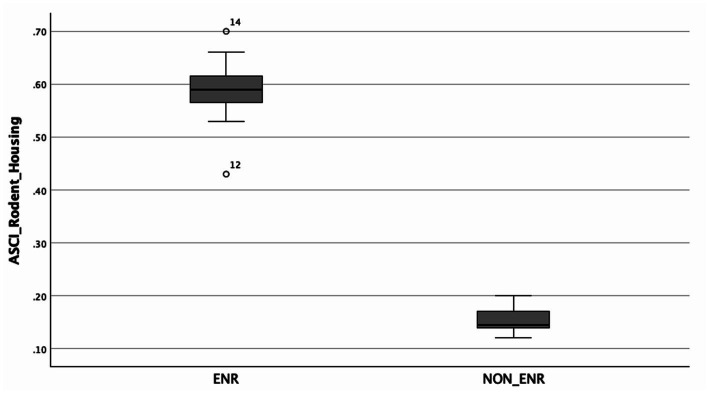 Figure 1
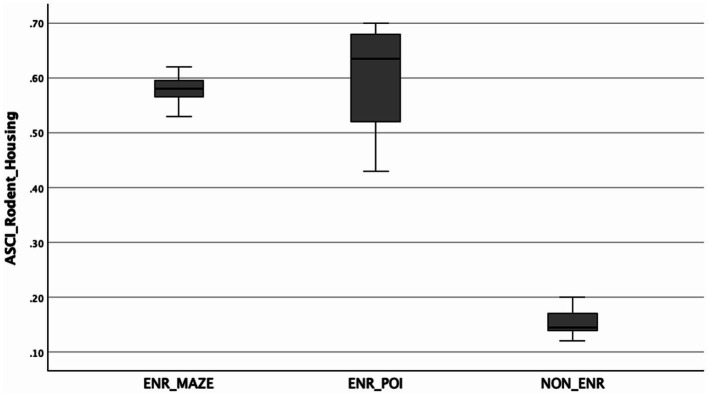 Figure 2
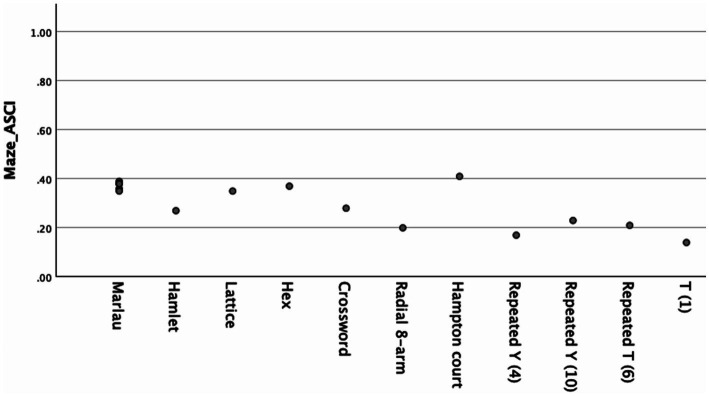 Figure 3
Peer Reviews
No public reviews on file for this paper yet. If you reviewed it on a platform where reviews are public (OpenReview, ICLR, NeurIPS, ICML), you can paste yours below so the community can read it here.
Videos
No videos yet. Explain this paper in a talk, walkthrough, or lecture? Add one.
Taxonomy
TopicsMemory and Neural Mechanisms · Neurogenesis and neuroplasticity mechanisms · Spatial Neglect and Hemispheric Dysfunction