A Water‐Soluble PVA Macrothiol Enables Two‐Photon Microfabrication of Cell‐Interactive Hydrogel Structures at 400 mm s−1
Wanwan Qiu, Margherita Bernero, Muja Emilie Ye, Xianjun Yang, Philipp Fisch, Ralph Müller, Xiao‐Hua Qin

TL;DR
A new water-soluble material allows fast and precise 3D printing of cell-friendly hydrogel structures using laser technology.
Contribution
A PVA-based macromolecular thiol enables efficient two-photon polymerization at low polymer concentrations and high speeds.
Findings
PVASH-based hydrogels show reduced swelling and improved mechanical properties compared to traditional crosslinkers.
Hydrogel structures were printed at 400 mm s−1 with sub-micron precision at 3% polymer concentration.
Biofunctionalized scaffolds supported cell infiltration, adhesion, and osteogenic differentiation.
Abstract
Two‐photon polymerization (2PP) has garnered increasing attention for engineering hydrogels with tailored architectures and controlled cellular responses. However, current 2PP strategies typically rely on (meth)acrylated proteins and inefficient chain‐growth crosslinking mechanisms. Although thiol‐ene photo‐click reactions can enhance 2PP efficiency, commercial water‐soluble thiol crosslinkers (e.g., DTT—dithiothreitol) tend to form intramolecular loops and introduce structural defects due to their short molecular length. As a result, high polymer concentrations (often up to 20%–50%) are required to achieve satisfactory print fidelity. Here, we develop a series of water‐soluble, polyvinyl alcohol macromolecular thiol (PVASH, bearing 10–35 thiol groups) for fast high‐fidelity hydrogel microfabrication via 2PP. A two‐step synthesis yields PVASH with tunable degrees of substitution and…
Genes, proteins, chemicals, diseases, species, mutations and cell lines named across the full text — each resolved to its canonical identifier and authoritative record.
Click any figure to enlarge with its caption.
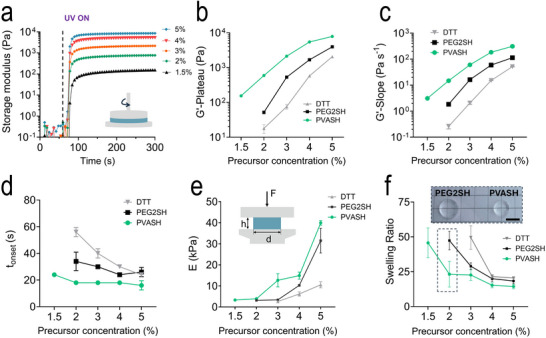 Figure 1
 Figure 2
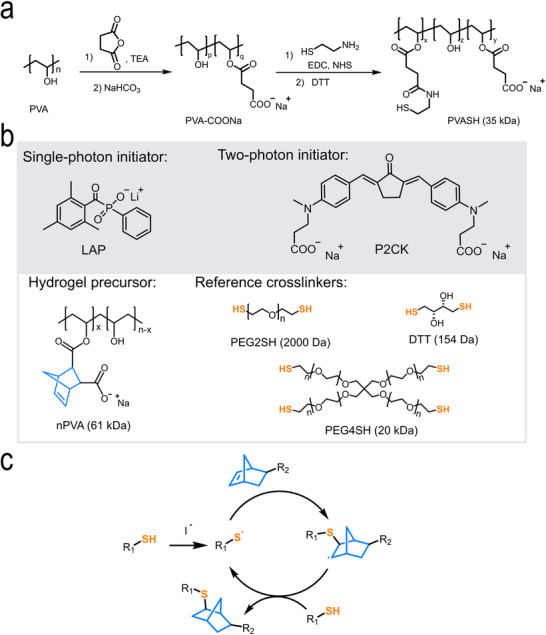 Figure 3
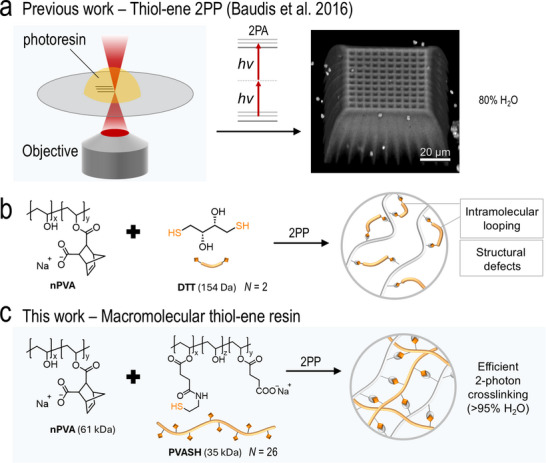 Figure 4
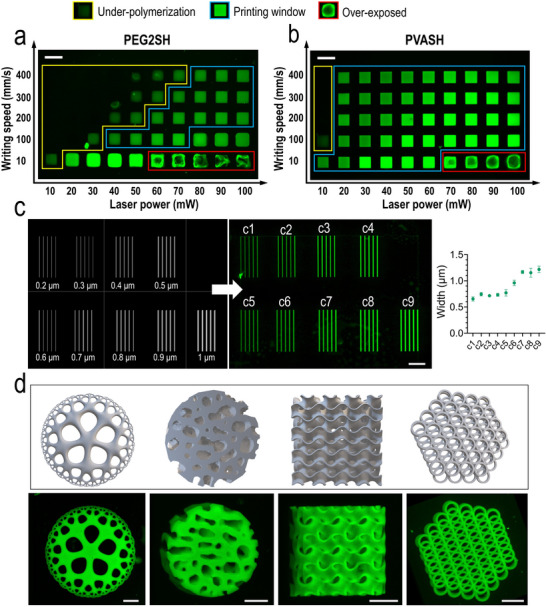 Figure 5
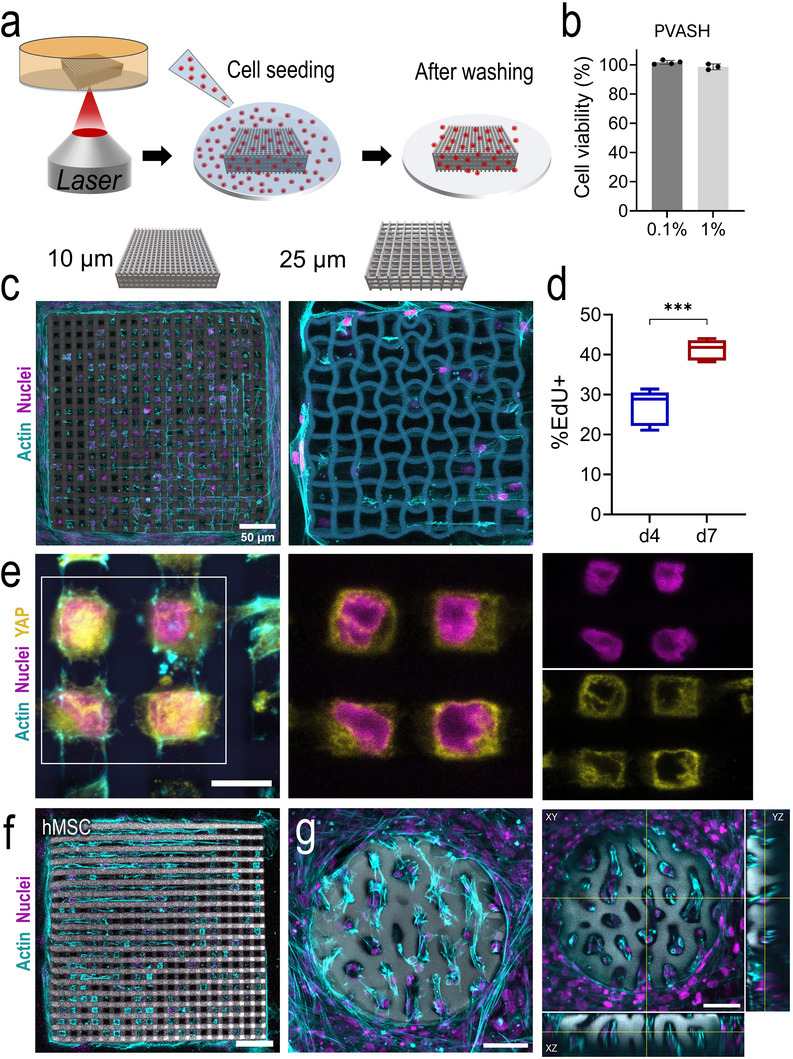 Figure 6
 Figure 7
Peer Reviews
No public reviews on file for this paper yet. If you reviewed it on a platform where reviews are public (OpenReview, ICLR, NeurIPS, ICML), you can paste yours below so the community can read it here.
Videos
No videos yet. Explain this paper in a talk, walkthrough, or lecture? Add one.
Taxonomy
TopicsNonlinear Optical Materials Studies · 3D Printing in Biomedical Research · Advanced Materials and Mechanics