Safety and efficacy of bio-engineered, autologous dermo-epidermal skin grafts in reconstructive surgery: 1-year results of a prospective, randomized, intra-patient controlled, multicenter phase II clinical trial
Frederique M. Kemme, Anouk Pijpe, Matthea M. Stoop, Paul P. M. van Zuijlen, Martin Meuli, Clemens Schiestl, Fabienne Hartmann-Fritsch, Bong-Sung Kim, Kathrin Neuhaus, Jan A. Plock, Daniel Rittirsch, Kathi Mujynya, Ernst Reichmann, Sophie Böttcher-Haberzeth, Melinda Farkas

TL;DR
A new bio-engineered skin graft improved scar quality and skin elasticity better than traditional grafts in a clinical trial.
Contribution
Demonstrated the long-term safety and efficacy of denovoSkin™ in reconstructive surgery for full-thickness skin defects.
Findings
DenovoSkin™ showed significantly better scar quality than STSG at 3 and 12 months.
Elasticity parameters consistently favored denovoSkin™ over traditional grafts.
DenovoSkin™ provided a much higher coverage-to-donor site ratio compared to STSG.
Abstract
Extensive full-thickness defects remain challenging to reconstruct, as various techniques used, such as split-thickness skin grafts, often result in donor site morbidity and functional and cosmetic scar sequelae. This study evaluated the safety and efficacy of denovoSkin™—a bio-engineered autologous dermo-epidermal skin graft consisting of patient-derived epidermal and dermal cells cultured within an extracellular matrix—compared to autologous split thickness skin grafts (STSG). Twenty-three patients (mean age 37.4 years; 65% male; 70% post-burn scars), received both denovoSkin™ and STSG on comparable wound areas. At 3 months, scar quality was significantly better for denovoSkin™ than for STSG (POSAS observer total score 23.4 vs 27.9; p = 0.008), with benefits maintained at 12 months. Elasticity parameters also consistently favored denovoSkin™, and the ratio of covered surface area to…
Genes, proteins, chemicals, diseases, species, mutations and cell lines named across the full text — each resolved to its canonical identifier and authoritative record.
Click any figure to enlarge with its caption.
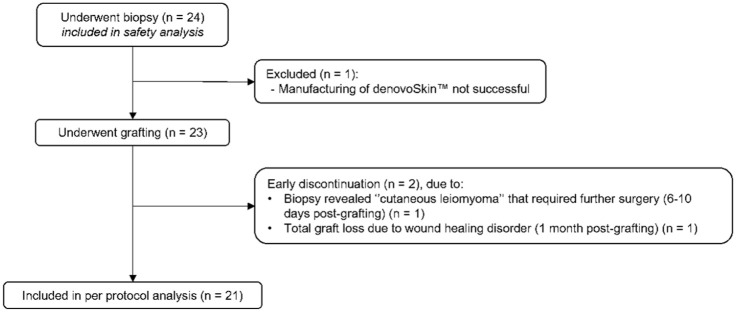 Figure 1
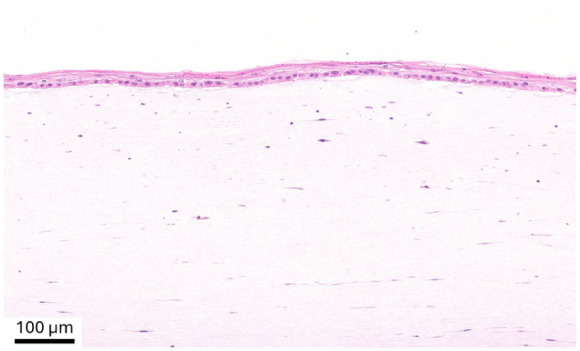 Figure 2
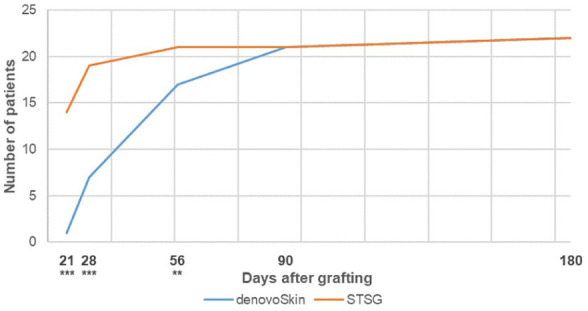 Figure 3
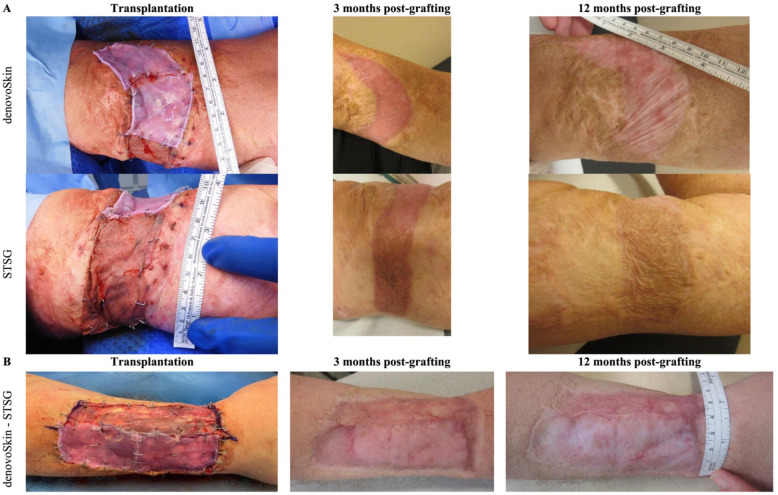 Figure 4
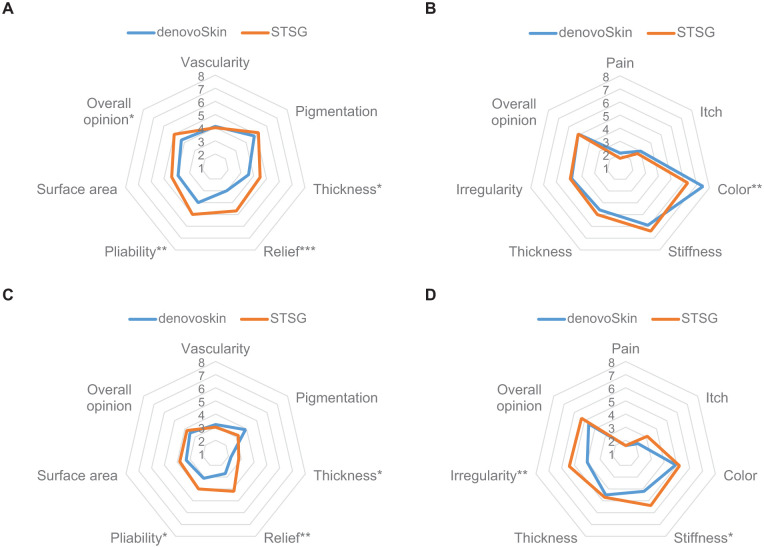 Figure 5
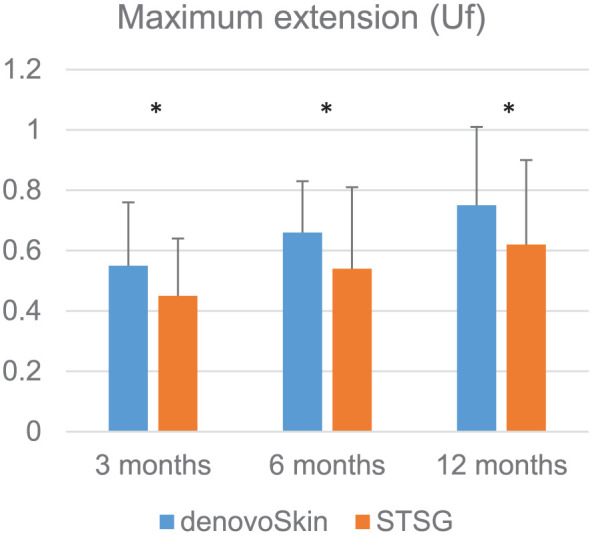 Figure 6
 Figure 7
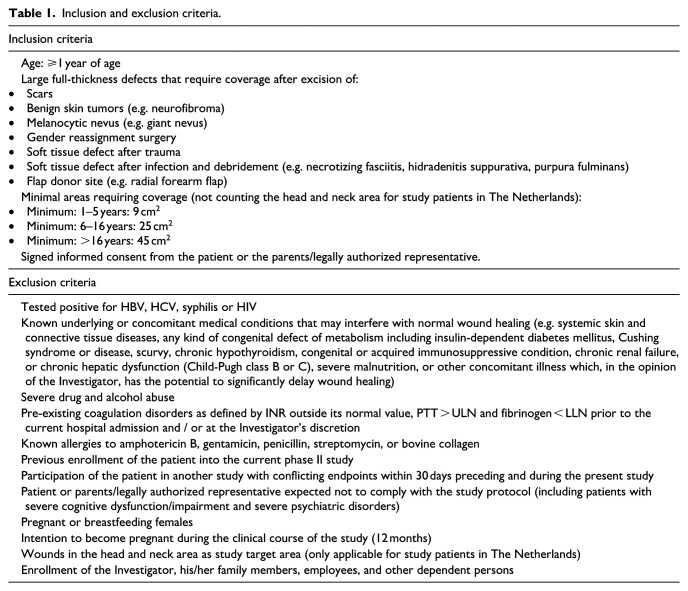 Figure 8
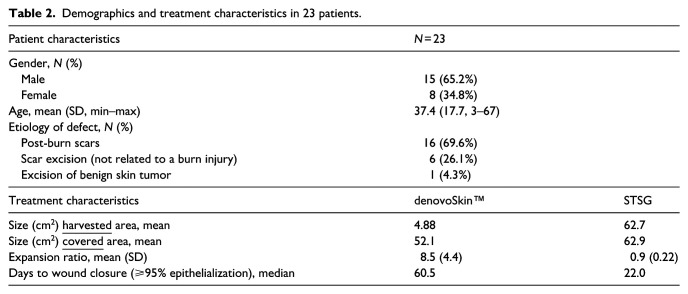 Figure 9
 Figure 10
Peer Reviews
No public reviews on file for this paper yet. If you reviewed it on a platform where reviews are public (OpenReview, ICLR, NeurIPS, ICML), you can paste yours below so the community can read it here.
Videos
No videos yet. Explain this paper in a talk, walkthrough, or lecture? Add one.
Taxonomy
TopicsWound Healing and Treatments · Reconstructive Facial Surgery Techniques · Tissue Engineering and Regenerative Medicine