Pre-trauma cognitive traits predict fear generalization and associated prefrontal functioning in a longitudinal rodent model
László Szente, Manó Aliczki, Gyula Y. Balla, Róbert D. Maróthy, Zoltán K. Varga, Bendegúz Á. Varga, Zsolt Borhegyi, László Biró, Kornél Demeter, Christina Miskolczi, Zoltán Balogh, Huba Szebik, Anett Szilvásy-Szabó, Anita Kurilla, Máté Tóth, Éva Mikics

TL;DR
This study shows that pre-trauma learning abilities predict fear responses in rats, with brain activity and gene expression in the prefrontal cortex playing a key role in PTSD-like symptoms.
Contribution
The study identifies pre-trauma operant learning as a novel predictor of PTSD-like fear generalization and reveals prefrontal interneurons as potential therapeutic targets.
Findings
Reduced pre-trauma operant learning strongly predicts excessive fear generalization after trauma.
Vulnerable rats show altered medial prefrontal cortex dynamics and less coordinated subregion activity.
Silencing prefrontal Crh expression reduces fear expression and enhances prefrontal cortex activation.
Abstract
Posttraumatic stress disorder (PTSD) is a chronic psychiatric condition that develops in susceptible individuals exposed to traumatic stress. Identifying predisposing risk factors and mechanisms presents a significant challenge for prevention and therapy development. Here, we aimed to identify behavioral predictors of excessive fear generalization - a core symptom of PTSD - and its neural correlates in rats using a longitudinal design. Prior to trauma, rats underwent extensive behavioral test batteries to assess their emotional and cognitive traits. They were then exposed to a single traumatic experience via inescapable footshocks. Twenty-eight days later, fear generalization was measured in a neutral/safe context, differentiating vulnerable (high freezing) and resilient (low freezing) subpopulations. Reduced pre-trauma operant learning performance emerged as the strongest predictor of…
Genes, proteins, chemicals, diseases, species, mutations and cell lines named across the full text — each resolved to its canonical identifier and authoritative record.
Click any figure to enlarge with its caption.
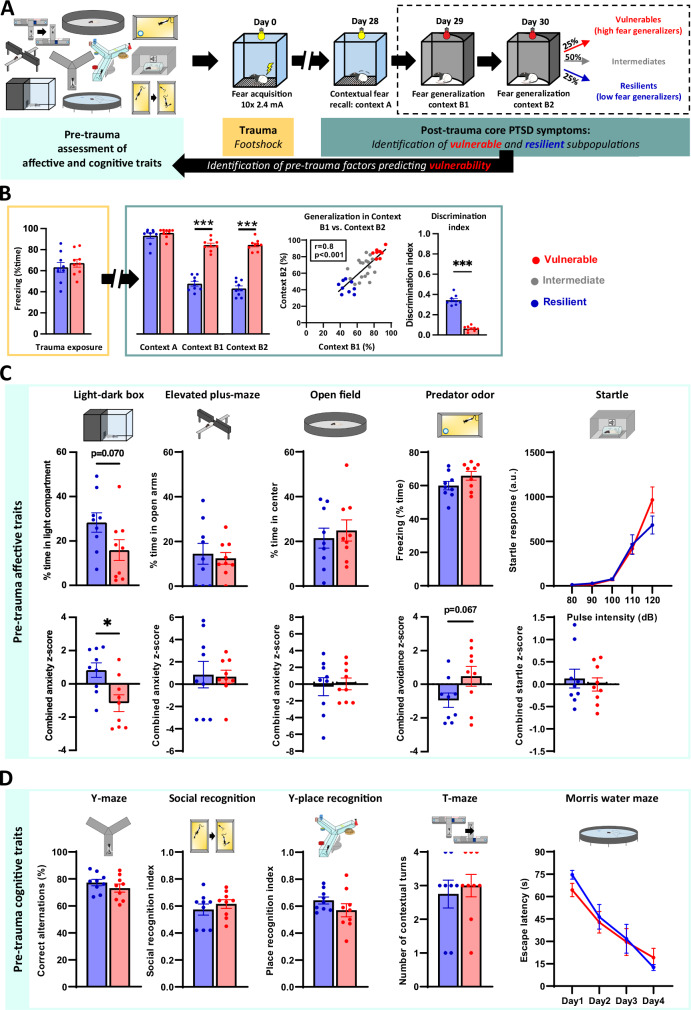 Figure 1
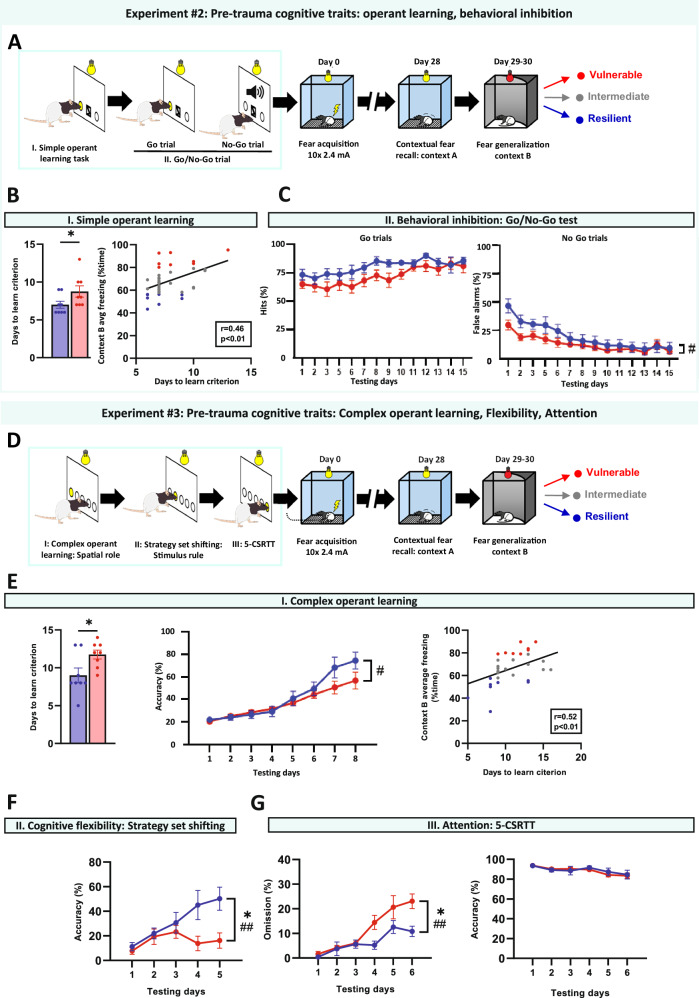 Figure 2
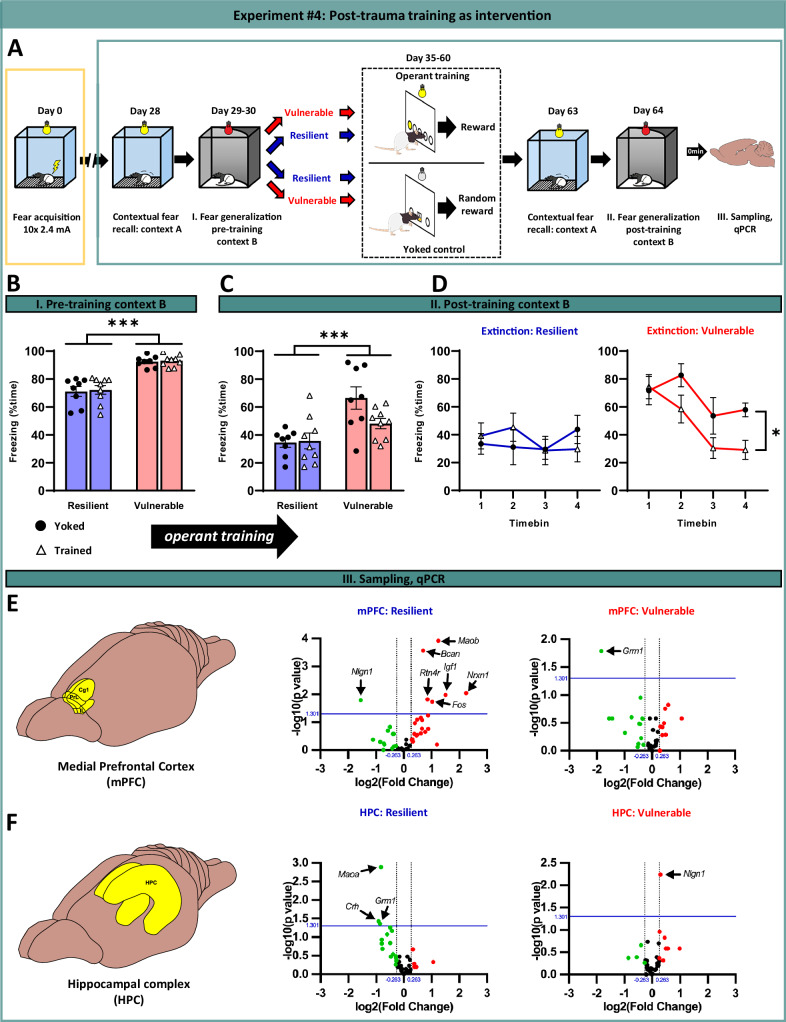 Figure 3
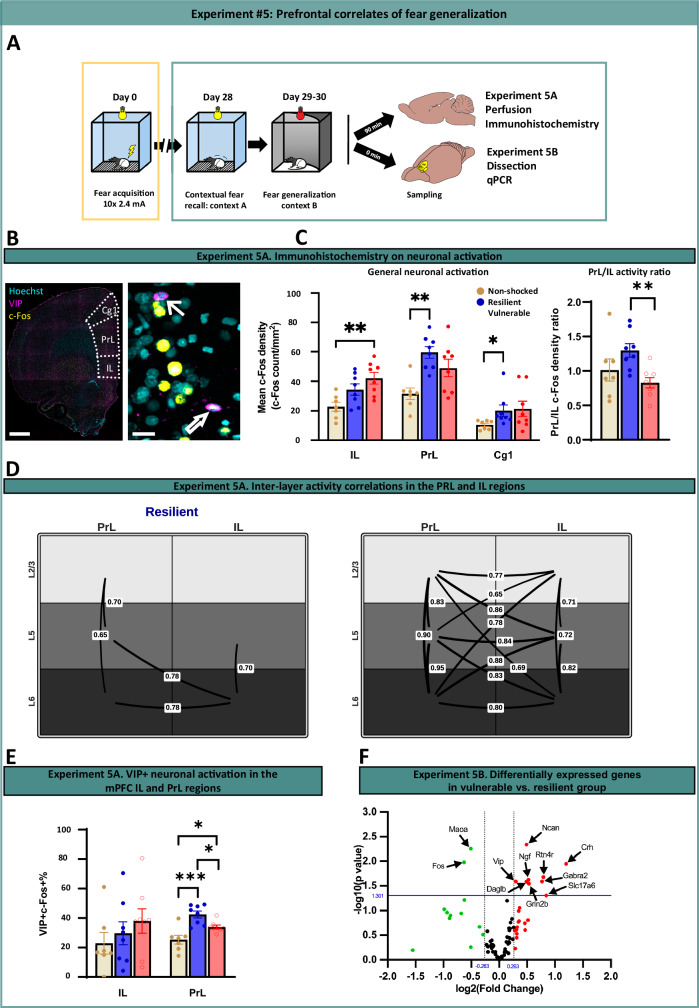 Figure 4
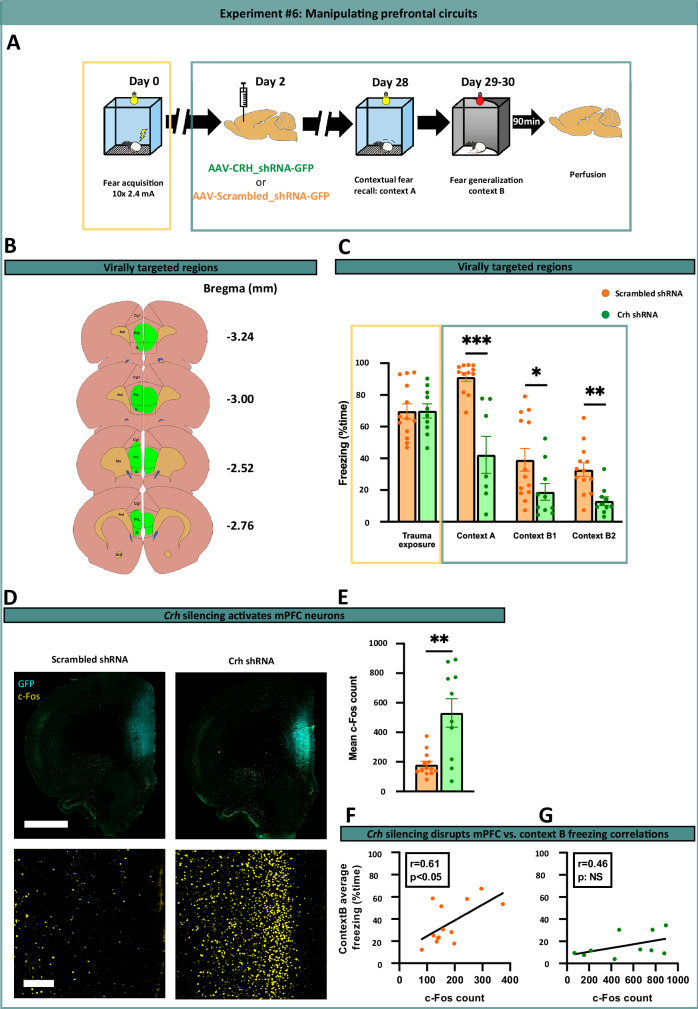 Figure 5
Peer Reviews
No public reviews on file for this paper yet. If you reviewed it on a platform where reviews are public (OpenReview, ICLR, NeurIPS, ICML), you can paste yours below so the community can read it here.
Videos
No videos yet. Explain this paper in a talk, walkthrough, or lecture? Add one.
Taxonomy
TopicsMemory and Neural Mechanisms · Stress Responses and Cortisol · Posttraumatic Stress Disorder Research