Integrating living biomaterials into neuroelectronic systems
Minseong Hong, YeongSeok Ye, Joungwon Kim, Jae-Ick Kim, Jong-Cheol Rah, Youngbin Tchoe

TL;DR
This paper explores how living biomaterials can be integrated into neuroelectronic systems to create adaptive brain-computer interfaces.
Contribution
The paper introduces a framework for biohybrid neural interfaces that combine living cells with electronics for improved brain compatibility.
Findings
Biohybrid interfaces can adapt to the brain's dynamic environment.
Living electrodes offer bidirectional communication and tissue conformity.
In vitro and in vivo systems are being combined for seamless integration.
Abstract
Neural interface technologies stand at the threshold of a revolution, offering new possibilities for seamless, high-bandwidth interconnection between the human brain and computers. Recent progress has been driven by advances in microscale manufacturing, yielding sophisticated neural probes with diverse form factors capable of recording from macroscopic networks down to single units. These platforms span rigid-to-soft architectures and combine inorganic and organic materials, improving compatibility with the brain’s mechanical and chemical properties. Despite these advances, the field still relies primarily on nonbiological electrodes, which face inherent limitations in adapting to the dynamic and complex nature of living neural tissue. Living biomaterials-integrated neuroelectronics, on the other hand, could open new possibilities by enabling technologies that adapt to the host…
Genes, proteins, chemicals, diseases, species, mutations and cell lines named across the full text — each resolved to its canonical identifier and authoritative record.
Click any figure to enlarge with its caption.
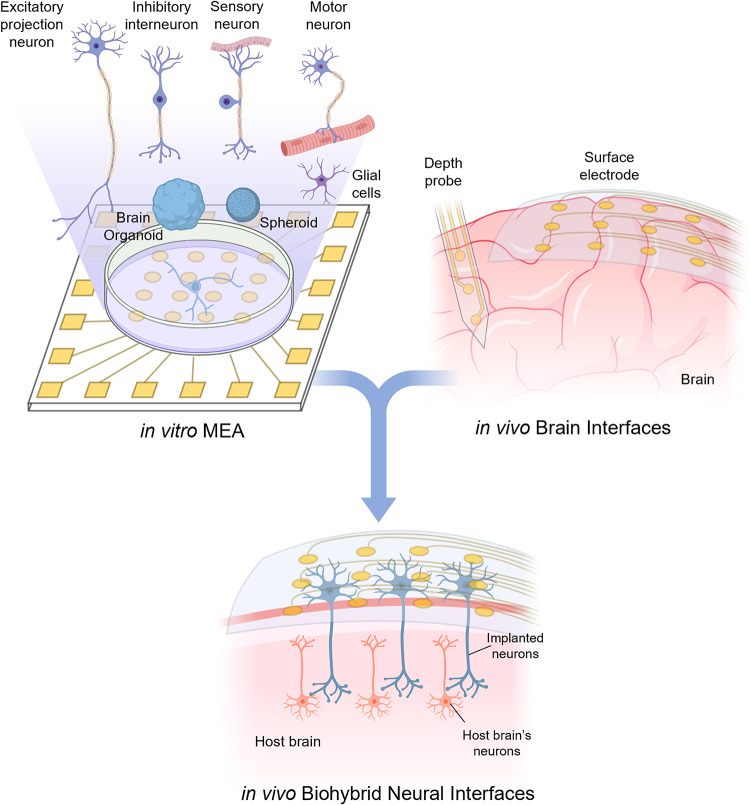 Figure 1
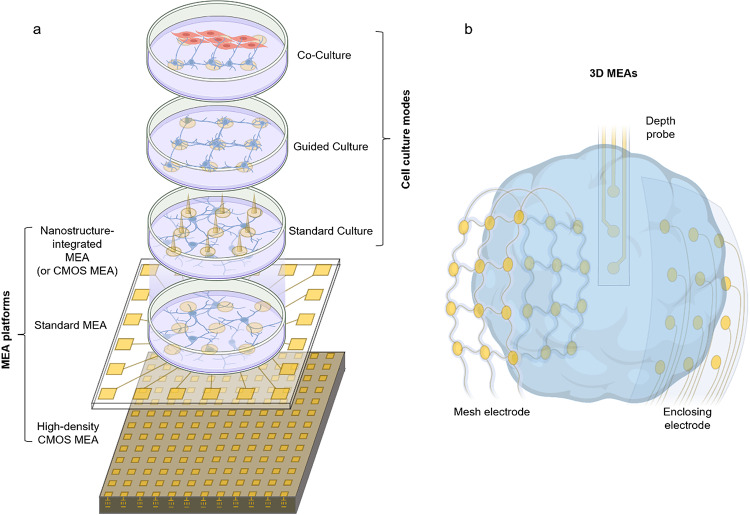 Figure 2
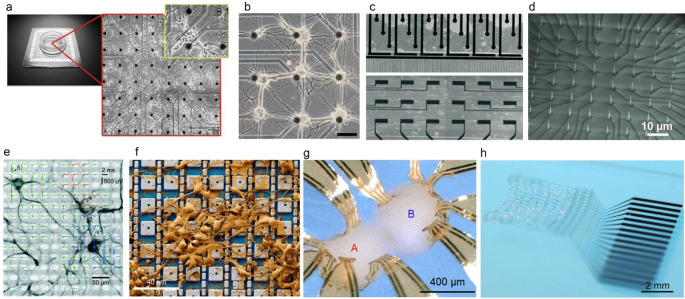 Figure 3
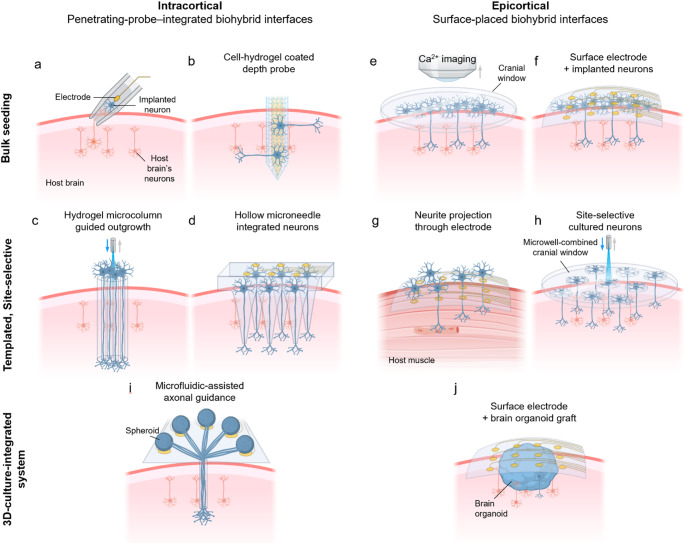 Figure 4
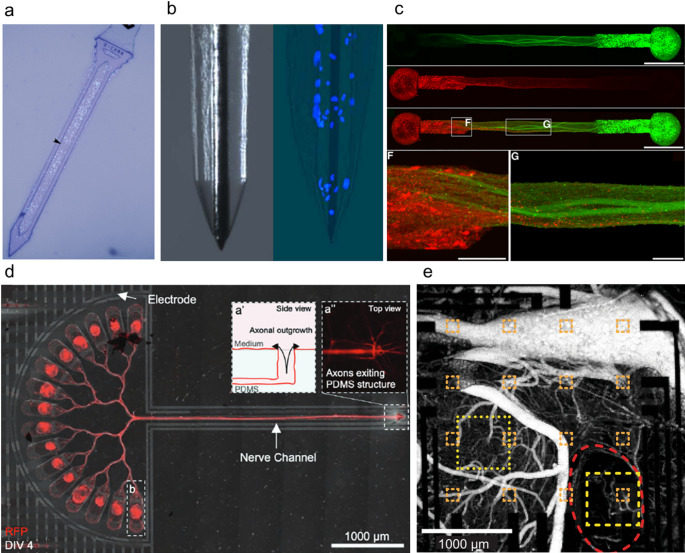 Figure 5
Peer Reviews
No public reviews on file for this paper yet. If you reviewed it on a platform where reviews are public (OpenReview, ICLR, NeurIPS, ICML), you can paste yours below so the community can read it here.
Videos
No videos yet. Explain this paper in a talk, walkthrough, or lecture? Add one.
Taxonomy
TopicsNeuroscience and Neural Engineering · Photoreceptor and optogenetics research · Planarian Biology and Electrostimulation