Efficient pheromone navigation via antagonistic detectors in Caenorhabditis elegans male
Xuan Wan, Tingtao Zhou, Vladislav Susoy, Alessandro Groaz, Core Francisco Park, John F. Brady, Aravinthan D. T. Samuel, Paul W. Sternberg

TL;DR
C. elegans males use opposing signals from head and tail sensors to navigate toward mates by interpreting pheromone gradients.
Contribution
The study reveals a novel antagonistic sensory strategy in C. elegans males for pheromone-based navigation.
Findings
AWA neurons promote forward movement while PHD neurons induce reversals in response to pheromone gradients.
An antagonistic integration of head and tail sensory inputs enables reliable mate tracking in dynamic environments.
Abstract
Chemotaxis to a moving potential mate that emits a volatile sex pheromone poses a navigation challenge requiring rapid, precise responses to maximize reproductive success. Volatile chemicals form gradients that differ from soluble compounds, potentially making navigation based on comparisons between spatially separated sensors unreliable for small-bodied animals. Here we show that, rather than a simple spatial comparison, Caenorhabditis elegans males employ an antagonistic strategy, comparing inputs from sex-shared head (AWA) and male-specific tail (PHD) sensory neurons with distinct response properties. Despite sharing a receptor, SRD-1, these detectors play different roles: AWAs promote forward movement and acceleration, while PHDs induce reversals and deceleration. In rising pheromone gradients, AWA activity dominates; in falling gradients, AWA inactivates, allowing PHD to correct…
Genes, proteins, chemicals, diseases, species, mutations and cell lines named across the full text — each resolved to its canonical identifier and authoritative record.
Click any figure to enlarge with its caption.
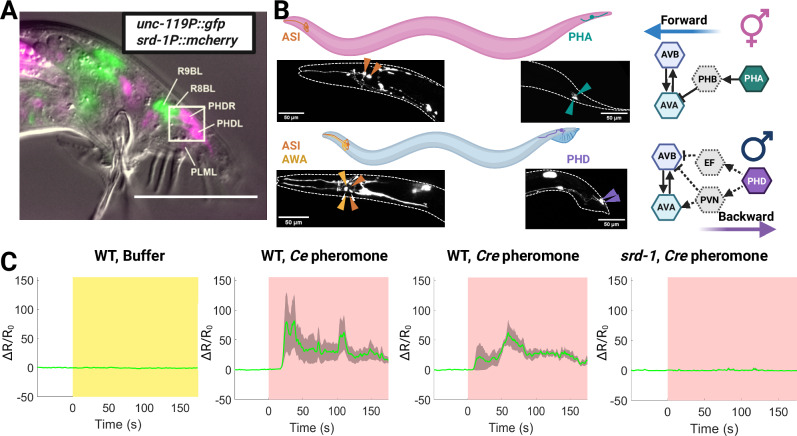 Figure 1
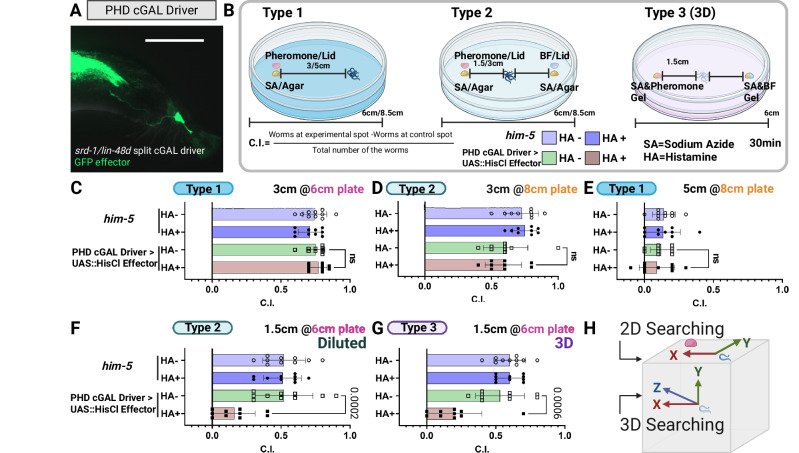 Figure 2
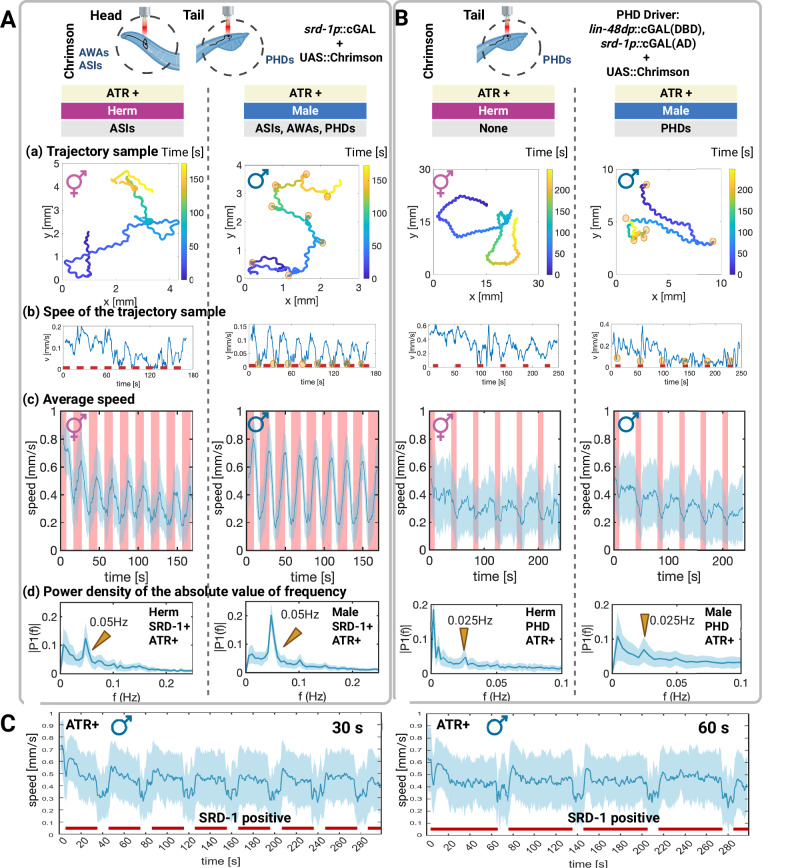 Figure 3
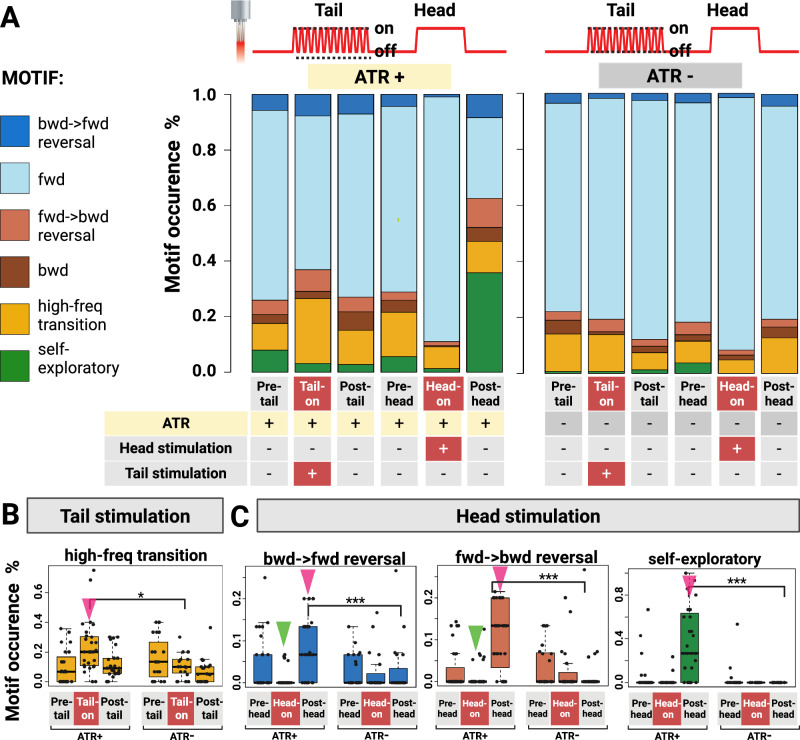 Figure 4
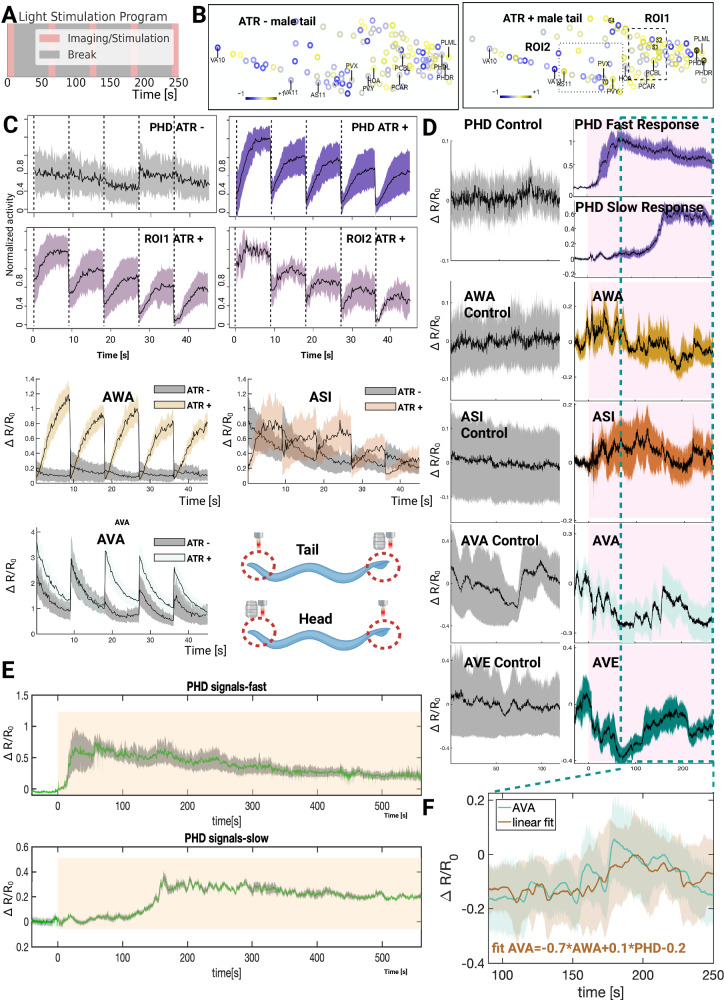 Figure 5
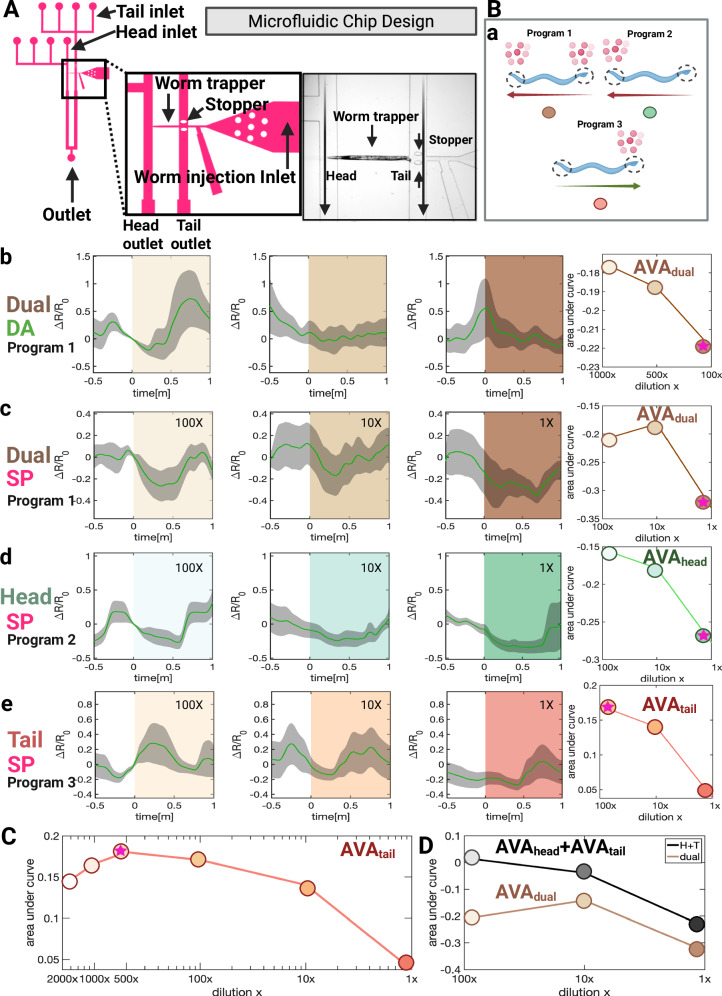 Figure 6
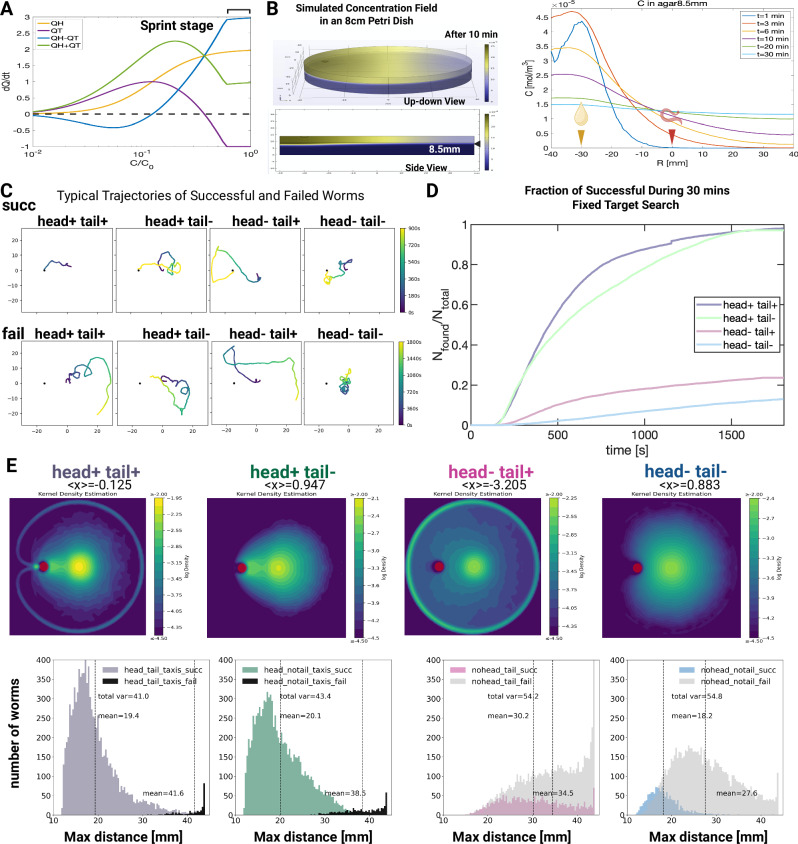 Figure 7
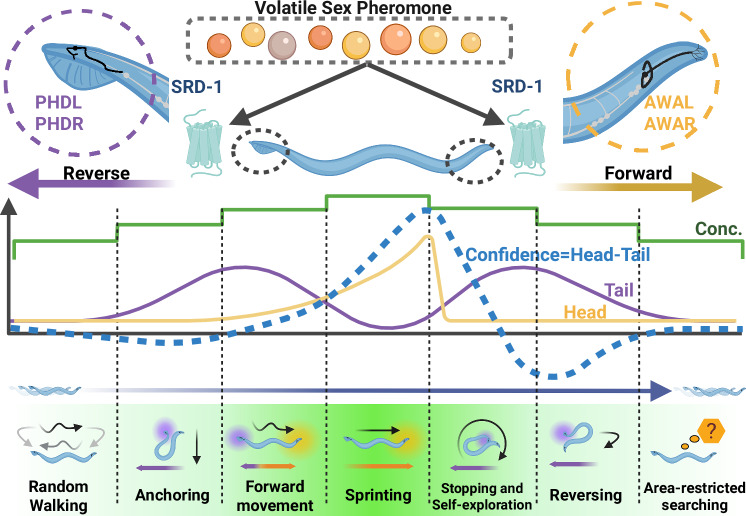 Figure 8
Peer Reviews
No public reviews on file for this paper yet. If you reviewed it on a platform where reviews are public (OpenReview, ICLR, NeurIPS, ICML), you can paste yours below so the community can read it here.
Videos
No videos yet. Explain this paper in a talk, walkthrough, or lecture? Add one.
Taxonomy
TopicsGenetics, Aging, and Longevity in Model Organisms · Neurobiology and Insect Physiology Research · Evolution and Genetic Dynamics