Deciphering hippocampal place codes in weak theta rhythms
Gautam Agarwal, Seiji Akera, Brian Lustig, Eva Pastalkova, Albert K. Lee, Friedrich T. Sommer

TL;DR
This paper shows that weak brain rhythms can still carry spatial information using a new neural network approach.
Contribution
The authors developed a novel neural network to decode spatial information from weak theta rhythms in the hippocampus.
Findings
Weak theta rhythms can convey spatial information comparable to population spike codes.
Position-tuned theta rhythms (pThetas) are distinct from dominant theta rhythms and reflect population coordination.
Information-based decoding principles outperform variance-based methods in capturing spatial data from irregular rhythms.
Abstract
Local field potentials (LFPs) reflect coordination among neural populations, yet their exact relationship to neural computation remains unknown. One exception is the theta rhythm of the rodent hippocampus, which organizes sequential firing among place cells, enabling spike timing to track the animal’s path through its environment. But when the animal stops, the theta rhythm becomes irregular, which is assumed to disrupt its ability to carry spatial information. Here we challenge this assumption by developing an artificial neural network that discovers position-tuned theta rhythms (pThetas) from LFPs even in the absence of strong theta oscillations. Using recordings from male rats, we provide evidence that pTheta is distinct from the dominant theta rhythm, while reflecting rhythmic coordination among place cell populations. Our work suggests that weak and intermittent oscillations, as…
Genes, proteins, chemicals, diseases, species, mutations and cell lines named across the full text — each resolved to its canonical identifier and authoritative record.
Click any figure to enlarge with its caption.
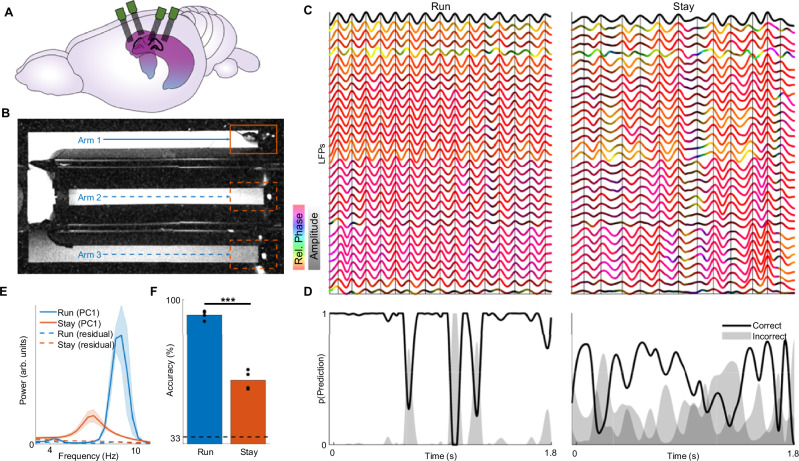 Figure 1
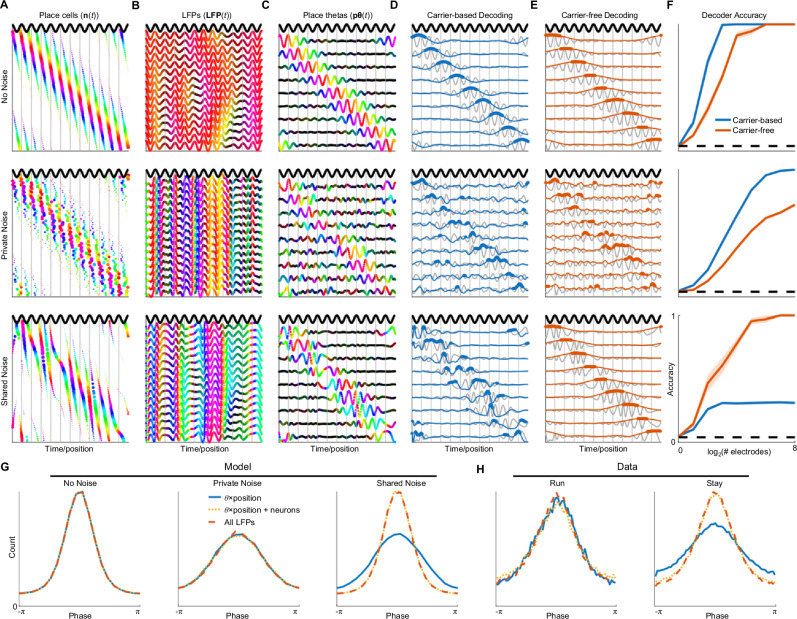 Figure 2
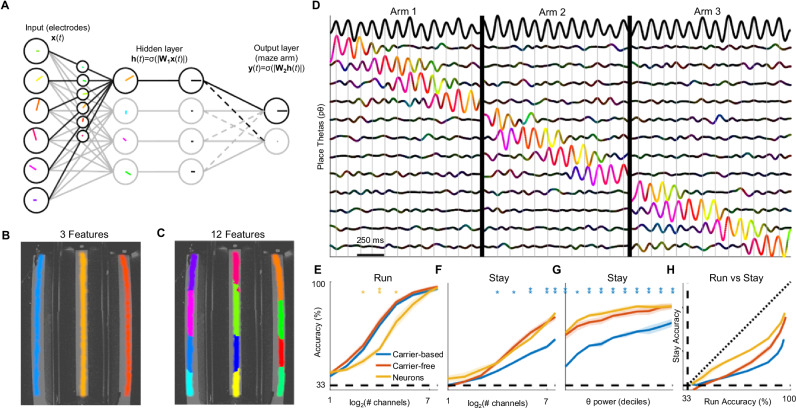 Figure 3
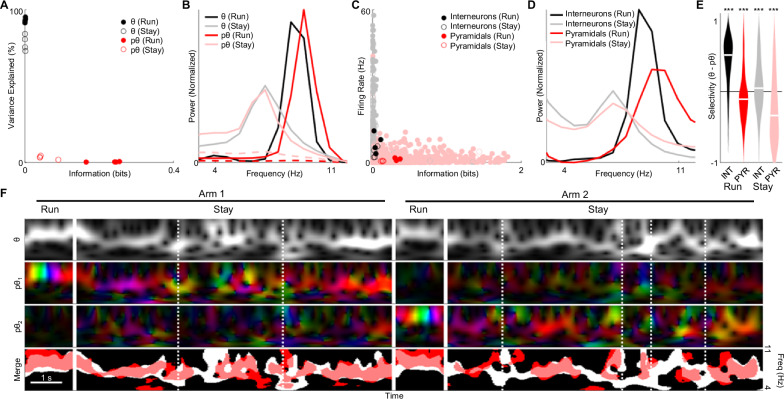 Figure 4
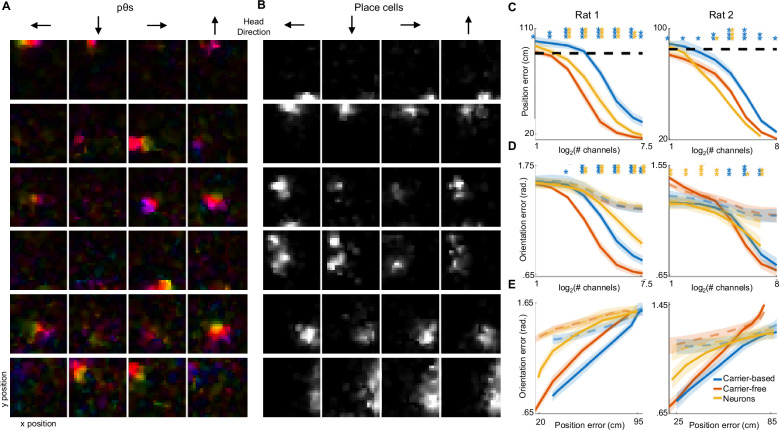 Figure 5
Peer Reviews
No public reviews on file for this paper yet. If you reviewed it on a platform where reviews are public (OpenReview, ICLR, NeurIPS, ICML), you can paste yours below so the community can read it here.
Videos
No videos yet. Explain this paper in a talk, walkthrough, or lecture? Add one.
Taxonomy
TopicsMemory and Neural Mechanisms · Neural dynamics and brain function · Neuroscience and Music Perception