Altered amygdala and striatal responsivity and prediction error encoding of temporal reward dynamics in post-trauma psychopathology
Lauren K. Enten, Annamarie DeMarco, Rachel Kline, Franziska M. Globisch, Joseph E. Dunsmoor, Josh M. Cisler, Charles B. Nemeroff, Gregory A. Fonzo

TL;DR
This study finds altered brain activity in trauma-related mental health conditions, particularly in regions involved in reward prediction and timing.
Contribution
The study identifies disrupted amygdala and striatal responsivity to temporal reward prediction errors in post-trauma psychopathology.
Findings
PTP individuals showed reduced amygdala and putamen activation during unexpected reward receipt.
Blunted amygdala deactivation correlated with lower anhedonia in PTP individuals.
Model-based analysis revealed altered prediction error encoding in PTP-related brain regions.
Abstract
Diminished positive affect is a hallmark of post-trauma psychopathology (PTP), e.g. posttraumatic stress disorder and major depressive disorder, yet the circuit dysfunction underlying these PTP symptoms is poorly understood. Computational models offer a powerful framework to probe learning processes by linking such processes to brain activity in regions involved in updating reward predictions. Here, we examined fMRI neural responsivity to temporal prediction errors—deviations in timing of expected reward delivery—and applied a temporal difference (TD) learning model to characterize model-based prediction error neural encoding in individuals with PTP (N = 45; 32 females) and trauma-exposed healthy controls (N = 45; 25 females). Participants learned that a visual cue reliably predicted timing of a primary reward (oral juice bolus). To induce temporal prediction errors, we introduced…
Genes, proteins, chemicals, diseases, species, mutations and cell lines named across the full text — each resolved to its canonical identifier and authoritative record.
Click any figure to enlarge with its caption.
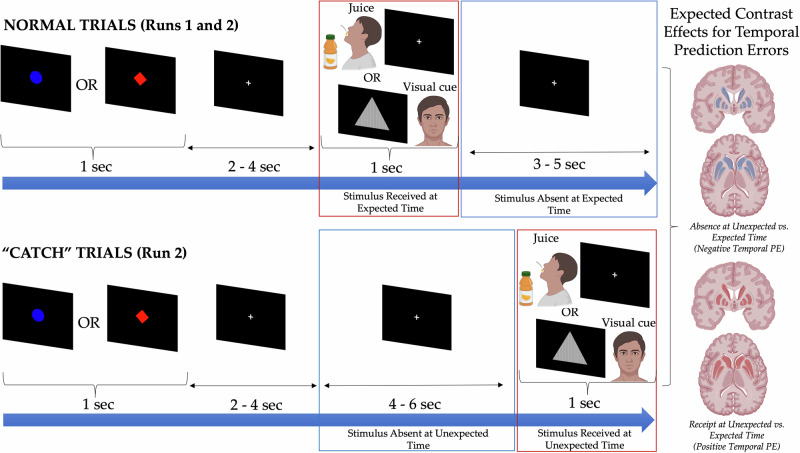 Figure 1
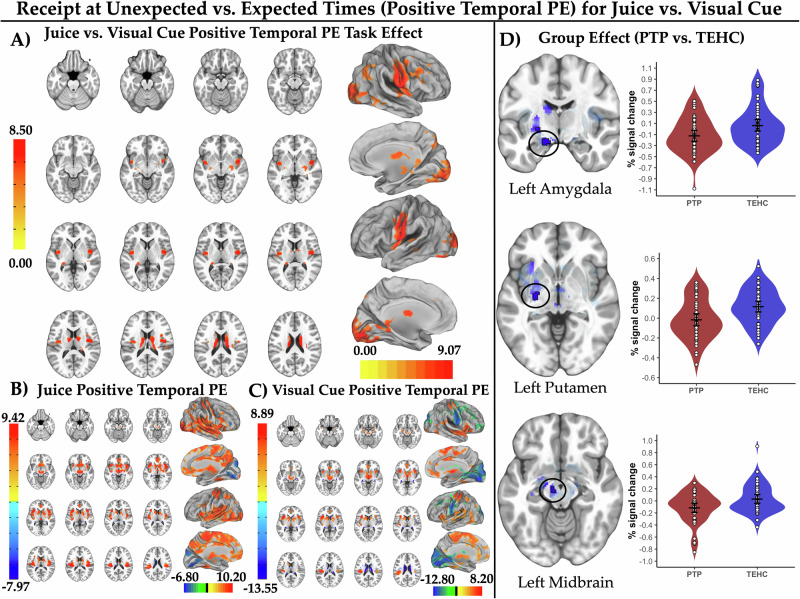 Figure 2
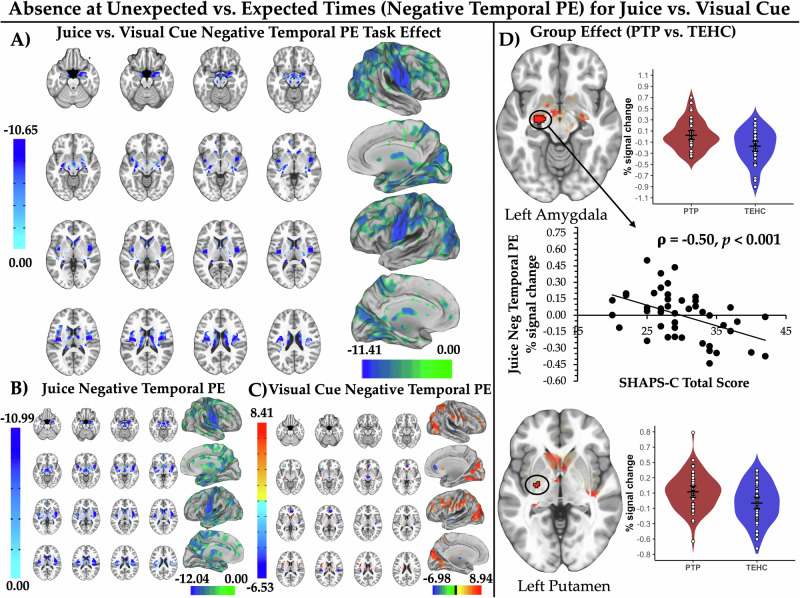 Figure 3
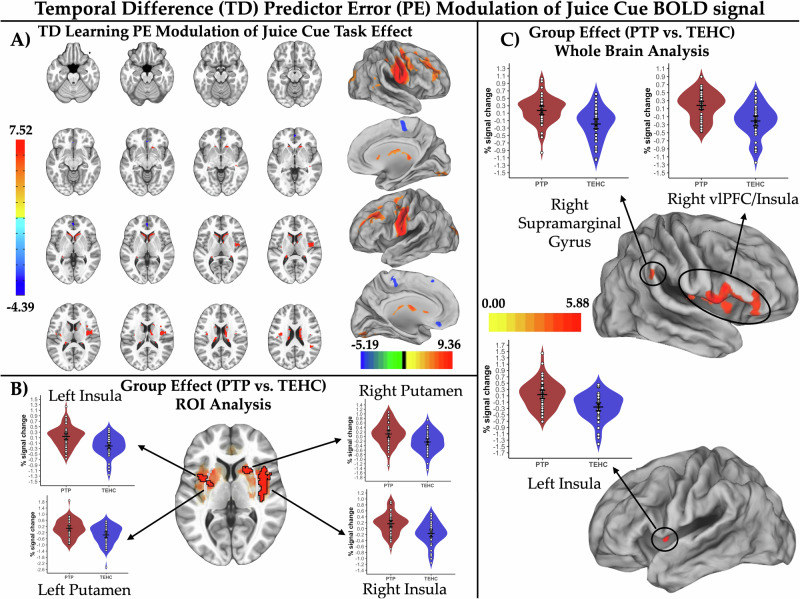 Figure 4
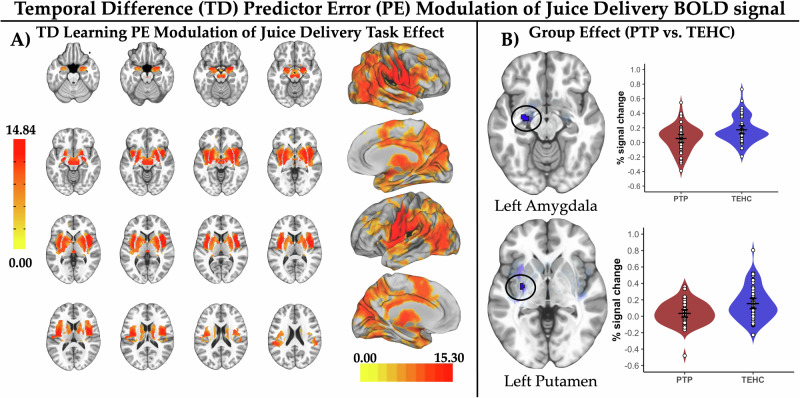 Figure 5
Peer Reviews
No public reviews on file for this paper yet. If you reviewed it on a platform where reviews are public (OpenReview, ICLR, NeurIPS, ICML), you can paste yours below so the community can read it here.
Videos
No videos yet. Explain this paper in a talk, walkthrough, or lecture? Add one.
Taxonomy
TopicsMemory and Neural Mechanisms · Neural and Behavioral Psychology Studies · Functional Brain Connectivity Studies