Data augmentation method for computer-aided diagnosis using specular reflection
Youmin Shin, Jeonga Seol, Changwoo Lee, Jung Kim, Jinwook Choi, Jinbae Park, Soonwhan Kang, Gyuseon Song, Jung Ho Bae, Young-Gon Kim

TL;DR
This paper introduces a new data augmentation method using specular reflection to improve deep learning models for colon polyp diagnosis during colonoscopies.
Contribution
The novel contribution is a specular reflection-based data augmentation technique that enhances model performance, especially with limited training data.
Findings
The SR augmentation method improved model accuracy in limited data scenarios.
SR augmentation showed robustness across different deep learning architectures.
The method outperformed conventional augmentation techniques in stress tests.
Abstract
Colorectal cancer (CRC) is a significant global health challenge, emphasizing the importance of effective screening by applying methods like colonoscopy. While advanced imaging technologies, such as narrow-band imaging (NBI), allow real-time optical diagnosis of colon polyps, variations in endoscopist skills and unnecessary polypectomy underscore the need for artificial intelligence applications, particularly deep learning (DL) in computer-aided polyp detection and diagnosis (CADe and CADx). This study developed and investigated a data augmentation technique using specular reflection (SR) to enhance the robustness and performance of DL models tailored explicitly for CADx in colonoscopy. This SR augmentation method included SR generation and inpainting integrated into conventional augmentation techniques. We utilized two DL architectures: a convolutional neural network and a vision…
Genes, proteins, chemicals, diseases, species, mutations and cell lines named across the full text — each resolved to its canonical identifier and authoritative record.
Click any figure to enlarge with its caption.
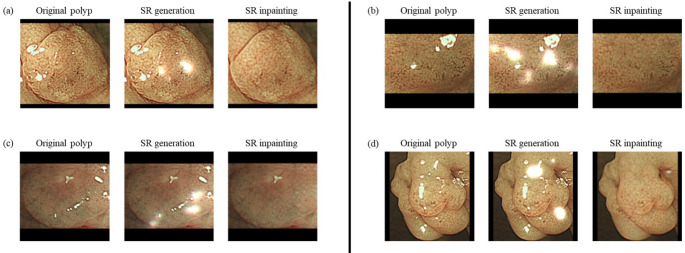 Figure 1
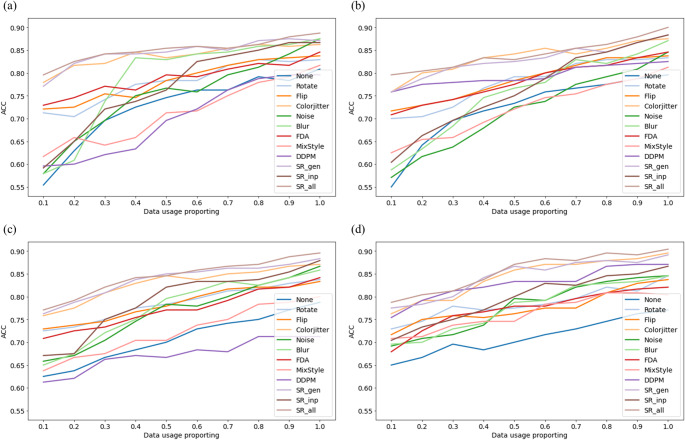 Figure 2
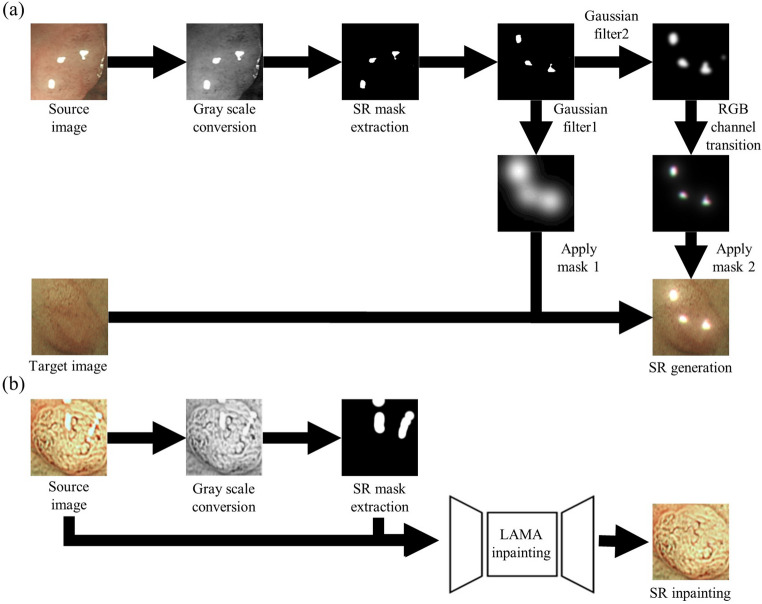 Figure 3
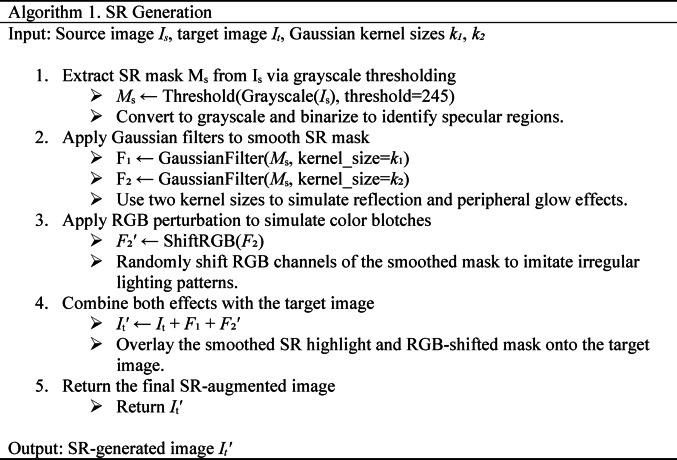 Figure 4
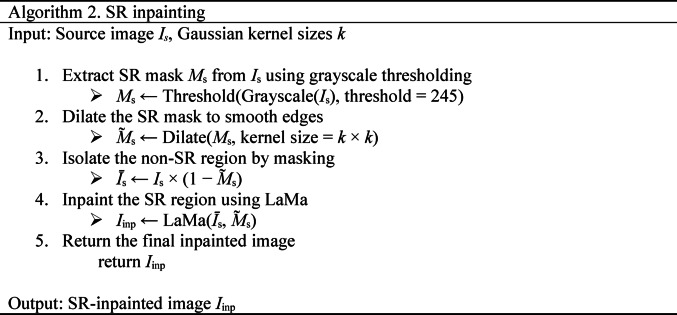 Figure 5
Peer Reviews
No public reviews on file for this paper yet. If you reviewed it on a platform where reviews are public (OpenReview, ICLR, NeurIPS, ICML), you can paste yours below so the community can read it here.
Videos
No videos yet. Explain this paper in a talk, walkthrough, or lecture? Add one.
Taxonomy
TopicsColorectal Cancer Screening and Detection · AI in cancer detection · COVID-19 diagnosis using AI