A molecular perspective of gelsolin amyloidosis: An old foe with new faces
Michela Bollati, Carmina Natale, Loic Girois, Andrea Conz, Kaliroi Peqini, Stefano Pieraccini, Sara Pellegrino, Luisa Diomede, Matteo de Rosa

TL;DR
This paper reviews hereditary gelsolin amyloidosis, a rare disease caused by protein misfolding, and explores new mutations and their impact on diagnosis and treatment.
Contribution
The paper introduces a classification system for gelsolin mutations based on molecular and clinical features to guide future research and diagnosis.
Findings
New amyloidogenic variants in gelsolin have been identified since 2013, leading to diverse clinical phenotypes.
Current understanding of pathogenic mechanisms is limited, hindering the development of effective treatments.
A classification system is proposed to improve research and diagnostic approaches for gelsolin amyloidosis.
Abstract
Hereditary gelsolin amyloidosis (AGel) is a rare and often underrecognized protein misfolding disorder caused by mutations in the gelsolin (GSN) protein, leading to its aggregation in various tissues. Its rarity, combined with a heterogeneous and complex clinical presentation and the multidomain, flexible nature of GSN, has impeded research into its pathogenic mechanisms and therapeutic options. GSN comprises six homologous domains, labeled sequentially from G1 to G6. For over 40 years, AGel amyloidosis was exclusively linked to a systemic form, caused by D187N and D187Y mutations in the second domain, referred to as the Finnish and Danish variants. However, since 2013, numerous novel amyloidogenic variants have been identified in different protein regions, leading to various clinical phenotypes, characterized by distinct molecular mechanisms. This review examines these mutations and…
Genes, proteins, chemicals, diseases, species, mutations and cell lines named across the full text — each resolved to its canonical identifier and authoritative record.
Click any figure to enlarge with its caption.
 Figure 1
 Figure 2
 Figure 3
 Figure 4
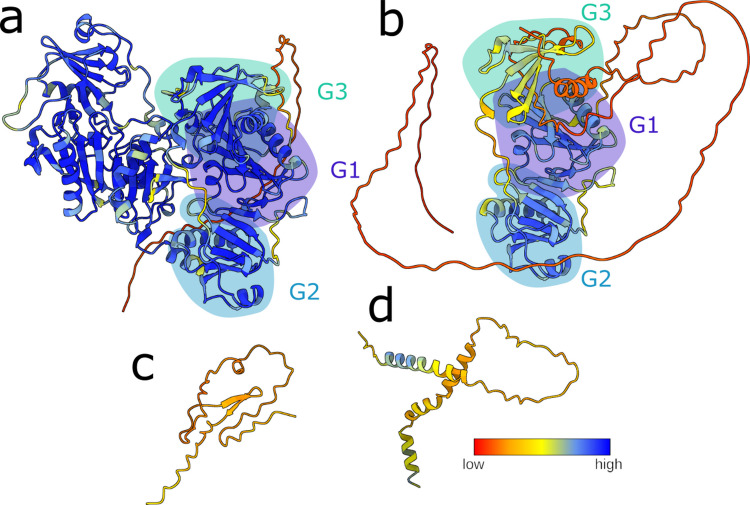 Figure 5
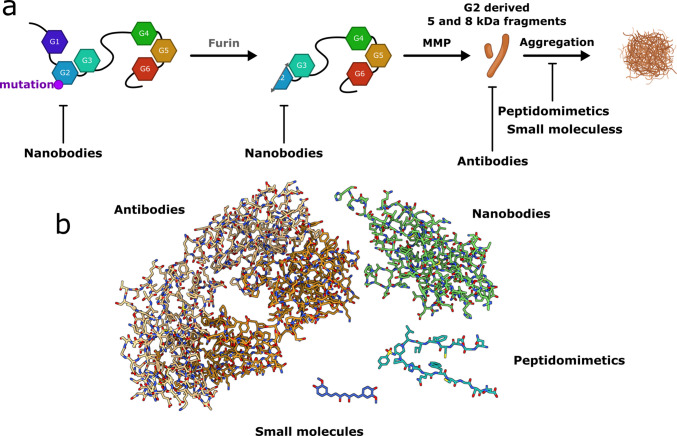 Figure 6
Peer Reviews
No public reviews on file for this paper yet. If you reviewed it on a platform where reviews are public (OpenReview, ICLR, NeurIPS, ICML), you can paste yours below so the community can read it here.
Videos
No videos yet. Explain this paper in a talk, walkthrough, or lecture? Add one.
Taxonomy
TopicsAmyloidosis: Diagnosis, Treatment, Outcomes · Cellular Mechanics and Interactions · Alzheimer's disease research and treatments