PNET-PRISM: a multicenter-validated radiomics nomogram for noninvasive grading of pancreatic neuroendocrine tumors
Ying Li, Chengwei Chen, Mingzhi Lu, Jiajun Liu, Jieyu Yu, Danqun Zheng, Yilun Zheng, Yixuan Shen, Fang Liu, Tiegong Wang, Xu Fang, Jing Li, Jianping Lu, Chengwei Shao, Yun Bian

TL;DR
A new CT-based radiomics model called PNET-PRISM accurately grades pancreatic neuroendocrine tumors noninvasively, offering a safer alternative when biopsies fail.
Contribution
PNET-PRISM is a validated radiomics nomogram that improves noninvasive grading of PNETs and outperforms clinical models.
Findings
PNET-PRISM achieved AUCs of 0.92, 0.89, and 0.87 in training, validation, and external test sets.
The model provided accurate grading in 52% of cases where EUS-FNA yielded insufficient tissue.
M-DLR Score was significantly associated with progression-free survival (HR = 2.05).
Abstract
Accurate preoperative grading of pancreatic neuroendocrine tumors (PNETs) is essential for optimal treatment selection, yet endoscopic ultrasound-guided fine-needle aspiration (EUS-FNA) yields inadequate tissue in up to 40% of cases and carries procedural risks, necessitating reliable noninvasive alternatives. This multicenter retrospective study included 407 surgically confirmed PNET patients across training (n = 244), validation (n = 106), and external test (n = 57) cohorts. We developed a pancreatic radiomics integrated scoring model for PNET (PNET-PRISM), integrating multidimensional CT radiomics features from intratumoral, peritumoral, habitat, and deep learning domains using automated segmentation. A multidimensional deep learning radiomics score (M-DLR Score) was constructed from 13,542 features and combined with clinical variables for preoperative grade prediction. PNET-PRISM…
Genes, proteins, chemicals, diseases, species, mutations and cell lines named across the full text — each resolved to its canonical identifier and authoritative record.
Click any figure to enlarge with its caption.
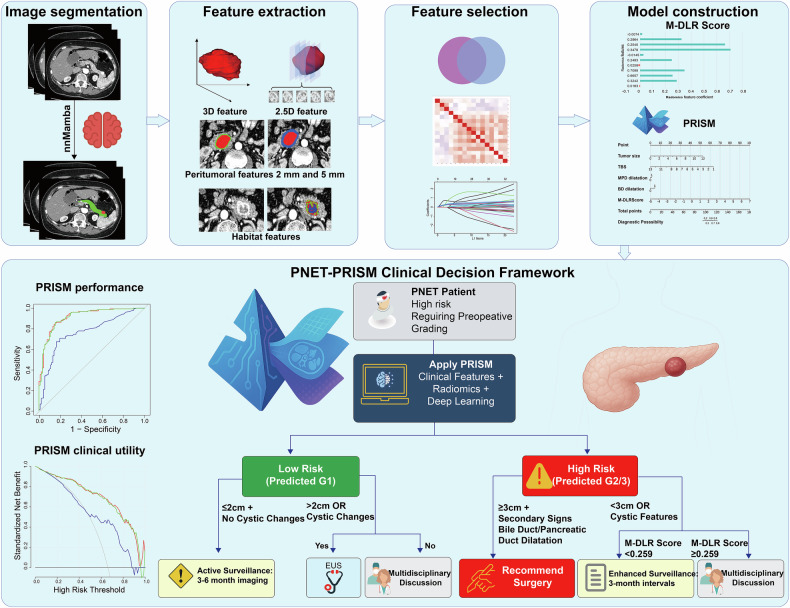 Figure 1
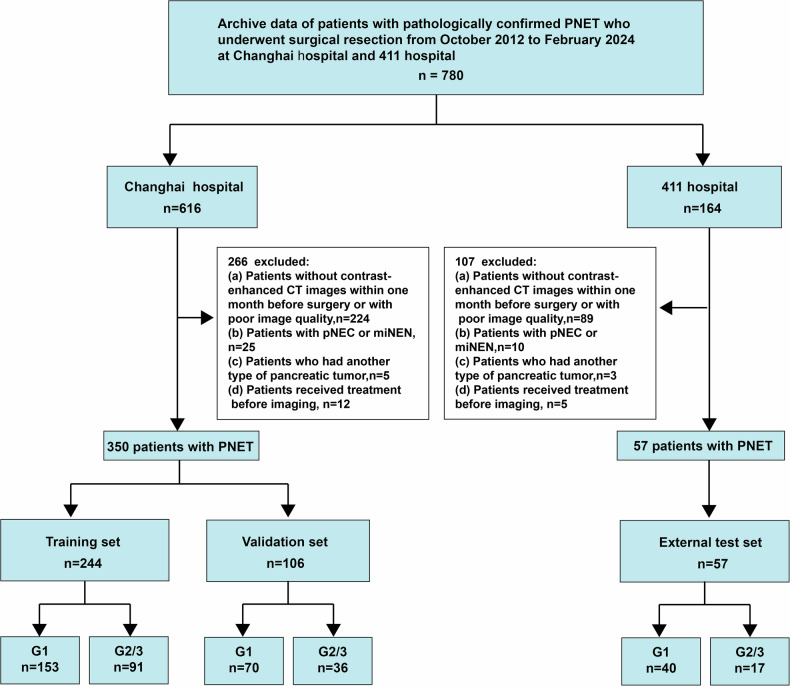 Figure 2
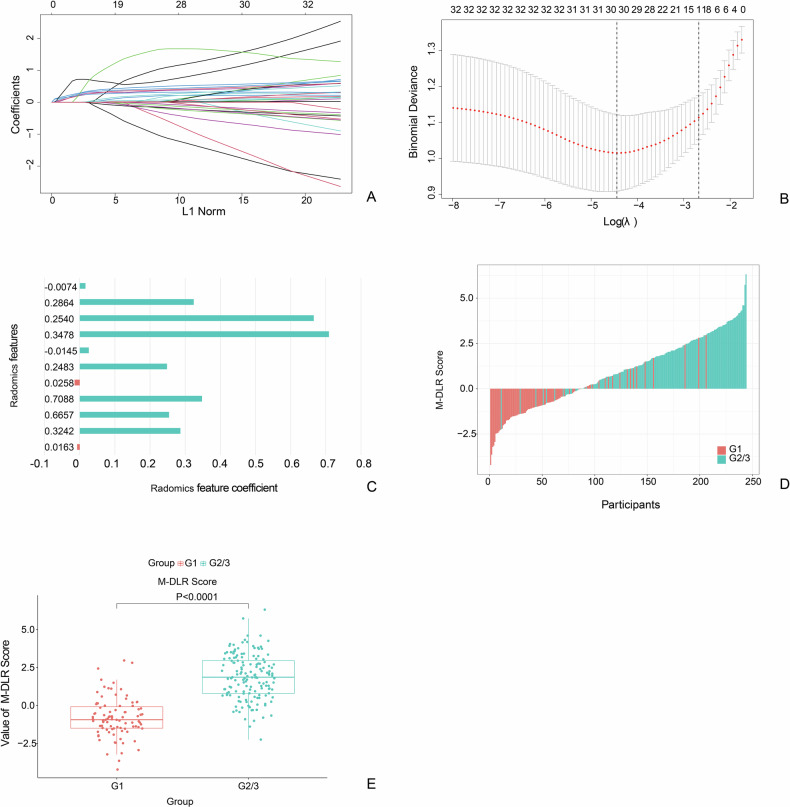 Figure 3
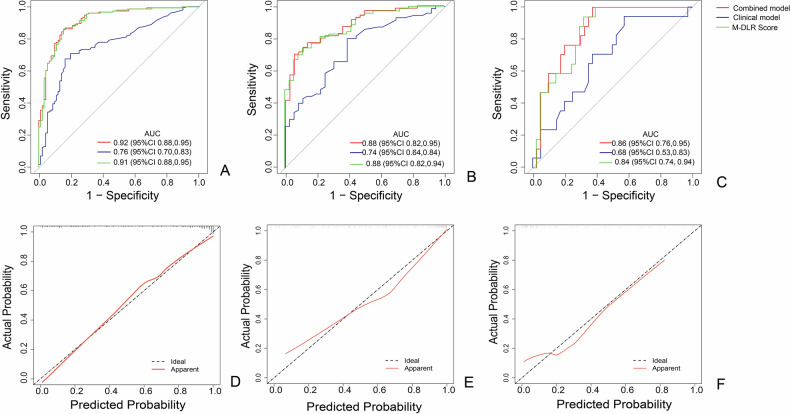 Figure 4
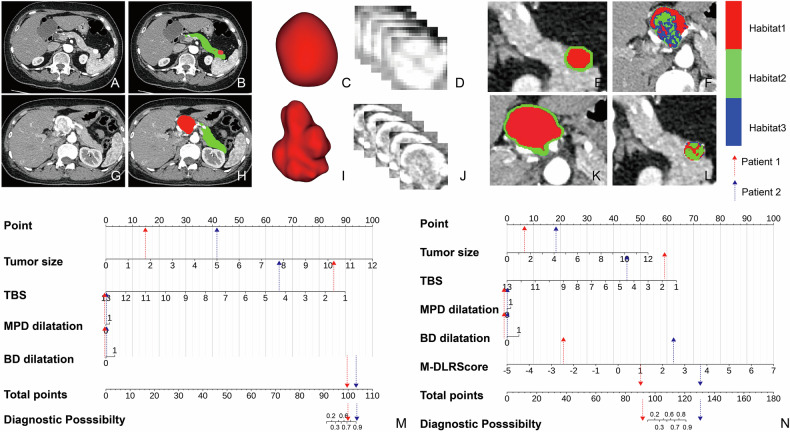 Figure 5
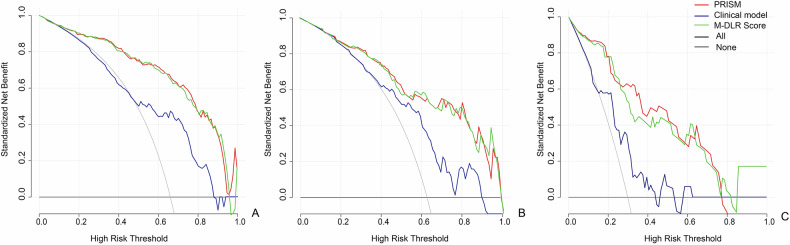 Figure 6
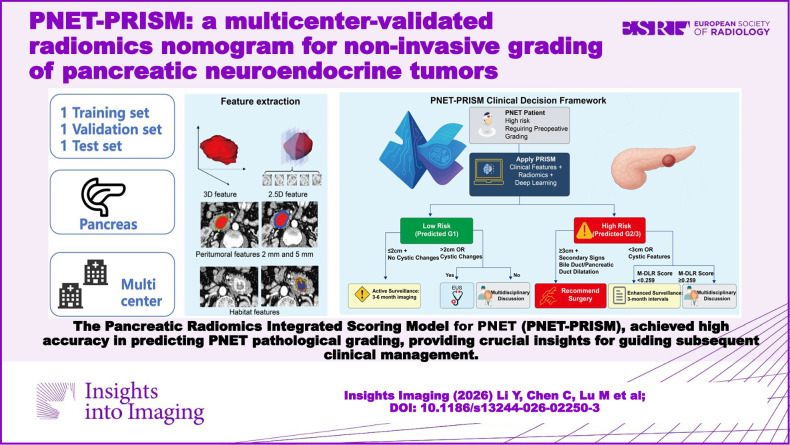 Figure 7
Peer Reviews
No public reviews on file for this paper yet. If you reviewed it on a platform where reviews are public (OpenReview, ICLR, NeurIPS, ICML), you can paste yours below so the community can read it here.
Videos
No videos yet. Explain this paper in a talk, walkthrough, or lecture? Add one.
Taxonomy
TopicsPancreatic and Hepatic Oncology Research · Neuroendocrine Tumor Research Advances · Gastrointestinal Tumor Research and Treatment