Quantitative clinical assessment of wrist proprioception with stroke survivors
Yvonne YK Mak-Yuen, Thomas A Matyas, Kylee Lockwood, Leeanne M Carey

TL;DR
This study shows how clinicians can use a wrist test to detect proprioceptive impairment in stroke survivors, helping improve diagnosis and treatment.
Contribution
The study establishes a new criterion for wrist proprioception impairment and validates a shorter version of the test for clinical use.
Findings
Proprioceptive impairment was common in the contralesional wrist (66%) and present in the ipsilesional wrist (21%).
A new criterion of abnormality was set at 11.10 average error with high sensitivity and specificity for the brief test version.
Abstract
The aims of this study were to characterise proprioceptive impairment in individuals after stroke using the Wrist Position Sense Test (WPST) in a relatively large pooled sample, to re-establish the criterion of abnormality of the WPST, and to determine the sensitivity and specificity of a briefer test version for use in clinical settings. Cross-sectional observation study with pooling of data across studies. Rehabilitation or outpatient settings. Stroke survivors (n = 205) and neurologically healthy controls (n = 93) were assessed at baseline. Wrist proprioception assessed using the WPST. Baseline data from stroke survivors and healthy controls assessed on the WPST was extracted from six studies. Raw data were pooled and analysed to determine an updated criterion of impairment and ability of a brief 10-trial version to detect proprioceptive impairment. Proprioceptive impairment…
Genes, proteins, chemicals, diseases, species, mutations and cell lines named across the full text — each resolved to its canonical identifier and authoritative record.
Click any figure to enlarge with its caption.
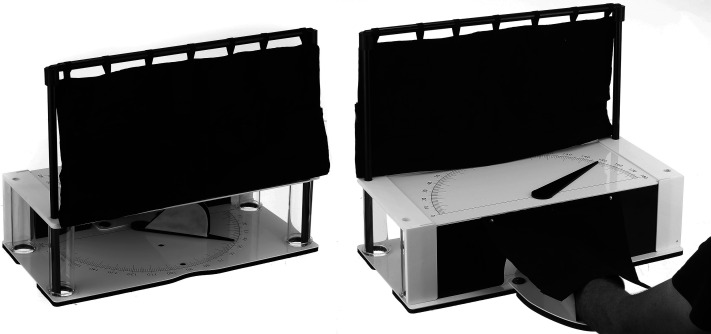 Figure 1
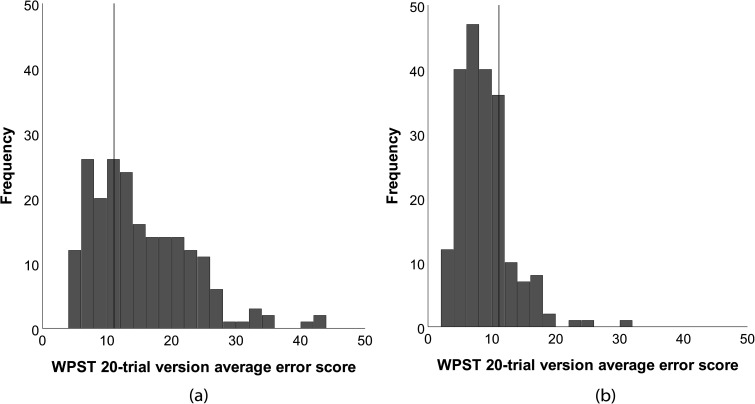 Figure 2
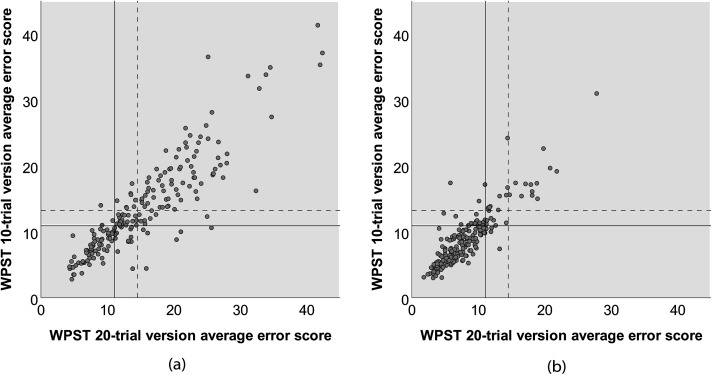 Figure 3
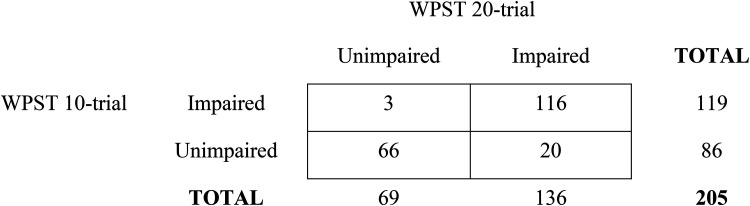 Figure 4
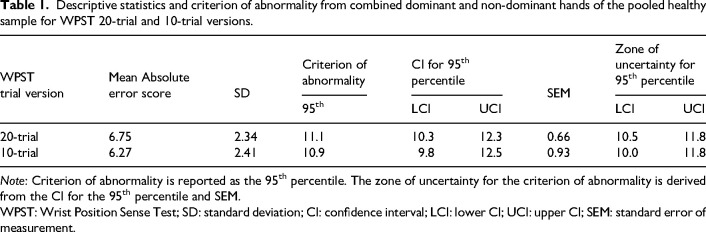 Figure 5
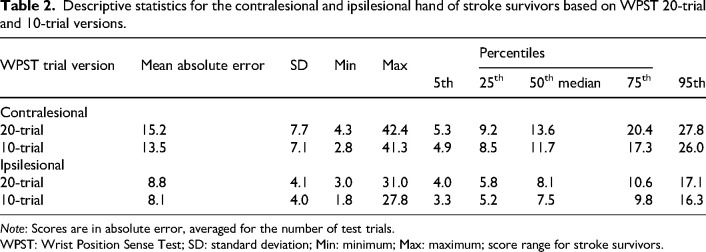 Figure 6
Peer Reviews
No public reviews on file for this paper yet. If you reviewed it on a platform where reviews are public (OpenReview, ICLR, NeurIPS, ICML), you can paste yours below so the community can read it here.
Videos
No videos yet. Explain this paper in a talk, walkthrough, or lecture? Add one.
Taxonomy
TopicsStroke Rehabilitation and Recovery · Spatial Neglect and Hemispheric Dysfunction · Botulinum Toxin and Related Neurological Disorders