Evaluating the efficacy of smoke management technologies in laparoscopic sleeve gastrectomy: insights from a prospective, single-centre comparative study
Cédric R. D. Demtröder, Daniel Göhler, Kathrin Oelschlägel, Claudia Jahn-Wolf, Hülya Agarius, Peter Kirchmeyer, Fabian Kockelmann, Sébastien Roger, Mehdi Ouaissi, Dmitrij Dajchin, Urs Giger-Pabst

TL;DR
This study compares three smoke management technologies during laparoscopic sleeve gastrectomy to determine their effectiveness in clearing surgical smoke and maintaining operating conditions.
Contribution
The study provides empirical performance data on smoke management technologies in human laparoscopic surgery, comparing their efficiency and impact on CO2 consumption and visibility.
Findings
Electrostatic precipitation (ESP) had the highest smoke clearance efficiency with a concentration half-life of 7.2 seconds.
ESP consumed significantly less CO2 compared to continuous active filtration (CAF) and continuous passive filtration (CPF).
All technologies maintained good intraoperative visibility and stable capnoperitoneal pressure.
Abstract
Surgical power devices generate surgical smoke that may contain infectious components. Various technologies have been developed to improve surgical smoke management, but comparative performance data from human studies are limited. A prospective, single-centre study was performed for evaluating three smoke management technologies - continuous passive filtration (CPF), electrostatic precipitation (ESP), and continuous active filtration (CAF) - during laparoscopic sleeve gastrectomy in 15 bariatric patients. Surgical smoke concentration was monitored by condensation particle counting and single particle light scattering. Efficiency of intraoperative smoke clearance was assessed by the concentration half-life (T1/2). Secondary outcomes included total CO2 consumption, intraoperative pressure stability, and intraoperative visibility. ESP showed the highest smoke clearance efficiency (T1/2 =…
Genes, proteins, chemicals, diseases, species, mutations and cell lines named across the full text — each resolved to its canonical identifier and authoritative record.
Click any figure to enlarge with its caption.
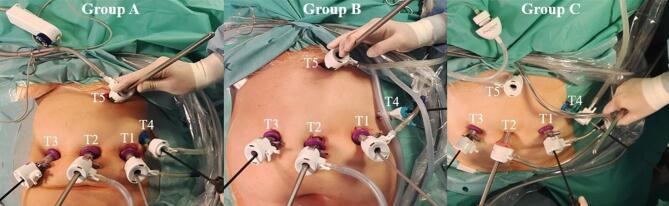 Figure 1
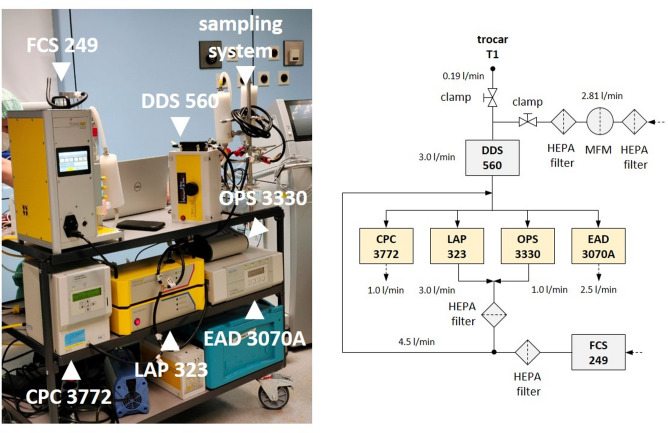 Figure 2
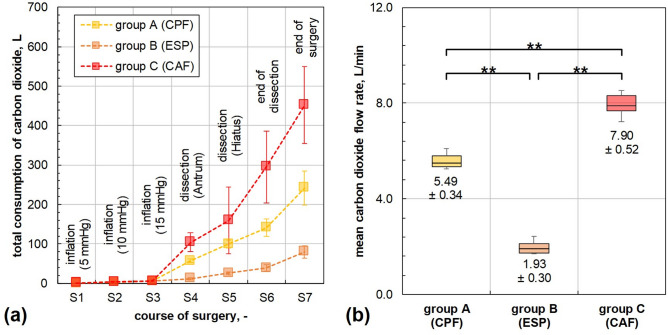 Figure 3
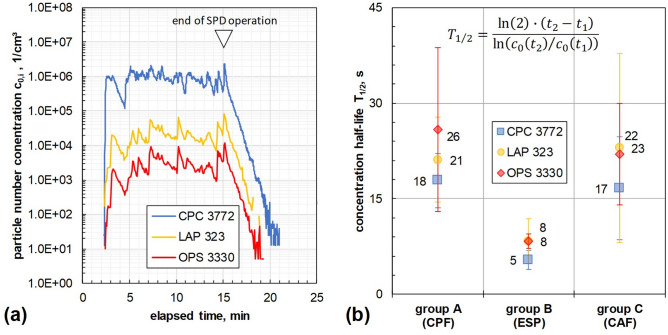 Figure 4
Peer Reviews
No public reviews on file for this paper yet. If you reviewed it on a platform where reviews are public (OpenReview, ICLR, NeurIPS, ICML), you can paste yours below so the community can read it here.
Videos
No videos yet. Explain this paper in a talk, walkthrough, or lecture? Add one.
Taxonomy
TopicsCOVID-19 and healthcare impacts · Burn Injury Management and Outcomes · Lymphatic System and Diseases