Evolutionary history and climate-driven dynamics of transposable elements has shaped genome evolution in the Coffea genus
Mathilde Dupeyron, Laura Gonzalez-Garcia, Simon Orozco-Arias, Rickarlos Bezandry, Nathalie Raharimalala, Luiz Felipe Protasio Pereira, Dominique Crouzillat, Petra De Block, Coralie Fournier, Laurence Bellanger, Patrick Descombes, Perla Hamon, Douglas Silva Domingues, Romain Guyot

TL;DR
The study shows how transposable elements and climate have shaped genome evolution in the Coffea genus, leading to species adaptation and divergence.
Contribution
The study provides new insights into the role of transposable elements and environmental factors in shaping genome size and evolution in Coffea species.
Findings
Genome size and transposable element landscapes are structured by phylogenetic relationships and lineage-specific retrotransposon dynamics.
Specific transposable element families are associated with environmental variables like isothermality and annual precipitation.
Transposable elements contribute to genomic divergence and adaptation in Coffea species across different geographic regions.
Abstract
Genome size variation is a fundamental feature of plant genomes and plays an important role in phenotypic diversity, ecological adaptation, and plant evolution across angiosperms. In the Coffea genus (Rubiaceae, 141 species/taxa), significant genome size variations have been observed. There has been nearly a twofold increase between species from East and West Africa and a notable increase from northwest to southeast Madagascar, resulting in geographic gradients. Previous studies suggest a role of Long Terminal Repeat (LTR) retrotransposons in these variations; however, the low resolution of the data to support this hypothesis did not allow for a clear understanding of LTR retrotransposons dynamics within the genus. Here, we present an analysis of the genomes of 22 Coffea species mainly from Africa and Madagascar and their genome size variations within a robust phylogenetic framework.…
Genes, proteins, chemicals, diseases, species, mutations and cell lines named across the full text — each resolved to its canonical identifier and authoritative record.
Click any figure to enlarge with its caption.
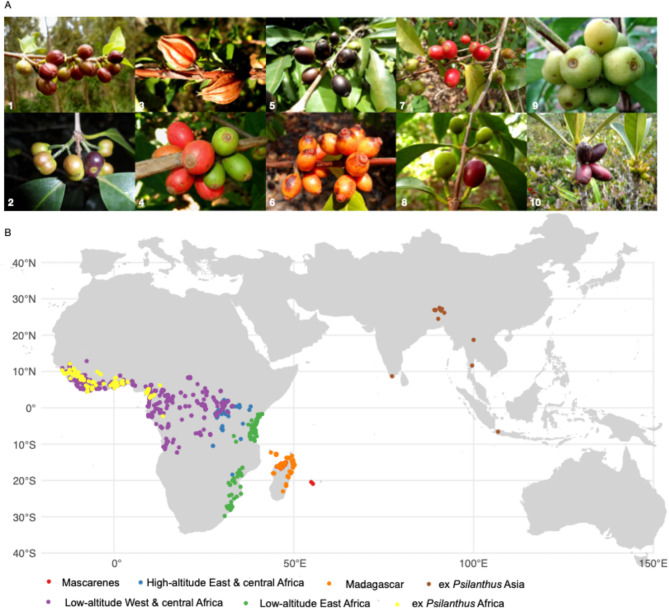 Figure 1
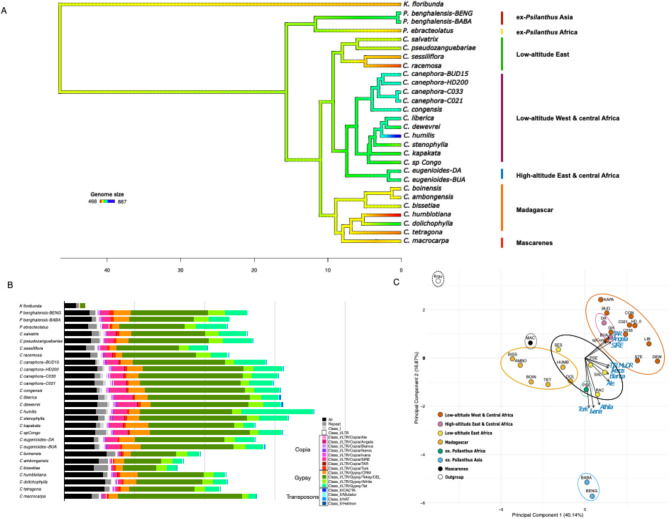 Figure 2
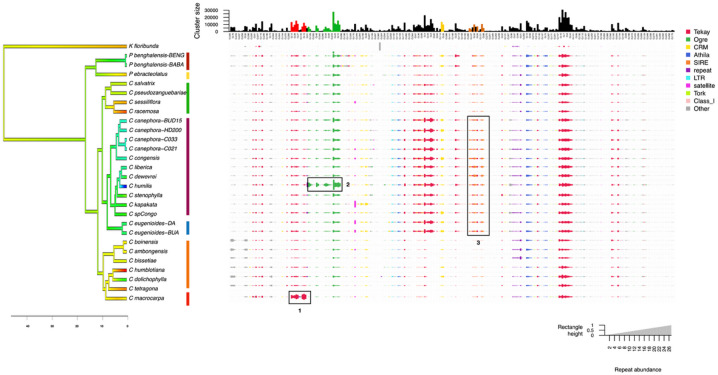 Figure 3
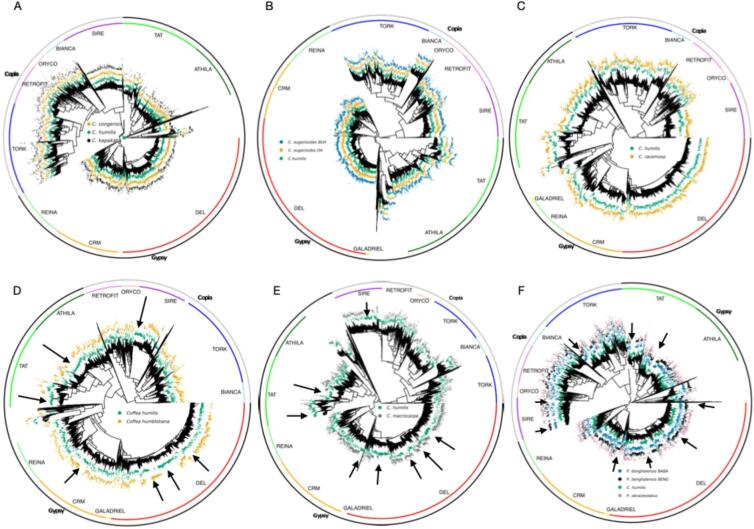 Figure 4
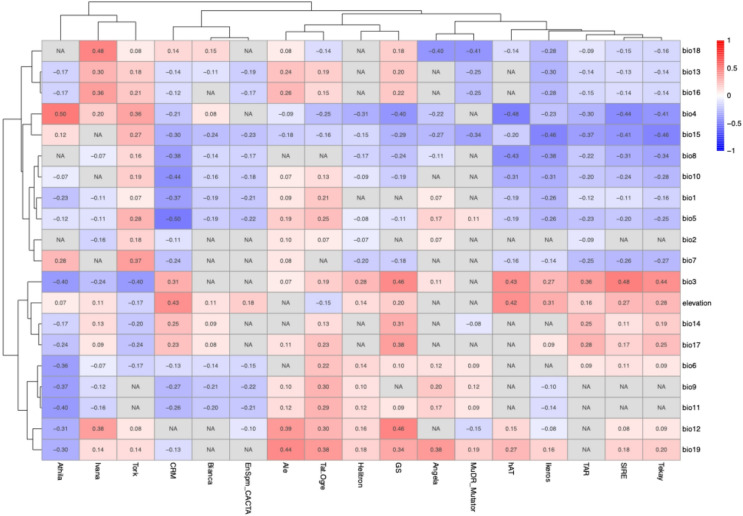 Figure 5
Peer Reviews
No public reviews on file for this paper yet. If you reviewed it on a platform where reviews are public (OpenReview, ICLR, NeurIPS, ICML), you can paste yours below so the community can read it here.
Videos
No videos yet. Explain this paper in a talk, walkthrough, or lecture? Add one.
Taxonomy
TopicsChromosomal and Genetic Variations · Genomics and Phylogenetic Studies · Plant Diversity and Evolution