Validation and reliability of Kinovea video analysis for temporomandibular and cervical range of motion in children with spastic cerebral palsy
Özge Baykan Çopuroğlu, Baki Umut Tuğay, Muhammet Furkan Vatan

TL;DR
Kinovea software is a reliable and precise tool for measuring jaw and neck movement in children with spastic cerebral palsy, offering a cost-effective alternative to traditional methods.
Contribution
The study validates Kinovea's use for temporomandibular and cervical range of motion in children with spastic CP.
Findings
Kinovea showed excellent concurrent validity compared to manual goniometry (r = 0.87–0.99).
Intra- and inter-rater reliability were high (ICC = 0.91–0.97).
Bland–Altman analysis confirmed consistent agreement between Kinovea and manual goniometry.
Abstract
Spastic cerebral palsy (CP) affects mandibular and cervical motor control, making accurate assessment of range of motion (ROM) clinically important. Manual goniometry is widely used but observer-dependent, whereas advanced 3D motion systems are costly. Kinovea software offers a two-dimensional, digital video-based alternative; however, its validity in this population remains unclear. Fifty-two children with spastic CP (mean age = 10.8 ± 2.4 years; GMFCS I–IV) underwent mandibular and cervical ROM assessment using manual goniometry and Kinovea video analysis. Two raters performed measurements twice, 1 week apart. Concurrent validity (Pearson’s r), intra/inter-rater reliability (ICC), SEM, MDC95, and Bland–Altman agreement analyses were conducted. Kinovea demonstrated excellent concurrent validity compared with manual goniometry (r = 0.87–0.99, p < 0.001) across all assessed movements.…
Genes, proteins, chemicals, diseases, species, mutations and cell lines named across the full text — each resolved to its canonical identifier and authoritative record.
Click any figure to enlarge with its caption.
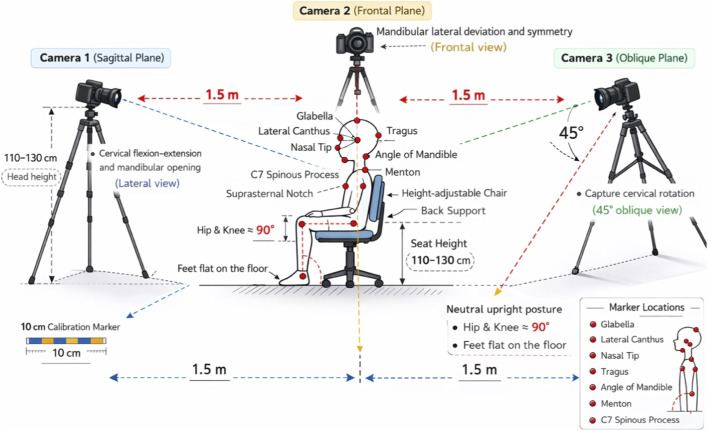 Figure 1
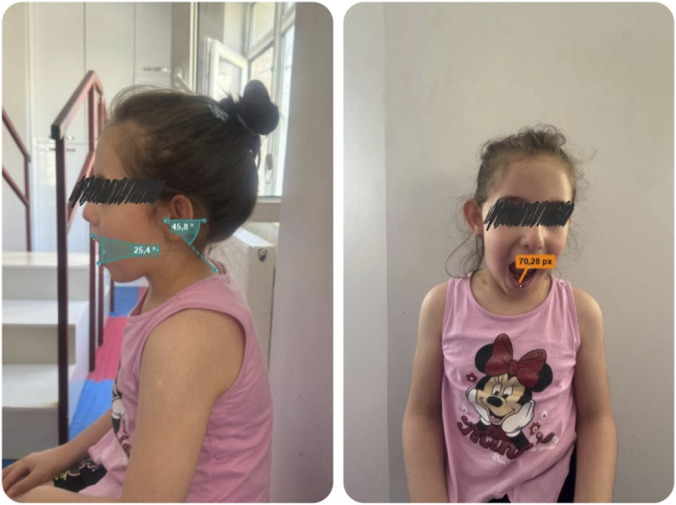 Figure 2
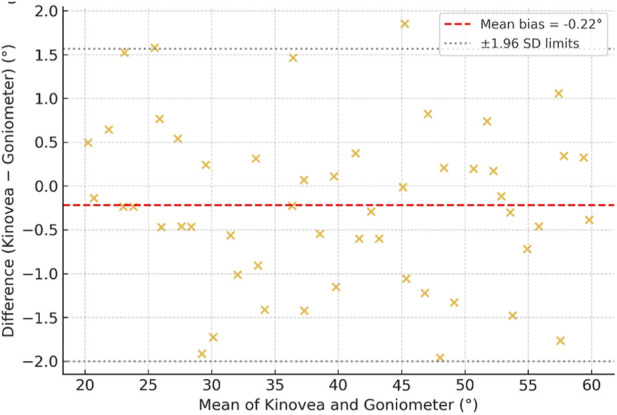 Figure 3
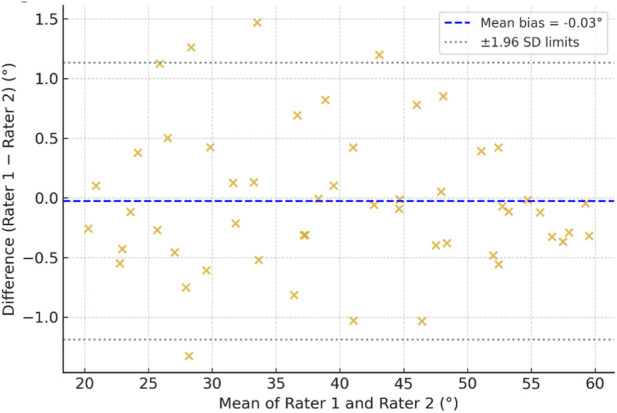 Figure 4
Peer Reviews
No public reviews on file for this paper yet. If you reviewed it on a platform where reviews are public (OpenReview, ICLR, NeurIPS, ICML), you can paste yours below so the community can read it here.
Videos
No videos yet. Explain this paper in a talk, walkthrough, or lecture? Add one.
Taxonomy
TopicsBotulinum Toxin and Related Neurological Disorders · Cerebral Palsy and Movement Disorders · Temporomandibular Joint Disorders