Editorial: Translational potential of novel biomarkers and molecular targets in lifestyle disorders
Atin Kalra, Pradip Nirbhavane, Chhanda Charan Danta, Priyanka Saroj, Ravinder Nayak

Abstract
Genes, proteins, chemicals, diseases, species, mutations and cell lines named across the full text — each resolved to its canonical identifier and authoritative record.
Click any figure to enlarge with its caption.
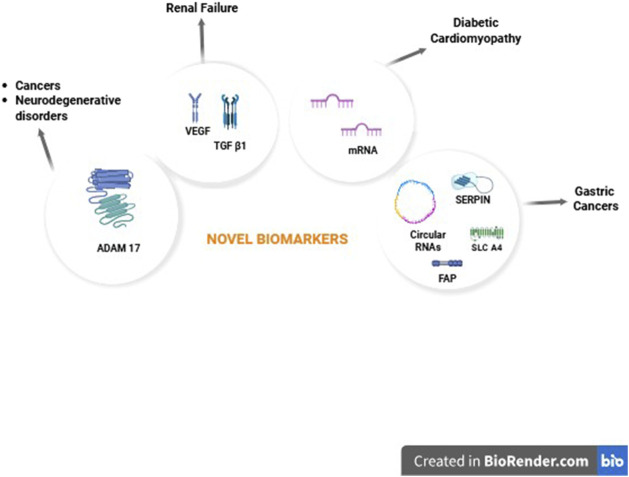 FIGURE 1
Peer Reviews
No public reviews on file for this paper yet. If you reviewed it on a platform where reviews are public (OpenReview, ICLR, NeurIPS, ICML), you can paste yours below so the community can read it here.
Videos
No videos yet. Explain this paper in a talk, walkthrough, or lecture? Add one.
Taxonomy
TopicsGDF15 and Related Biomarkers · Phosphodiesterase function and regulation · Renin-Angiotensin System Studies
Aims and scopes of this research topic
Lifestyle disorders, also known as non-communicable diseases, are chronic in nature and can be attributed to poor diet, lack of physical activity, prolonged stress, predisposition to diseases, etc. These factors thus make one vulnerable to conditions such as cardiovascular diseases, diabetes, cancer, and chronic respiratory diseases.
As per the World Health Organization (WHO), 43 million deaths have been reported due to these non-communicable diseases. In 2021. Over 18 million of these deaths were considered “premature” (before age 70), and 82% of these premature deaths occurred in low- and middle-income countries (World Health Organization, 2025).
There has been a concerted effort to address the rise of lifestyle disorders by developing better therapeutics and focusing on preventive measures through the development of newer and more efficient biomarkers.
A biomarker is defined as a substance, structure, or process that can be objectively quantified as an indicator of typical biological functions, disease processes, or biological reactions to exposure (Aryutova et al., 2021). Thus, they play a critical role in the early detection and diagnosis of these lifestyle diseases.
This Research Topic contains six articles: three reviews, two original research articles, and one clinical trial. These articles focus on the current state of the art in the area of biomarkers in various inflammatory like gastric cancers and cardiovascular diseases. Further, the role of transmembrane proteases in the pathogenesis of neurodegenerative diseases is also discussed (Figure 1).
Novel biomarkers and their role in various diseases (Created in https://BioRender.com).
Shifting paradigms in biomarker research and its potential impact on treatment outcomes
Dysregulation of a disintegrin and metalloproteinase (ADAM)
ADAM17 is a type I transmembrane protein consisting of 824 amino acids, encoded by a gene located on chromosome 2 (Rose-John, 2013). Strong evidence suggests dysregulation of ADAM17 activity has been implicated in various diseases, including inflammatory disorders, cancer, cardiovascular disease, and neurodegenerative disease (Liu et al.). Its ability to process tumor necrosis factor-alpha (TNF-α) and epidermal growth factor receptor (EGFR) ligands makes it a critical player in disease progression and a promising therapeutic target. Recent literature suggests it has a significant role in the progression of various cancers, including colorectal and gastric cancers (Chen et al., 2024). Also, its involvement in cardiovascular diseases like myocardial infarction is being investigated (Kawai et al., 2021).
Novel biomarkers in the detection of gastric cancer (GC)
GC ranks fourth in the world for mortality among malignancies and fifth for incidence (Mamun et al., 2024).
Conventional serum markers often fail to detect GC at curable stages or distinguish it from benign conditions, resulting in missed opportunities for timely intervention. Markers used in GC, such as carcinoembryonic antigen (CEA), cancer antigen (CA19-9), and CA72-4, are constrained by low sensitivity and specificity, particularly for early-stage disease (Kaur et al.). Recent studies have identified upregulation of enzymes such as fatty acid synthase (FASN), and transcription factors like SREBP1 have been reported; both are emerging as tissue-based biomarkers associated with tumor progression and poor prognosis. Other important biomarkers include the role of circular RNAs and Proteinase 3 (PRTN3) in GC (Kaur et al.).
Similarly, microRNAs (mRNAs) have also emerged as key regulators in various diseases, including cardiomyopathy (De et al.).
Mitochondrial dysfunction in type 2 diabetes mellitus (T2DM)
T2DM is a metabolic disorder characterised by hyperglycemia and insulin resistance. Mitochondrial dysfunction has been shown to contribute significantly to the various inflammation responses associated with T2DM. Imeglimin, an oral antidiabetic agent, has demonstrated dual-purpose action to control hyperglycemia. However, real-life evidence is limited. Satheesan et al. studied the effect of Imeglimin monotherapy and compared it with its combination therapy with other antidiabetics and assessed their impact on mitochondrial distress via circulating cell-free mitochondrial DNA (ccf-mtDNA).
Emerging role of vascular endothelial growth factor (VEGF) and endothelin-1 (ET-1)
End-stage renal failure patients rely on frequent dialysis, which is cumbersome for both patient and caregiver, requiring advanced facilities that are often a big constraint in resource-poor countries. Current focus area to address this includes studying the role of biomarkers such as transforming growth factor-β1 (TGF-β1), VEGF, and ET-1, and their levels in peritoneal dialysis effluent on peritoneal solute transport function (Han et al.).
Drug repurposing for managing lifestyle disorders
Recently, drug repurposing has become an important arsenal in managing various diseases like cancers. The role of ondansetron’s anti-inflammatory and antioxidant activity has been studied for possible use in reducing pro-inflammatory markers and oxidative stress in the liver (Naeem et al.). This has provided an opportunity for further investigation into its role in the management of diabetes and non-alcoholic fatty liver disease (NAFLD).
Concluding remarks
This Research Topic has provided recent developments in the area of biomarker research and novel targets for lifestyle diseases. The emerging evidence of the role of these biomarkers in the treatment of various inflammatory diseases is likely to transform into robust clinical markers in the near future. Because of their high sensitivity, biomarkers like ADAM17, SREBP1, and circular RNA have the potential to revolutionise the early detection of GC. Similarly, other biomarkers like VEGF and ET-1 have been strongly associated with renal failure. Finally, with robust experimental evidence and proof of concept studies, these biomarkers are providing an opportunity for the repurposing of drugs like ondansetron in the management of diabetes and NAFLD.
The reference list from the paper itself. Each links out to its DOI / PubMed record.
- 1Abhishek S. Kumar J. S. Leela K. V. Murugesan R. (2025). Imeglimin-based therapies improve glycemic control and reduce mitochondrial stress in type 2 diabetes: a prospective cohort study. Front. Endocrinol. 16, 1639046. 10.3389/fendo.2025.1639046 PMC 1250044541064360 · doi ↗ · pubmed ↗
- 2Aryutova K. Stoyanov D.St. Kandilarova S. Todeva-Radneva A. Kostianev S. S. (2021). Clinical use of neurophysiological biomarkers and self-assessment scales to predict and monitor treatment response for psychotic and affective disorders. Curr. Pharm. Des. 27 (39), 4039–4048. 10.2174/1381612827666210406151447 33823771 · doi ↗ · pubmed ↗
- 3Chen G. Cong L.-H. Gu C.-J. Li P. (2024). Correlation between TEX 14 and ADAM 17 expressions in colorectal cancer tissues of elderly patients and neoplasm staging, invasion, and metastasis. World J. Clin. Cases 12 (24), 5492–5501. 10.12998/wjcc.v 12.i 24.5492 39188605 PMC 11269982 · doi ↗ · pubmed ↗
- 4Kawai T. Elliott K. J. Scalia R. Eguchi S. (2021). Contribution of ADAM 17 and related ADA Ms in cardiovascular diseases. Cell. Mol. Life Sci. 78 (9), 4161–4187. 10.1007/s 00018-021-03779-w 33575814 PMC 9301870 · doi ↗ · pubmed ↗
- 5Mamun T. I. Younus S. Rahman Md.H. (2024). Gastric cancer - epidemiology, modifiable and non-modifiable risk factors, challenges and opportunities: an updated review. Cancer Treat. Res. Commun. 41, 100845. 10.1016/j.ctarc.2024.100845 39357127 · doi ↗ · pubmed ↗
- 6Rose-John S. (2013). ADAM 17, shedding, TACE as therapeutic targets. Pharmacol. Res. 71, 19–22. 10.1016/j.phrs.2013.01.012 23415892 · doi ↗ · pubmed ↗
- 7World Health Organization (2025). Noncommunicable diseases. Available online at: https://www.who.int/news-room/factsheets/detail/noncommunicable-diseases (Accessed December 10, 2025).