Efficacy of ChatGPT in personalized glucose-lowering strategy development: a clinician-based comparative study
Yu Wang, Cheng-Lin Zhang, Huijuan Zhao, Chang Wang, Lin Guo, Pengfei Wei, Mingyue Jin, Aiping Li, Qiang Li, Hongyan Pan

TL;DR
This study compares ChatGPT-4o's ability to create diabetes treatment plans with human doctors, finding it performs well on simple cases but needs improvement for complex ones.
Contribution
First comparative study of ChatGPT-4o's glucose-lowering strategy performance against physicians in real-world diabetes cases.
Findings
ChatGPT-4o passed China's endocrinology qualification exam with scores above 60%.
Its strategies scored similarly to general practitioners but lower than specialists for complex cases.
Performance dropped significantly with increasing case complexity.
Abstract
The increasing incidence of diabetes poses a significant burden on healthcare systems. Limited research exists on tools to assist providers in developing personalized glucose-lowering strategies, which could alleviate this pressure and enhance patient outcomes. This study aims to evaluate the capability of ChatGPT-4o in developing personalized glucose-lowering strategies for individuals with diabetes. First, an evaluation of ChatGPT-4o’s performance on China’s qualification examination for attending physicians in endocrinology. Second, a cross-sectional study was conducted, involving the comparison of glucose-lowering strategies formulated by ChatGPT-4o, general practitioners (GPs), and attending physicians (APs) in endocrinology for a set of 30 real-world diabetes cases. Three clinical experts scored blindly the reasonableness of each strategy on a scale, with stratification of cases…
Genes, proteins, chemicals, diseases, species, mutations and cell lines named across the full text — each resolved to its canonical identifier and authoritative record.
Click any figure to enlarge with its caption.
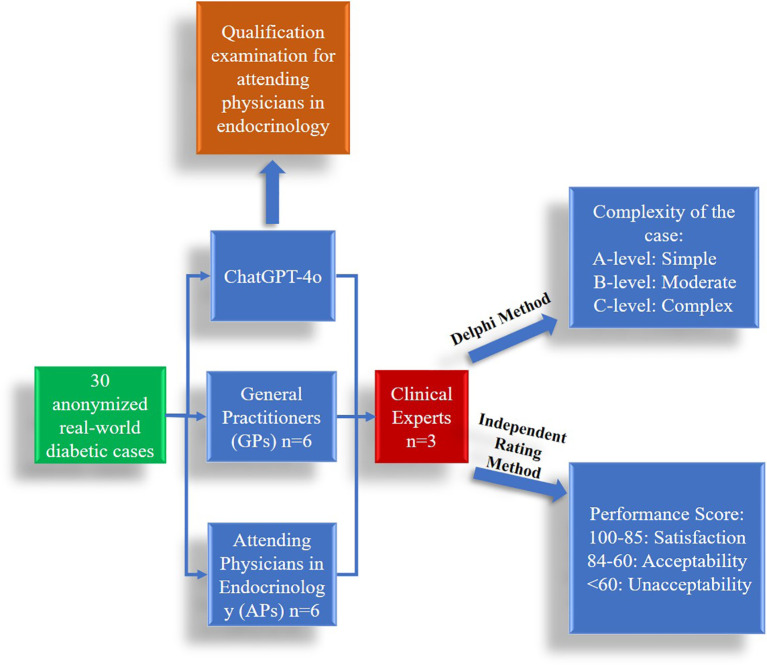 Figure 1
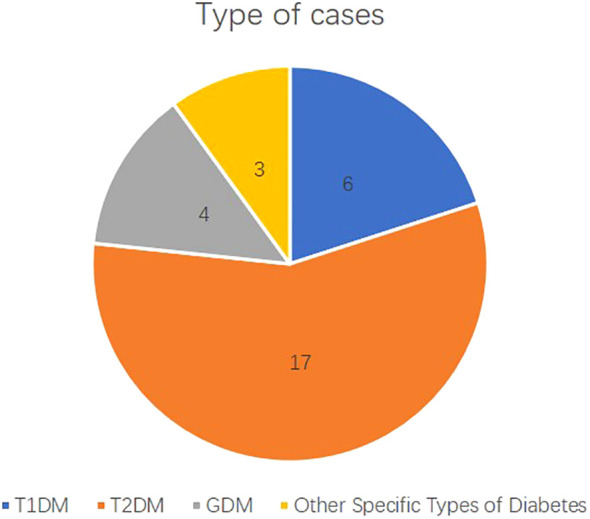 Figure 2
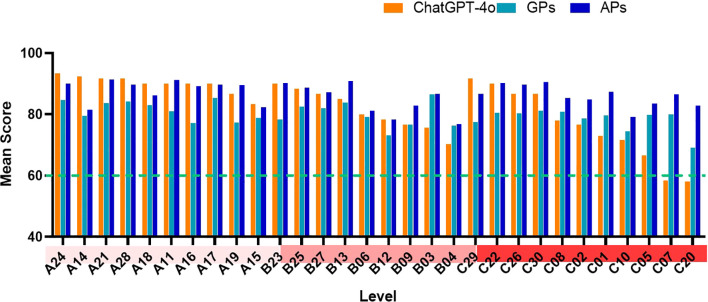 Figure 3
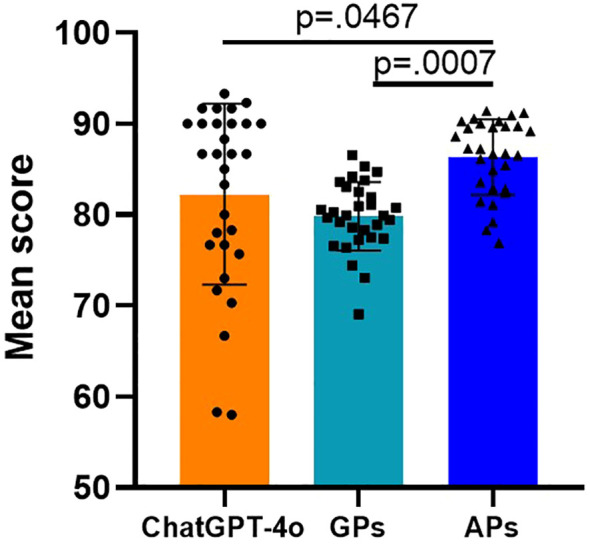 Figure 4
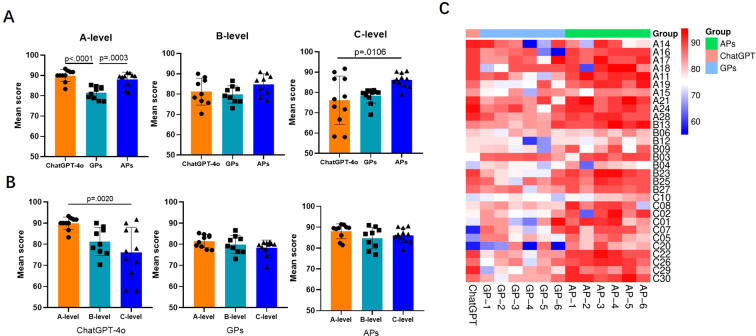 Figure 5
| ID | Age (years) | Sex | Disease duration | BMI (kg/m²) | HbA1c (%) | Type | Clinical characteristics |
|---|---|---|---|---|---|---|---|
| A19 | 35 | F | 1 week | 23.02 | 6.5 | GDM | Gestational diabetes mellitus |
| A21 | 28 | F | 1 day | 28 | 7.5 | GDM | Insulin resistance |
| A24 | 32 | F | 1 day | 25 | 5.8 | GDM | Mild GDM |
| B23 | 30 | F | 2 weeks | 23 | 6.2 | GDM | Hepatic impairment |
| A28 | 45 | M | 1 year | 19.60 | 9.5 | Other Specific Types of Diabetes | Pancreatogenic diabetes |
| C29 | 28 | F | 6 months | 19.30 | 7.8 | Other Specific Types of Diabetes | MODY3 (HNF1α mutation) |
| C30 | 38 | F | 1 year | 18.4 | 8.9 | Other Specific Types of Diabetes | Mitochondrial diabetes (m.3243A>G mutation) |
| A14 | 28 | F | 8 months | 17.57 | 7 | T1DM | New-onset diabetes |
| A17 | 6.75 | M | 20 days | 15.1 | 12.7 | T1DM | Pediatric case |
| B25 | 32 | M | 3 months | 20.2 | 8.7 | T1DM | LADA |
| B27 | 52 | M | 12 years | 19.03 | 9.2 | T1DM | Renal dysfunction |
| C22 | 25 | F | 3 days | 19.5 | 7.8 | T1DM | Fulminant type 1 diabetes during pregnancy |
| C26 | 14 | F | 1 month | 16.8 | 12.5 | T1DM | DKA |
| A11 | 33 | M | 1 year | 37.62 | 8.8 | T2DM | Mild hepatic dysfunction |
| A15 | 63 | M | 20 years | 23.72 | 7.6 | T2DM | Long-standing diabetes with poor islet function |
| A16 | 13 | F | 3 days | 25.68 | 7.7 | T2DM | Pediatric case |
| A18 | 26 | M | 1 month | 22.79 | 12.5 | T2DM | Diabetic ketosis |
| B12 | 33 | M | 3 days | 22.03 | 6.6 | T2DM | New-onset diabetes |
| B13 | 34 | F | 1 year | 31.77 | 8 | T2DM | New-onset diabetes |
| B3 | 65 | F | 2 days | 27.18 | 6 | T2DM | Family history of medullary thyroid carcinoma |
| B4 | 48 | M | 3 years | 28.68 | 8 | T2DM | Bladder cancer |
| B6 | 76 | M | 20 days | 26.98 | 6.6 | T2DM | Heart failure |
| B9 | 71 | M | 3 years | 28.4 | 8 | T2DM | Renal insufficiency |
| C1 | 34 | M | 1 year | 28.87 | 7.8 | T2DM | History of pancreatitis |
| C10 | 72 | M | 1 day | 21.64 | 8.5 | T2DM | Renal insufficiency |
| C2 | 43 | M | 2 years | 31.7 | 6.7 | T2DM | Hyperlipidemia |
| C20 | 81 | F | 3 years | 19.8 | 8 | T2DM | Pancreatic cancer with hepatic dysfunction |
| C5 | 43 | M | 3 years | 25.49 | 7.9 | T2DM | Gastrointestinal dysfunction |
| C7 | 34 | M | 1 month | 57.7 | 6.3 | T2DM | Severe obstructive sleep apnea with hypoxemia |
| C8 | 61 | F | 10 years | 17.41 | 9.8 | T2DM | Diabetic nephropathy |
| Evaluation criteria | Weight (%) | Description |
|---|---|---|
| Safety of drug selection and combinations | 30% | Assessment of whether chosen drugs and their combinations pose minimal risks. |
| Rationale for drug selection | 20% | Justification based on guidelines, evidence, or patient-specific factors. |
| Appropriateness of dosage choices | 20% | Evaluation of dosing accuracy (e.g., age, weight, renal/hepatic function). |
| Management of side effects | 20% | Documentation of monitoring and mitigation strategies for adverse effects. |
| Presence of drug contraindications | 10% | Verification that no absolute contraindications were overlooked. |
| Proportion and item | Score | Accuracy rate (%) |
|---|---|---|
| Section 1 (Fundamental Knowledge) | 84/100 | 84% |
| Section 2 (Relevant Professional Knowledge) | 68/100 | 68% |
| Section 3 (Professional Knowledge) | 84/100 | 84% |
| Section 4 (Professional Practice Ability) | 49.7/70 | 71% |
| Subject of assessment | Mean score | Satisfaction | Acceptability | Unacceptability |
|---|---|---|---|---|
| ChatGPT-4o | 82.24 ± 9.933 | 17 | 11 | 2 |
| A:89.90 ± 2.936 | 9 | 1 | 0 | |
| B:81.22 ± 6.629 | 4 | 5 | 0 | |
| C:76.12 ± 11.93 | 4 | 5 | 2 | |
| GPs | 79.83 ± 3.768 | 2 | 28 | 0 |
| A:81.48 ± 3.084 | 1 | 9 | 0 | |
| B:79.81 ± 4.236 | 1 | 8 | 0 | |
| C:78.35 ± 3.622 | 0 | 11 | 0 | |
| APs | 86.35 ± 4.142 | 20 | 10 | 0 |
| A:88.05 ± 3.538 | 8 | 2 | 0 | |
| B:84.77 ± 5.169 | 5 | 4 | 0 | |
| C:86.09 ± 3.450 | 7 | 4 | 0 |
| 34-year-old male patient with a diagnosis of diabetes mellitus for 1 month and previous respiratory sleep apnea hypoxemia. He was 180cm tall and weighed 187kg.BMI: 57.7 kg/m2. Liver function, renal function, blood lipids were normal, urine ketone body, urine protein was negative. SpO2 85%. Fasting blood glucose: 5 mmol/L. 2-hour postprandial blood glucose: 8.5 mmol/L, glycated hemoglobin: 6.3%. Fasting insulin level: 153.9 pmol/L (reference range 17.8-173 pmol/L). Please develop a reasonable glucose-lowering program for this patient. | |
| Previous | Update |
|---|---|
| Pharmacologic Therapy: | Pharmacologic Therapy: |
Peer Reviews
No public reviews on file for this paper yet. If you reviewed it on a platform where reviews are public (OpenReview, ICLR, NeurIPS, ICML), you can paste yours below so the community can read it here.
Videos
No videos yet. Explain this paper in a talk, walkthrough, or lecture? Add one.
Taxonomy
TopicsArtificial Intelligence in Healthcare and Education · Mobile Health and mHealth Applications · Digital Mental Health Interventions
Introduction
1
The rising prevalence of diabetes presents a substantial threat to global public health. It is projected that by 2045, diabetes will affect 783 million individuals worldwide (1), imposing significant economic and workload challenges on healthcare systems, general practitioners (GPs), and endocrinologist. Moreover, according to the 2021 International Diabetes Federation’s Diabetes Atlas, it is estimated that 44.7% of adults with diabetes remain undiagnosed, with over 81% of these individuals residing in low- and middle-income countries that have limited medical resources (1). The management of diabetes encompasses diabetes education, dietary interventions, exercise regimens, pharmacotherapy, and self-monitoring of blood glucose. However, chronic disease management demands significant time and energy from primary healthcare workers. Furthermore, the uneven distribution of medical resources often results in suboptimal management of many diabetic patients, particularly those in remote or low-income areas. These patients often lack access to specialized care from endocrinologists. The development of a personalized glucose-lowering strategy represents a pivotal aspect of effective diabetes management. Achieving this necessitates careful consideration of patient-specific factors, requiring healthcare workers to possess both a strong foundation in fundamental knowledge and extensive clinical expertise.
Artificial intelligence (AI) is a rapidly evolving field of science, particularly in light of recent developments in Large Language Models (LLMs). LLMs are developed using advanced natural language processing techniques, enabling them to recognize and comprehend the structure and semantics of human language. These models are capable of classifying texts based on content or intent and generating responses that are both contextually appropriate and coherent (2). Chat Generative Pre-Trained Transformer (ChatGTP) represents a notable milestone of AI development (3). ChatGPT-4o was developed by OpenAI and released in May 2024. The language model was trained on a corpus of textual data comprising web pages, articles, and books, up until October 2023.
As a representative of advanced AI, ChatGPT has demonstrated considerable potential both preclinically and clinically. Researchers assessed ChatGPT’s clinical reasoning abilities by testing it with questions from the U.S. Medical Licensing Examination (USMLE). Impressively, without any prior reinforcement or specific training, the technology managed to pass these exams with an accuracy rate of 60% (4, 5). While passing the examination is only a prerequisite of becoming a doctor, the potential applications of ChatGPT in medicine are currently being extensively researched. In fact, AI has shown great potential in the management of diabetes (6), including health education (7–9), AI-based diet recommendations (10, 11), intelligent personalized exercise prescription (12, 13), prediction and detection of hypoglycemia (14, 15), dosing strategies for insulin therapy (16) and screening for diabetes complications (17). However, there is scarce data on its reliability and accuracy in personalizing glucose-lowering strategies for clinical diabetic cases. In this study, we aimed to explore whether ChatGPT can accurately formulate glucose-lowering strategies for different types of clinical diabetic cases, with the aim of determining whether AI can effectively serve as an assistant to healthcare workers, support clinical decision-making, and identify its potential limitations for future enhancement.
Methods
2
This cross-sectional study was conducted in a large tertiary hospital in Guangdong Province, China, and included 30 anonymized real-world diabetic cases. Participants comprised six attending physicians (APs) in endocrinology from three major tertiary hospitals, six general practitioners (GPs) from five community health service centers, and three clinical experts in endocrinology from two major tertiary hospitals. This study follows Strengthening the Reporting of Observational Studies in Epidemiology (STROBE) reporting guideline. Figure 1 illustrates the experimental procedure. Figure 2 illustrates distribution of different types of diabetes mellitus cases. This study was reviewed by the Institutional Review Board of Shenzhen University General Hospital (SUGH), which determined that the use of de-identified clinical text data from the SUGH Information Commons does not constitute human subjects research and is therefore exempt from further ethical review and the requirement for informed consent. All data were processed through de-identification procedures in accordance with the Personal Information Protection Law of the People's Republic of China to ensure that no individual could be identified without additional information.
Study flow diagram.
Type of cases. Distribution of different types of diabetes mellitus cases. The bar graph represents the number of cases for Type 1 Diabetes Mellitus (T1DM, n=6), Type 2 Diabetes Mellitus (T2DM, n=17), Gestational Diabetes Mellitus (GDM, n=4), and Other Specific Types of Diabetes (n=3).
Qualification examination for attending physicians in endocrinology
2.1
In the beginning, we tested ChatGPT-4o on questions from the qualification examination for APs in endocrinology in China (qualification exam questions used in our study were all based on content from before 2023, which is well within the training data window of ChatGPT-4o), assessing its mastery of professional knowledge in internal medicine and endocrinology. The examination is divided into four sections: Fundamental Knowledge (100 single-choice questions), Relevant Professional Knowledge (100 single-choice questions), Professional Knowledge (100 single-choice questions), and Professional Practice Ability (70 multiple-choice questions, with multiple correct answers). The Fundamental Knowledge and Relevant Professional Knowledge sections focus on fundamental concepts and case analysis in internal medicine. The Professional Knowledge and Professional Practice Ability sections assess essential endocrinology knowledge and clinical competence. An accuracy rate of over 60% in each section of the exam is considered passing.
Evaluation of the ability of ChatGPT-4o, GPs, and APs to formulate personalized glucose-lowering strategies
2.2
After that, we assessed ChatGPT-4o’s clinical practice abilities and compared them with those of GPs working in community health centers and APs working in endocrine specialties in large general hospitals. For this analysis, we selected 30 real-world clinical diabetic cases admitted to the Department of Endocrinology and Metabolic Diseases at SUGH, a tertiary hospital, between 2021 and 2024. These cases included various types of diabetes, such as type 1 diabetes, type 2 diabetes, gestational diabetes and specific types of diabetes, covering both pediatric and adult populations. Brief cases information is presented in Table 1. To begin with, six GPs from five community health centers, six APs in endocrinology from three large tertiary general hospitals, and ChatGPT-4o were tasked with developing personalized glucose-lowering strategies tailored to the specific characteristics of these cases. The cases were categorized using a three-point scale, with categories A (n = 10), B (n = 9), and C (n = 11) representing progressively increasing levels of complexity, which were determined by three clinical experts in endocrinology from two hospitals, each with over 20 years of clinical experience and senior professional titles using the Delphi method. Complexity factors included advanced age, impaired liver or kidney function, intricate medical histories, and potential drug contraindications. The quality of the proposed glucose-lowering strategies was independently evaluated by three clinical experts, in accordance with the “China Guidelines for the Prevention and Treatment of Type 2 Diabetes (2023)” and the “ADA Standards of Care in Diabetes-2023”. The evaluation criteria included the safety and rationale of drug selection and combinations, dosage choices, management of side effects, and the presence of any drug contraindications (Table 2). After that, a designated individual standardized the responses from the three groups into comparable sentences to ensure consistency and to eliminate any potential influence of linguistic variations on the expert assessments. In the end, three clinical experts in endocrinology conducted a comprehensive evaluation and analysis of the quality and limitations of the responses provided by the GPs, APs, and ChatGPT-4o. The evaluation scores ranged from 0 to 100, with scores of 85 or above indicating satisfaction, meaning that the drug selection and combinations were appropriate, dosages were reasonable, and they met the patient’s personalized needs. Scores of 60 to 84 indicated acceptability, suggesting that while the drug selection was adequate, there may have been certain deficiencies, such as dosage or type, and it lacked personalization for the patient’s specific characteristics. Scores below 60 indicated unacceptability, highlighting significant deficiencies, such as inappropriate or unsafe medication choices. All participating clinicians and experts were blinded to the purpose of the study and the experimental group assignments. The specific inclusion criteria were as follows:
GPs: those general practitioners working at community health service centers with 2–4 years of clinical experience and junior professional titles were included.APs: those from the endocrinology department of large tertiary general hospitals with 2–4 years of clinical practice and junior professional titles were included.Clinical experts: those from the endocrinology department of large tertiary general hospitals with more than 20 years of clinical practice and senior professional titles were included.
Statistical analysis
2.3
The statistical analysis for multiple-group comparisons among three groups was conducted using Brown-Forsythe and Welch ANOVA to account for potential heterogeneity of variances. Post hoc pairwise comparisons were performed using the Dunnett T3 test with adjustments for multiple testing to maintain the family-wise error rate at an acceptable level. The mean scores for each group, along with their standard deviations (SD), were reported to illustrate both the central tendency and the dispersion of the data. The significance level was set at p <.05 for all tests conducted, which were two-tailed. All statistical analyses were executed using Prism 8.0.1 software, ensuring the precision and reliability of the outcomes.
Results
3
Qualification examination for attending physicians in endocrinology
3.1
In our evaluation of ChatGPT-4o, we systematically assessed its performance using a series of test questions, with specific results detailed in Supplementary Table 1. As shown in Table 3, ChatGPT-4o, without any prior reinforcement or training, achieved scores in all four sections that exceeded the passing threshold, successfully meeting the requirements to pass the qualification examination for attending physicians in endocrinology.
Evaluation of the ability of ChatGPT-4o, GPs, and APs to formulate personalized glucose-lowering strategies
3.2
The answer produced by ChatGPT-4o can be broadly classified into four main sections: lifestyle modifications, pharmacologic therapy, monitoring and follow-up, and additional considerations. To guarantee the precision of the study outcomes, we only assessed the pharmacologic therapy part. To ensure consistency across responses from three groups and minimize the impact of linguistic differences on expert evaluations, a standardization method was employed. A template with a fixed sentence structure was created, along with guidelines for completion. A trained individual extracted information from the original responses and filled in the template accordingly. A dual-review process was implemented to ensure consistency, and neutrality in language was maintained. This process ensured that the responses were structurally similar, providing a fair and unbiased basis for expert assessment.
Initially, a consistency analysis was performed on the ratings provided by three experts for 30 cases analyzed by ChatGPT. The Cronbach’s α coefficient was found to be 0.795, which suggests a relatively high degree of agreement among the expert ratings. As shown in Table 4, the mean scores (± SD) were 82.24 ± 9.933 for ChatGPT-4o, 79.83 ± 3.768 for GPs, and 86.35 ± 4.142 for APs. As case complexity increased, ChatGPT’s scores gradually decreased, with a mean score of 89.90 ± 2.936 for A-level cases, 81.22 ± 6.629 for B-level cases, and 76.12 ± 11.93 for C-level cases. The mean scores for GPs were comparable to those of ChatGPT-4o, but the score gradually decreased as the complex increased (A-level: 81.48 ± 3.084; B-level: 79.81 ± 4.236; C-level: 78.35 ± 3.622), but no statistically significant differences were observed among the groups. APs achieved the highest mean scores among the three groups, with 88.05 ± 3.538 for A-level cases, 84.77 ± 5.169 for B-level cases, and 86.09 ± 3.450 for C-level cases.
In terms of answer satisfaction (score ≥ 85), APs demonstrated the best performance, with 20 questions scoring above 85, indicating satisfaction with the answers, and another 10 questions scoring between 60 and 84, indicating acceptable answers. ChatGPT-4o provided 17 satisfactory answers, 11 acceptable answers, and 2 unacceptable answers. GPs provided only 2 satisfactory answers, while 28 answers were deemed acceptable. Among the three groups, only the ChatGPT-4o group contained unacceptable answers. Figure 3 shown the mean scores for each case assessed by ChatGPT-4o, GPs, and APs. As shown in Figure 4, there was a significant difference in the overall mean scores of APs compared to both ChatGPT-4o and GPs. However, no significant statistical difference was observed between the mean score of ChatGPT-4o and GPs. Figure 5A illustrates that for A-level questions, ChatGPT-4o achieved the highest scores, while GPs had the lowest. There were statistically significant differences in scores between ChatGPT-4o and GPs, as well as between APs and GPs. For B-level questions, there were no significant statistical differences among the three groups. Interestingly, for C-level questions, ChatGPT had the lowest scores, while APs achieved the highest. Significant statistical differences were observed between APs and ChatGPT-4o. Figure 5B illustrates the performance differences among ChatGPT-4o, GPs, and APs across varying levels of case complexity. Notably, ChatGPT-4o demonstrated significant performance variation in categories A, B, and C, with mean scores declining markedly as case complexity increased. In contrast, GPs and APs showed no statistically significant differences in performance across the case categories. Figure 5C presents the scores for each individual question across the three groups, highlighting the performance differences in detail.
Mean scores for each case assessed by ChatGPT-4o, GPs, and APs. The horizontal axis represents the level of complexity [(A) simple, (B) moderate, and (C) complex] and question number, while the vertical axis depicts the mean score.
Mean scores for each group. The overall mean scores from the 30 clinical cases indicated that ChatGPT-4o achieved a mean score of 82.24 ± 9.933, which is comparable to that of GPs (79.83 ± 3.768), but lower than that of APs (86.35 ± 4.142). n = 30 for each group.
Mean scores of the groups for cases of different complexity. (A) Performance varied with case complexity. For A-level questions (n=10), ChatGPT-4o achieved the highest scores, while GPs had the lowest. There were statistically significant differences in scores between ChatGPT-4o and GPs, as well as between APs and GPs. For B-level questions (n=9), there were no significant statistical differences among the three groups. For C-level questions (n=11), ChatGPT-4o had the lowest scores, while APs achieved the highest. Significant statistical differences were observed between APs and ChatGPT-4o. (B) ChatGPT-4o demonstrated significant performance variation in A-level (n=10) and C-level (n=11), with mean scores declining markedly as case complexity increased. In contrast, GPs and APs showed no statistically significant differences in performance across the case categories. (C) This heatmap illustrates the scores of each individual across the three groups for each case question.
Within the C-level complex cases, ChatGPT’s performance exhibited considerable variability across different clinical scenarios. Four cases scored in the high range of 85–100 points, including fulminant type 1 diabetes, MODY3, mitochondrial diabetes, and diabetic ketoacidosis, suggesting that ChatGPT-4o demonstrates relative strength in managing special or atypical forms of diabetes. Five cases fell into the intermediate range of 60–85 points, encompassing diabetic kidney disease, diabetes with hyperlipidemia, diabetes with pancreatitis, diabetes with renal impairment, and diabetes with gastrointestinal dysfunction. In these cases, which involve coexisting complications or comorbidities, ChatGPT-4o’s recommendations were moderate, reflecting the additional complexity posed by multiple clinical factors. Two cases scored below 60 points, including a patient with sleep apnea and another with pancreatic cancer and impaired liver function (Supplementary Table 2). In these instances, ChatGPT-4o suggested glucose-lowering strategies that included drugs that are clinically contraindicated or should be used with caution. Although these medications are not strictly prohibited, their use requires careful consideration in the context of the patient’s overall clinical condition. These findings indicate that while ChatGPT-4o can handle typical and certain atypical diabetes cases well, its performance diminishes in highly complex scenarios involving severe comorbidities or organ dysfunction, highlighting areas where human clinical judgment remains essential.
Discussion
4
In our current study, we compared the abilities of ChatGPT-4o, GPs, and APs in formulating personalized glucose-lowering strategies for diabetic patients. We found that, overall, ChatGPT-4o performed comparably to GPs but was slightly worse than APs. In relatively simple cases classified as A-level, ChatGPT-4o demonstrated strong performance, significantly outperforming GPs. However, as case complexity increased, particularly in B-level and C-level, ChatGPT-4o’s performance gradually declined. Several recent studies have also highlighted limitations of AI and large language models in complex medical contexts. For example, analyses of LLM reasoning in open-ended clinical problem-solving have shown poor performance relative to physicians and tendencies toward inflexible pattern matching and overconfident outputs, particularly in scenarios requiring nuanced clinical judgment (18). However, an intriguing observation in our study is that the glucose-lowering regimens proposed by ChatGPT-4o for rare secondary diabetes cases, such as cases 22, 29, and 30, received high scores. We believe this finding can be explained by several factors. First, the diagnosis and management of these rare subtypes are largely guided by well-defined criteria and established guidelines, making them more knowledge- and rule-based tasks, which align well with the strengths of large language models in structured knowledge retrieval and pattern recognition. Second, ChatGPT has been trained on a broad corpus of medical literature, guidelines, and educational materials, allowing it to access and integrate information on uncommon conditions that general practitioners may encounter infrequently in routine practice. Third, the model provides highly consistent outputs that are not influenced by variability in individual clinical experience, whereas physicians’ performance in rare diseases may vary depending on prior exposure. In addition, the case vignettes used in this study typically presented characteristic clinical features, facilitating accurate knowledge matching by the model. Together, these factors may account for the comparatively higher scores observed for ChatGPT in rare diabetes subtypes. Importantly, this strength suggests potential applications of LLMs in clinical education and decision support, such as supporting trainee learning, reinforcing awareness of uncommon diagnoses, and providing structured reminders or preliminary recommendations. Nevertheless, we acknowledge that real-world management of these conditions often depends on contextual, psychosocial, and longitudinal factors that are not fully captured in vignette-based evaluations, and therefore such systems should be positioned as supportive tools rather than substitutes for clinical judgment.
Upon further analysis of the cases underperformed by ChatGPT-4o, we identified a key concern in ChatGPT-4o-proposed glucose-lowering strategies: the inability to effectively avoid certain contraindications. This limitation is particularly evident in medical scenarios requiring high precision and reliability, where inappropriate recommendations could lead to significant clinical consequences. For instance, in case 7, ChatGPT-4o recommended the use of metformin for a patient with severe obstructive sleep apnea and hypoxemia (SpO2 85%), which could significantly increase the risk of severe adverse effects such as lactic acidosis (19–22). Although cases of lactic acidosis due to metformin application are exceedingly rare, the mortality rate is around 30%-50% (22–26). Consequently, the U.S. Food and Drug Administration (FDA) recommends that these drugs be administered with caution in patients with hypoxemia. Another illustrative example is Case C20, in which a dipeptidyl peptidase-4 inhibitor (DPP-4i) was selected as the glucose-lowering therapy for an elderly patient with a prior history of pancreatic cancer, based on individual clinical characteristics. Although pancreatic cancer is not listed as a formal contraindication for DPP-4i, the drug label highlights an increased risk of pancreatitis. Both DPP-4i and glucagon-like peptide-1 (GLP-1) receptor agonists are incretin-based antidiabetic drugs. Incretin hormones, such as GLP-1, improve β-cell function and suppress glucagon secretion, thereby ameliorating hyperglycemia (27). However, incretin-based therapies are also known to exert pleiotropic effects on the exocrine pancreas, including stimulation of cellular proliferation and dysplastic changes (28). Previous observational studies have suggested that the use of DPP-4i in patients with type 2 diabetes may be associated with an increased risk of pancreatitis and pancreatic cancer (28–30). However, subsequent large cohort studies and meta-analyses have not consistently confirmed a causal relationship (31, 32). Nevertheless, from a clinical perspective, caution remains warranted when prescribing DPP-4i to patients with a history of pancreatic disease. In this case, selecting a DPP-4i as the first-line glucose-lowering therapy does not fully align with prudent, risk-aware clinical prescribing principles. Upon further analysis, we recognize that several factors may contribute to this limitation. First, the model’s training data, while extensive, may not include a sufficient number of real-world cases involving complex comorbidities or rare conditions, which could lead to gaps in recognizing contraindications. Second, its semantic reasoning capabilities, though advanced, may face challenges in synthesizing multiple pathological factors to provide a comprehensive risk assessment. Third, the coverage of the medical knowledge base, while broad, may not always be as detailed or up-to-date as professional clinical decision support systems, potentially leading to insufficient warnings for high-risk scenarios. However, recent research has demonstrated that the accuracy of LLMs in handling drug contraindications can be substantially improved through targeted training and knowledge integration. For example, by implementing a Retrieval Augmented Generation approach that combines LLMs with curated drug utilization data, models can better identify contraindications related to age, pregnancy, and concomitant medications. Such approaches highlight the potential for enhancing LLM-guided treatment recommendations and reducing the risk of prescribing errors in complex clinical scenarios (33).
Despite the less satisfactory performance on complex cases, the ChatGPT-4o exhibited certain capabilities during this trial. It performed consistently and excellently in simple cases (A-level). This indicates its potential to be a valuable supplementary tool for healthcare professionals, particularly in regions with limited resources, such as rural and low-income communities, where the scarcity of medical facilities and professionals can limit the effectiveness of diabetes management. Moreover, ChatGPT-4o can improve its accuracy through user prompts. For instance, in case 7, after we provided ChatGPT-4o with information about the FDA safety warning regarding metformin-induced lactic acidosis, it adapted its recommendations for the patient. While ChatGPT-4o still suggested metformin as a first-line treatment, it included alerts to monitor renal function (Table 5). This illustrates that ChatGPT-4o can adjust its recommendations based on specific clinical information provided by users.
The development of personalized glucose-lowering strategies is crucial in diabetes management, taking into account factors such as age, comorbidities, kidney and liver function, and lifestyle. For newly diagnosed patients, general practitioners typically require significant time to formulate effective strategies. In our study, we observed that, after receiving the clinical data for each patient, general practitioners required approximately four minutes to formulate a strategy, whereas ChatGPT-4o completed the task in less than 30 seconds. This significant difference underscores a substantial improvement in clinical efficiency, particularly given the limited time available during healthcare visits.
Prior work has shown that ChatGPT perform well in guideline-based reasoning, standardized clinical examinations, and structured case simulations, often achieving scores comparable to medical trainees or non-specialist physicians (34, 35). However, most existing studies have primarily focused on relatively constrained or idealized tasks, such as insulin dose titration, forecasting glycemic trends, or providing personalized dietary recommendations (36–38). Direct comparisons between AI-generated treatment regimens and those developed by clinicians across varying levels of case complexity remain limited, particularly in real-world therapeutic decision-making.
Unlike prior studies emphasizing knowledge recall or isolated tasks, our study is the first to highlight ChatGPT-4o’s potential as a practical clinical support tool for healthcare providers, especially general practitioners, in the management of diabetes and the development of individualized glucose-lowering strategies. It demonstrated reliable performance in simple and moderately complex cases, offering significant advantages over traditional methods. Its higher scores in simpler cases underscore its utility for less experienced clinicians and medical students, providing 24/7 access to accurate information and enhancing clinical decision-making. It can effectively solve the problem of allocation and balance of medical resources. Furthermore, the latest version of ChatGPT-4o includes image and video processing capabilities, further enriching clinical consultations and addressing the challenges of resource allocation in healthcare. The advances of ChatGPT may prove to be a double-edged sword in the medical field. On the one hand, well-trained clinicians may find it helpful to have a digital assistant that can assist them to save time and improve efficacy. On the other hand, excessive reliance on large language model tools during clinical training may lead medical students to reduce essential hands-on practice and critical thinking exercises, which could adversely affect their professional development. Moreover, many diabetic patients lack sufficient medical knowledge and may become reliant on Internet and AI for improper diabetes management. However, the information provided by AI may be incorrect or misleading (9, 39–41), and patients may have difficulty evaluating the accuracy of the information they encounter. In the absence of a citation (42, 43), the applicant is unable to ascertain the reliability of the information provided by ChatGTP-4o. Nevertheless, the management of diabetes necessitates a comprehensive approach, wherein effective communication between physician and patient is of paramount importance. Physicians are responsible for providing detailed guidance to patients on the careful use of AI for medical purpose.
We acknowledge that the successful implementation of AI in clinical settings depends not only on technical performance but also requires careful consideration of trust, legal implications, and the physician’s role. While our study highlights the efficiency advantages of the proposed model, we agree that real-world applications must preserve physicians’ ultimate right of review. To ensure clinical utility, we envision positioning this model as a decision-support tool rather than a replacement for physician judgment. The AI’s outputs will be presented as recommendations, with clinicians retaining full authority to accept, modify, or override them. This approach aligns with existing frameworks for AI-assisted diagnostics, where human expertise remains central to patient care. Future iterations of ChatGPT should focus on enhancing its ability to manage complex clinical scenarios by improving algorithms to recognize contraindications and incorporating sophisticated risk assessment models raised by clinical experts. Continuous evaluation and training with real-world clinical data are essential for refining performance, updating the knowledge based on the latest medical findings, and incorporating feedback from healthcare providers. Additionally, integrating ChatGPT with electronic health records can enhance its utility in developing personalized treatment strategies. Efforts are still needed to establish regulations on AI usage to protect patient privacy and resolve ethical issues (44).
The present study is subject to several limitations. Firstly, the sample size is relatively limited, with only 30 typical cases selected, which may not fully capture the complexity and diversity in diabetes pathophysiology, warranting further studies with larger sample size and higher statistical power. The current sample size was determined based on practical constraints, including data availability and study feasibility. Importantly, despite the sample size, our results have demonstrated clear and meaningful trends that provide valuable preliminary insights into the capability of ChatGPT-4o in diabetes management. These findings lay a foundation for future studies with expanded cohorts to further validate and refine the observations. These preliminary findings provide valuable insights and lay the foundation for future large-scale validation studies. Secondly, although the evaluations were conducted by expert endocrinologists, there may still be a degree of subjectivity in the scoring, requiring further verification on the consistency and reliability of the evaluation criteria. Thirdly, despite the clinicians and experts being blinded to the study’s purpose and experimental groups, there may still be uncontrollable biases which could affect the results. Fourthly, it was conducted over a relatively short period of time, during which the long-term effects of the glucose-lowering strategies and the actual clinical outcomes for patients were not observed or evaluated. The identification and subsequent addressing of these limitations can provide a foundation for future research improvements. Fifthly, the study is the absence of patient feedback on the acceptability and satisfaction with the glucose-lowering strategies, which is a crucial indicator of treatment efficacy and adherence. Furthermore, the study design did not fully consider the influence of various factors on real-world clinical decisions, including environmental conditions, resource availability, and social support for patients. Our study specifically focused on pharmacologic treatment patterns to maintain a clear research focus that could be thoroughly examined within our dataset limitations. This targeted approach enabled deeper analysis of medication-related decisions while controlling for confounding variables. The exclusion of lifestyle modifications and complication management was based on several considerations: inconsistent documentation of these parameters in our electronic health records, the challenge of attribution since these elements are typically managed by multidisciplinary teams, and the lack of standardization in non-pharmacologic measures across institutions. We fully recognize that excluding these factors may lead to overestimation of the apparent effectiveness of pharmacologic interventions alone and may limit the generalizability of our findings to settings with different non-pharmacologic support systems. The identification and subsequent addressing of these limitations can provide a foundation for future research improvements.
Conclusion
5
The study suggests that in terms of diabetes management, ChatGPT-4o demonstrates stable performance in formulating glucose-lowering strategies for relatively simple cases. This implies ChatGPT-4o as a physician’s assistant tool, providing cues to develop rational glucose-lowering strategies for diabetic patients, and improving the efficiency of diagnosis and treatment. However, for more complex cases, ChatGPT-4o’s performance still requires further enhancement and optimization. Future research could focus on developing an AI model specifically optimized for medical applications, potentially by collaborating with healthcare professionals and training on databases specific to medical information. The powerful synergy of human expertise and judgment, enhanced by AI assistance, will result in a higher quality in diabetes management. The tight collaboration among patients, large language models, and healthcare professionals shall optimize diabetes management model.
The reference list from the paper itself. Each links out to its DOI / PubMed record.
- 1Sun H Saeedi P Karuranga S Pinkepank M Ogurtsova K Duncan BB . Idf diabetes atlas: global, regional and country-level diabetes prevalence estimates for 2021 and projections for 2045. Diabetes Res Clin Pract. (2022) 183:109119. doi: 10.1016/j.diabres.2021.109119, PMID: 34879977 PMC 11057359 · doi ↗ · pubmed ↗
- 2Ali SR Dobbs TD Hutchings HA Whitaker IS . Using chatgpt to write patient clinic letters. Lancet Digit Health. (2023) 5:e 179–e 81. doi: 10.1016/S 2589-7500(23)00048-1, PMID: 36894409 · doi ↗ · pubmed ↗
- 3Stokel-Walker C Van Noorden R . What chatgpt and generative ai mean for science. Nature. (2023) 614:214–6. doi: 10.1038/d 41586-023-00340-6, PMID: 36747115 · doi ↗ · pubmed ↗
- 4Kung TH Cheatham M Medenilla A Sillos C De Leon L Elepano C . Performance of chatgpt on usmle: potential for ai-assisted medical education using large language models. Plo S Digit Health. (2023) 2:e 0000198. doi: 10.1371/journal.pdig.0000198, PMID: 36812645 PMC 9931230 · doi ↗ · pubmed ↗
- 5Gilson A Safranek CW Huang T Socrates V Chi L Taylor RA . How does chatgpt perform on the United States medical licensing examination (Usmle)? The implications of large language models for medical education and knowledge assessment. JMIR Med Educ. (2023) 9:e 45312. doi: 10.2196/45312, PMID: 36753318 PMC 9947764 · doi ↗ · pubmed ↗
- 6Guan Z Li H Liu R Cai C Liu Y Li J . Artificial intelligence in diabetes management: advancements, opportunities, and challenges. Cell Rep Med. (2023) 4:101213. doi: 10.1016/j.xcrm.2023.101213, PMID: 37788667 PMC 10591058 · doi ↗ · pubmed ↗
- 7Chen S Lu J Peng D Liu F Lu W Zhu W . Effect of a mobile health technology-based diabetes education program on glucose control in patients with type 2 diabetes initiating premixed insulin: A prospective, multicenter, observational study. Diabetes Care. (2023) 46:e 6–7. doi: 10.2337/dc 22-0510, PMID: 36399717 · doi ↗ · pubmed ↗
- 8Zheng Y Wu Y Feng B Wang L Kang K Zhao A . Enhancing diabetes self-management and education: A critical analysis of chatgpt’s role. Ann Biomed Eng. (2024) 52:741–4. doi: 10.1007/s 10439-023-03317-8, PMID: 37553556 · doi ↗ · pubmed ↗