Frey’s syndrome in an infant misdiagnosed as food allergy
Melanie Semaan, Sheikha Alkhuder, Samira Jeimy

TL;DR
An infant was misdiagnosed with food allergies but actually had Frey’s syndrome, a condition causing facial flushing and sweating during feeding.
Contribution
Highlights Frey’s syndrome as a misdiagnosed mimic of food allergy in infants, emphasizing the need for allergist awareness.
Findings
The infant showed unilateral facial flushing and sweating during feeding, not urticaria or systemic allergy symptoms.
Skin prick and IgE tests for food allergens were negative, confirming the absence of IgE-mediated allergy.
A supervised food challenge and home video confirmed Frey’s syndrome, not food allergy.
Abstract
Frey’s syndrome (auriculotemporal syndrome) is characterized by gustatory flushing and sweating in the distribution of the auriculotemporal nerve. Although classically described after parotid surgery in adults, congenital and idiopathic forms are increasingly recognized in infants. Because symptoms occur during feeding, the condition can closely mimic IgE-mediated food allergy, leading to unnecessary dietary restrictions and anxiety. We report an 8-month-old boy referred for evaluation of suspected multiple food allergies after several emergency department visits for feeding-associated facial redness, interpreted by caregivers as “hives”, and accompanied by significant parental anxiety and progressive dietary avoidance. On detailed reassessment, reactions were found to consist of localized, unilateral flushing and sweating of the right cheek, without urticaria or systemic features.…
Genes, proteins, chemicals, diseases, species, mutations and cell lines named across the full text — each resolved to its canonical identifier and authoritative record.
Click any figure to enlarge with its caption.
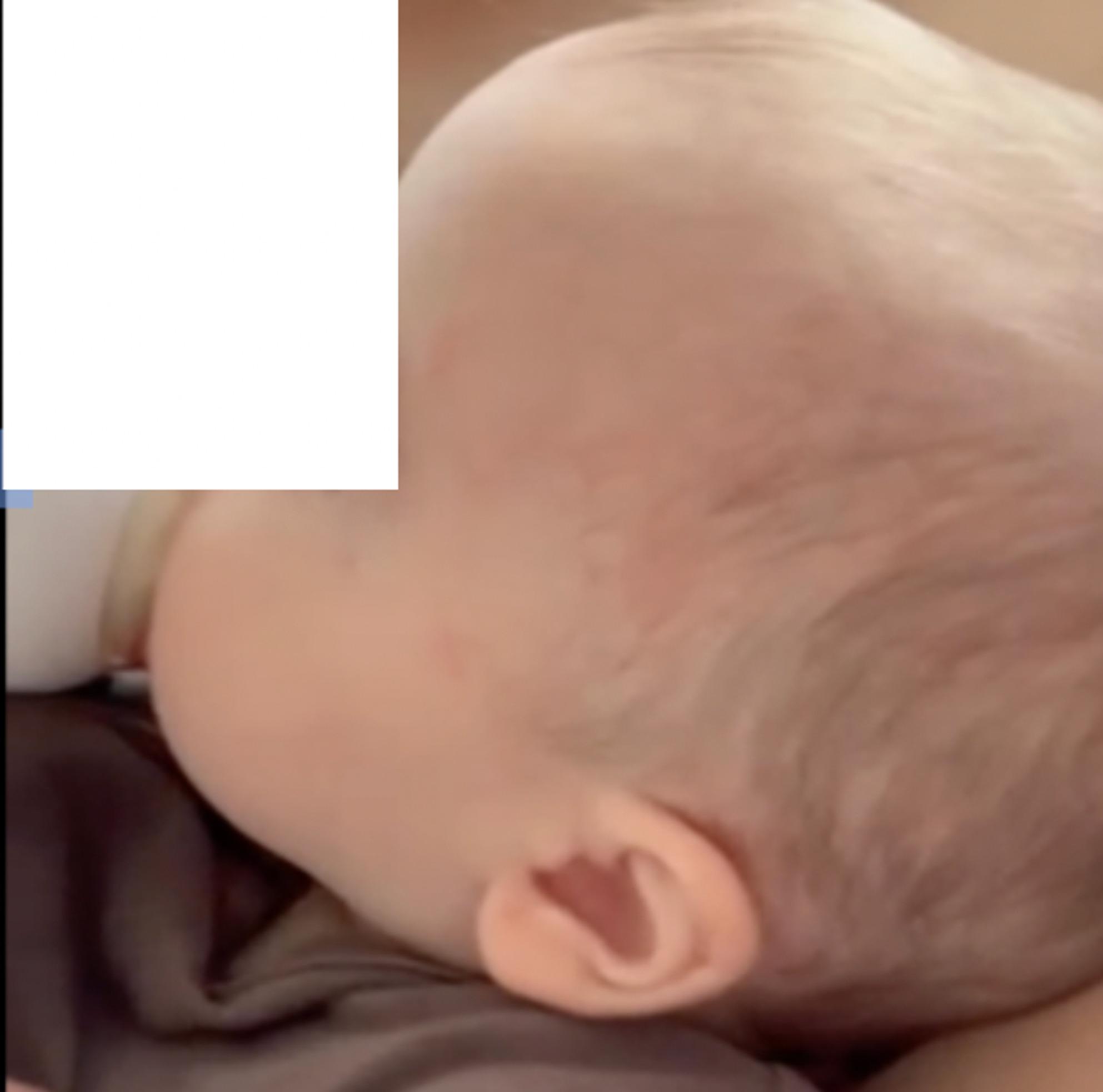 Figure 1
Peer Reviews
No public reviews on file for this paper yet. If you reviewed it on a platform where reviews are public (OpenReview, ICLR, NeurIPS, ICML), you can paste yours below so the community can read it here.
Videos
No videos yet. Explain this paper in a talk, walkthrough, or lecture? Add one.
Taxonomy
TopicsSalivary Gland Tumors Diagnosis and Treatment · Salivary Gland Disorders and Functions · Sinusitis and nasal conditions
Introduction
Food allergy evaluation in infancy is a frequent referral to allergy clinics. Clinical histories often involve nonspecific cutaneous findings such as flushing or erythema. When temporally associated with feeding, these are frequently interpreted as IgE-mediated food allergy, leading to unnecessary testing and inappropriate dietary avoidance.
Frey’s syndrome, or auriculotemporal syndrome, manifests as unilateral flushing and sweating triggered by gustatory stimuli. While well documented in adults after parotidectomy, pediatric presentations, including congenital and idiopathic forms, are less well known. Because the syndrome manifests during eating, it can be mistaken for food allergy in children, particularly infants.
This case adds to the growing literature on infantile Frey’s syndrome and highlights the importance of recognizing its distinguishing features in allergy practice.
Case presentation
An 8-month-old boy was referred to the allergy clinic for evaluation of suspected multiple food allergies. At referral, the family described immediate facial “hives” following milk, soy, and solid food (peanut, wheat, egg) ingestion, prompting several emergency department visits, progressive dietary avoidance, and significant parental anxiety surrounding feeding. The history provided emphasized acute onset reactions temporally associated with feeding, raising concern for IgE-mediated food allergy.
On detailed reassessment, the episodes were found to consist of flushing and diaphoresis, without angioedema, respiratory symptoms, gastrointestinal involvement, or other systemic features. Reactions were reproducible with feeding but occurred with multiple foods.
Skin prick testing and serum-specific IgE testing to milk, egg, peanut, soy, and wheat were negative. Given ongoing parental concern and the unclear nature of the initial history, a supervised baked milk oral food challenge was performed. During the challenge, the child developed isolated unilateral erythema and sweating of the right cheek within 10 min of ingestion, without urticaria or systemic allergic features. The reaction resolved spontaneously without intervention. A video provided by the family, recorded at home during feeding with formula, demonstrated a similar unilateral cutaneous reaction.
Based on the characteristic distribution, reproducibility, absence of systemic involvement, and negative allergy testing, the diagnosis of Frey’s syndrome was made. Parents were reassured, dietary restrictions were lifted, and feeding-related anxiety improved.
Discussion
Frey’s syndrome in infancy is rare but increasingly recognized. Dizon et al. [1] first described a series of eight infants presenting with localized flushing, often in the setting of perinatal trauma. Caulley et al. [2] documented an infant evaluated in family practice, highlghting the need for awareness beyond subspecialty clinics. Tillman et al. [3] described a 9-month-old with symptoms around the introduction of solids, while Hassan et al. [4] reported an infant repeatedly misdiagnosed with food allergy. Els and Delanty [5] highlighted another case termed “infantile Frey syndrome.” Finally, Betti et al. [6] systematically reviewed 121 non-surgical cases, demonstrating that pediatric presentations are not isolated curiosities but part of a broader spectrum.
Frey’s syndrome is thought to result from injury to parasympathetic fibers innervating the parotid gland, most commonly involving the auriculotemporal nerve [1]. During aberrant reinnervation, these parasympathetic fibers cross-innervate sympathetic pathways supplying cutaneous blood vessels and sweat glands in the periauricular and temporal region [1]. As a result, gustatory stimulation triggers localized flushing and sweating rather than salivation, producing a reproducible unilateral reaction that can be mistaken for food allergy.
The main diagnostic pitfall for allergists is assuming any reproducible food-triggered reaction must represent allergy. In infants, parental descriptions of facial flushing are often labeled as “hives,” contributing to misclassification as IgE-mediated allergy. As summarized in Table 1, IgE-mediated food allergy typically involves multi-organ symptoms such as urticaria, angioedema, wheeze, or vomiting, often with positive sensitization tests. By contrast, Frey’s syndrome is strictly unilateral, benign, and reproducible with diverse foods irrespective of allergenicity (Table 2).
Table 1. Distinguishing features of frey’s syndrome versus IgE-Mediated food allergy in infantsFeatureFrey’s syndromeIgE-mediated food allergyOnset with feedingYes, reproducible but non-allergen-specificYes, reproducible and allergen-specificDistributionLocalized, unilateral, auriculotemporal nerve territoryGeneralized or multi-systemSymptomsFlushing, sweatingUrticaria, angioedema, respiratory, GI, cardiovascular signsSystemic involvementAbsentCommon, multi-organIgE testingNegativeOften positiveCourseBenign, non-progressiveRisk of anaphylaxisManagementReassurance, food reintroductionStrict avoidance, emergency preparedness
Misdiagnosis carries meaningful consequences. Infants subjected to elimination diets risk impaired nutrition and growth, and avoidance of common foods may paradoxically promote development of true food allergy by interrupting oral tolerance acquisition. Families experience unnecessary anxiety and healthcare visits. Parental anxiety surrounding feeding reactions may further amplify concern for food allergy and contribute to escalation of testing (Fig. 1).
Fig. 1. Home-recorded video demonstrating unilateral erythema and sweating on the right cheek during feeding with formula in an 8-month-old infant, consistent with Frey’s syndrome
Table 2. Reported Pediatric/Infant frey’s (Auriculotemporal) syndrome cases and reviewsSourceAge at presentationTriggerLateralityKey featuresOutcomeDizon et al. [1]Infants (n = 8)Feeding (various)UnilateralFlushing, occasional sweating; often forceps deliveryBenign; reassuranceCaulley et al. [2]6 monthsChewing solidsUnilateralEpisodic flushing during meals; no systemic allergy signsReassuranceTillman et al. [3]9 monthsSolidsUnilateralFlushing ± sweating; mistaken for food allergyReassuranceHassan et al. [4]Infant (< 1 year)FeedingUnilateralRecurrent erythema; no trauma; misdiagnosed as food allergyCorrected diagnosis; foods reintroducedEls and Delanty [5]InfantFeedingUnilateral“Infantile Frey syndrome”ReassuranceBetti et al. [6]Multiple pediatric casesFeedingMostly unilateralSystematic review of 121 non-surgical casesUnderrecognized; benign course
Management of infantile Frey’s syndrome consists primarily of reassurance and avoidance of unnecessary dietary restriction. Once recognized, referral to other specialties such as otolaryngology or neurology is typically not required. The condition is benign and often improves or resolves over time. Correct recognition allows reassurance, safe food reintroduction, and avoidance of iatrogenic harm.
Our case is notable for the combination of supervised clinical observation and home-recorded video documentation, which together helped distinguish Frey’s syndrome from IgE-mediated food allergy and facilitated diagnostic clarity for both clinicians and the family.
Conclusion
Frey’s syndrome, though benign, is an important mimic of food allergy in infancy. This case illustrates how family anxiety, coupled with imprecise terminology in referral histories, can obscure recognition of benign feeding-related phenomena in infancy. For allergists, careful attention to laterality, distribution, and systemic features is essential. Awareness of this condition prevents misdiagnosis, protects nutritional status, and reassures families.