The ASFV CD2v protein inhibits apoptosis by inducing proteasomal degradation of BimEL via activation of the TPL2-MEK-ERK signaling pathway
Jianyu Zeng, Xin Zhang, Jingting Zhao, Qiang Li, Zhiyong Xiang, Fengyang Shi, Hua Wang, Wenlian Weng, Qiongqiong Zhou, Peng Gao, Lei Zhou, Xinna Ge, Jun Han, Xin Guo, Yongning Zhang, Hanchun Yang

TL;DR
This study shows how the ASFV CD2v protein prevents cell death by activating a signaling pathway that degrades a key pro-apoptotic protein, helping the virus survive and spread.
Contribution
The study reveals a novel anti-apoptotic mechanism of ASFV involving CD2v-mediated TPL2-MEK-ERK signaling and BimEL degradation.
Findings
CD2v activates the TPL2-MEK-ERK pathway to induce proteasomal degradation of BimEL in infected cells.
Soluble CD2v can also inhibit apoptosis in uninfected bystander cells through the same signaling pathway.
CRISPR-Cas9 knockout of CD2v abolishes ERK1/2 activation and BimEL degradation.
Abstract
African swine fever virus (ASFV) employs sophisticated regulatory strategies to manipulate host cell apoptosis, a process critical for its pathogenesis and immune evasion; however, the mechanisms underlying this process remain incompletely understood. Here, we report a novel mechanism by which the ASFV-encoded envelope protein CD2v suppresses apoptosis by activating the TPL2 (tumor progression locus 2)-MEK (mitogen-activated protein kinase kinase)-ERK (extracellular signal-regulated kinase) signaling axis, leading to proteasomal degradation of the pro-apoptotic protein BimEL in primary porcine alveolar macrophages and wild boar lung (WSL) cells. We further demonstrated that ASFV infection triggers ERK1/2-dependent phosphorylation and degradation of BimEL, a process independent of viral replication and mediated by viral structural components. A targeted screen identified CD2v as the key…
Genes, proteins, chemicals, diseases, species, mutations and cell lines named across the full text — each resolved to its canonical identifier and authoritative record.
Click any figure to enlarge with its caption.
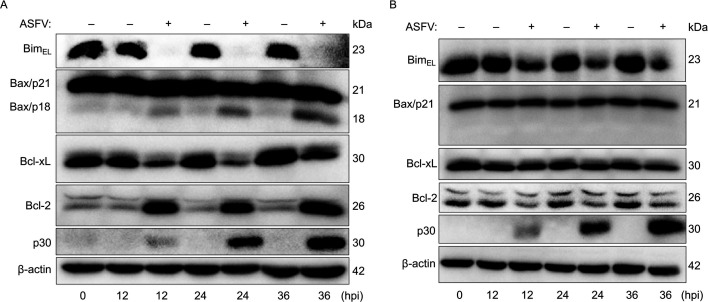 Figure 1
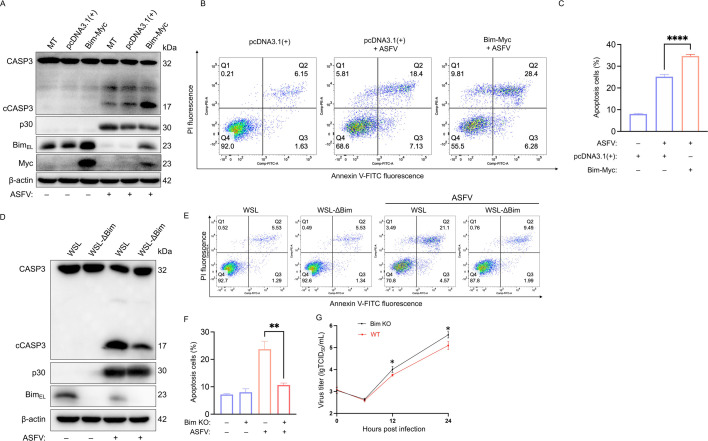 Figure 2
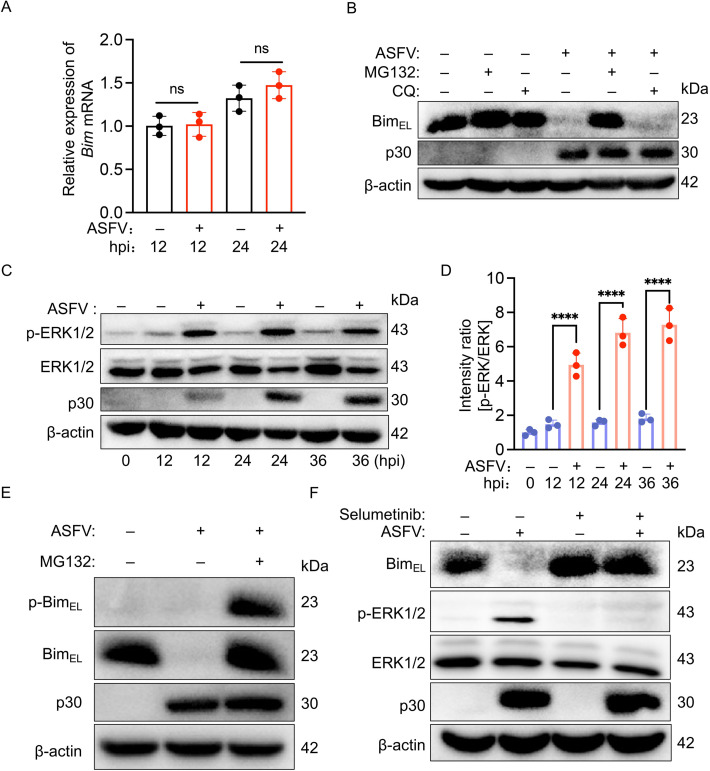 Figure 3
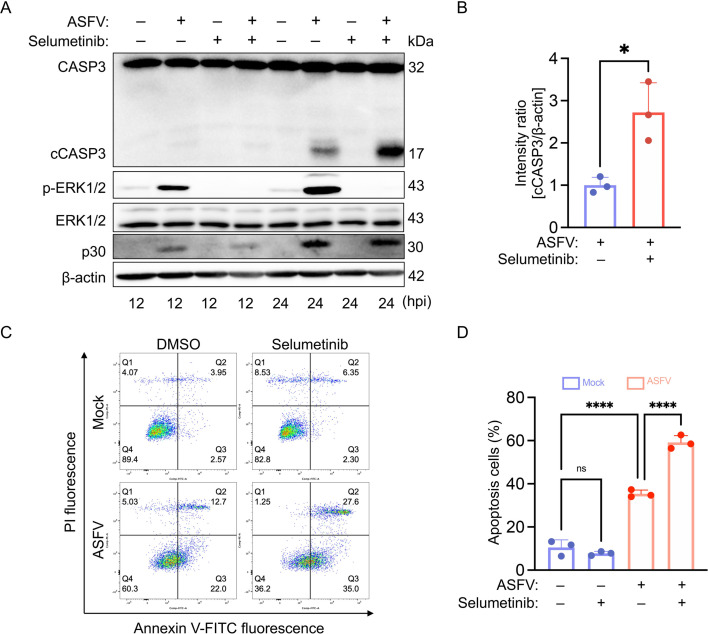 Figure 4
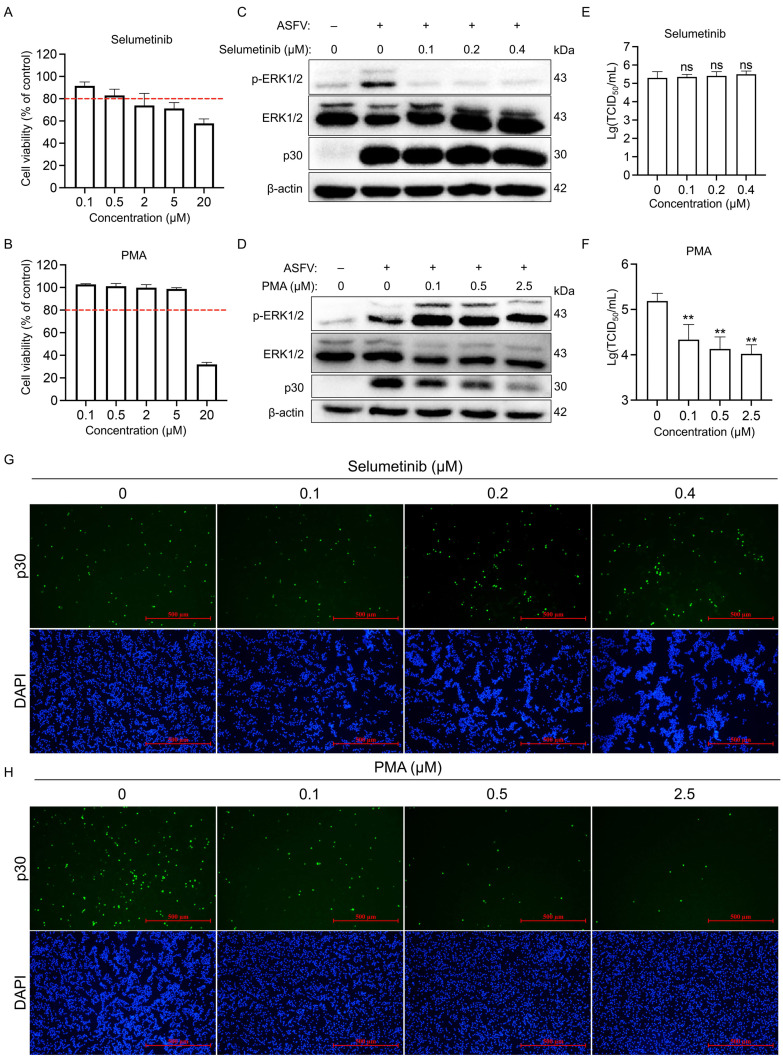 Figure 5
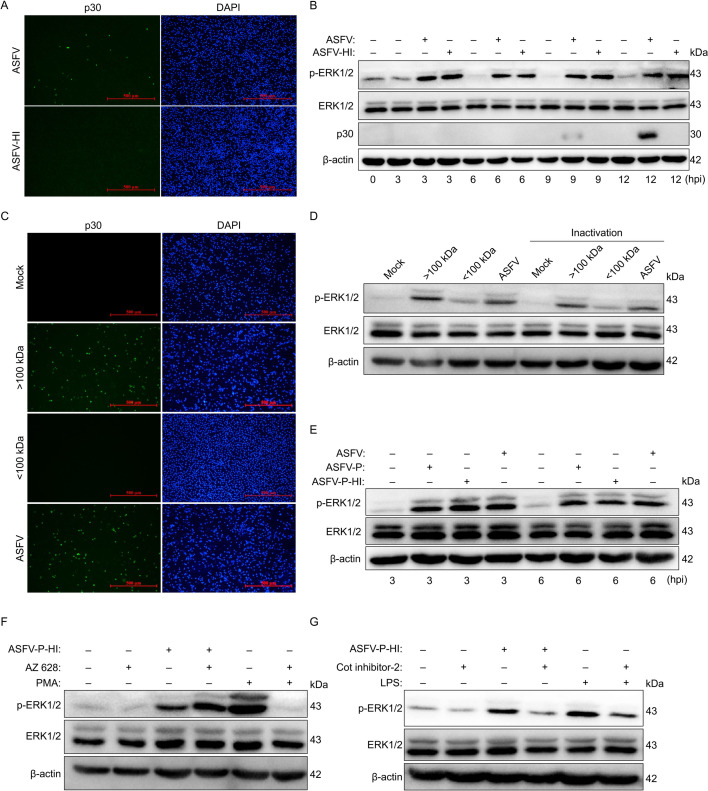 Figure 6
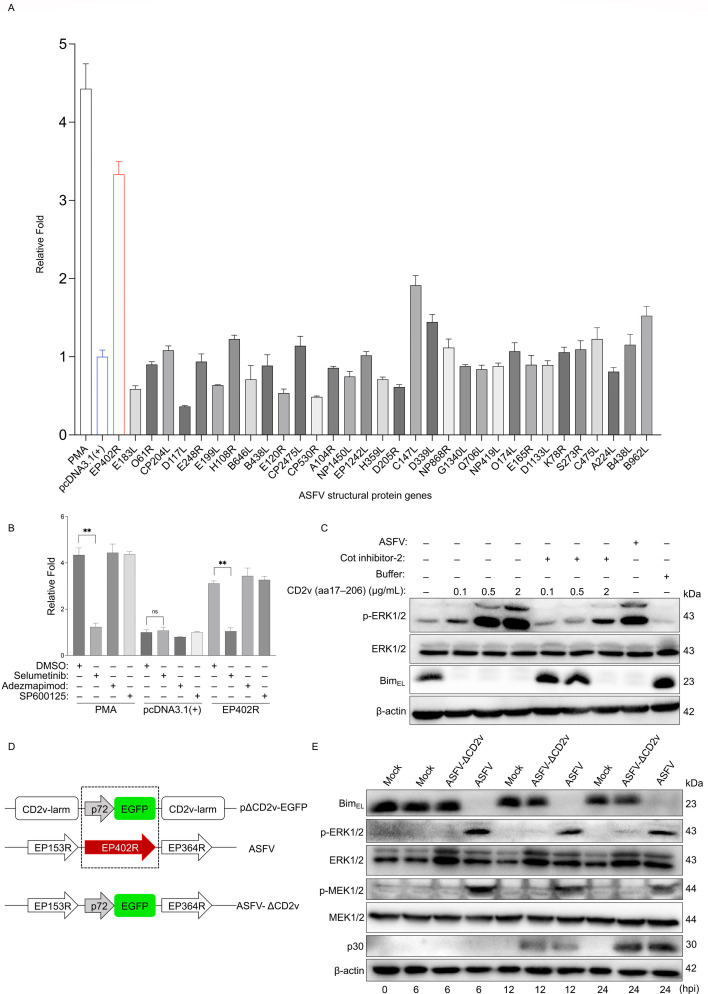 Figure 7
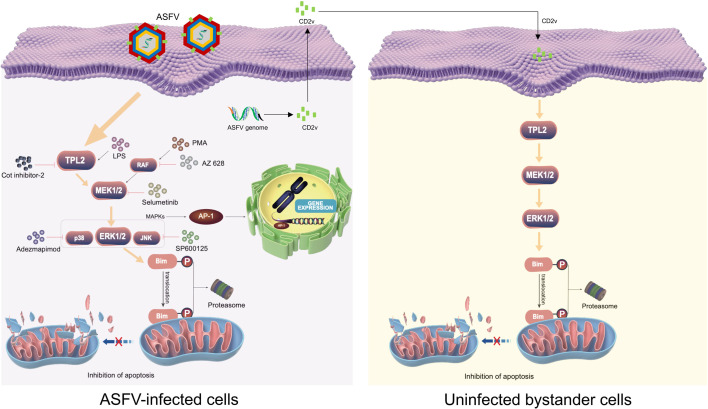 Figure 8
Peer Reviews
No public reviews on file for this paper yet. If you reviewed it on a platform where reviews are public (OpenReview, ICLR, NeurIPS, ICML), you can paste yours below so the community can read it here.
Videos
No videos yet. Explain this paper in a talk, walkthrough, or lecture? Add one.
Taxonomy
TopicsAnimal Disease Management and Epidemiology · Viral Infections and Vectors · Vector-Borne Animal Diseases