Integrated multi-omics reveals coordinated Staphylococcus aureus metabolic, iron transport, and stress responses to human serum
Warasinee Mujchariyakul, Calum J. Walsh, Stefano Giulieri, Cameron Cramond, Kim-Anh LêCao, Timothy P. Stinear, Benjamin P. Howden, Romain Guérillot, Abderrahman Hachani

TL;DR
This study explores how Staphylococcus aureus survives in human serum by combining multi-omics data and identifies key genes involved in metabolism, iron transport, and stress resistance.
Contribution
The study identifies conserved genetic determinants in S. aureus that are critical for survival in human serum through multi-omics integration and mutant validation.
Findings
Genes gapdhB, sucA, sirA, sstD, and perR are critical for S. aureus survival in serum.
Metabolic versatility, iron transport, and oxidative stress resistance are interconnected in S. aureus adaptation to serum.
Multi-omic integration reveals therapeutic vulnerabilities in S. aureus.
Abstract
Bloodstream infections caused by Staphylococcus aureus remain a leading cause of mortality worldwide. Our understanding of S. aureus survival and persistence in human serum, a cell-free fraction of blood hostile for bacteria, is still limited. Here, we applied multivariate data integration methods and network analysis to a multi-omic data set generated from five clinically prevalent S. aureus genotypes exposed to human serum. We observed, and then confirmed using isogenic mutants the significant roles of gapdhB, sucA, sirA, sstD, and perR in bacterial survival in serum. These data show that metabolic versatility in carbon source usage, iron transport, and resistance to oxidative stress is interlinked and central to S. aureus fitness in serum, representing potential S. aureus vulnerabilities that could be exploited therapeutically. Bloodstream infections caused by Staphylococcus aureus…
Genes, proteins, chemicals, diseases, species, mutations and cell lines named across the full text — each resolved to its canonical identifier and authoritative record.
Click any figure to enlarge with its caption.
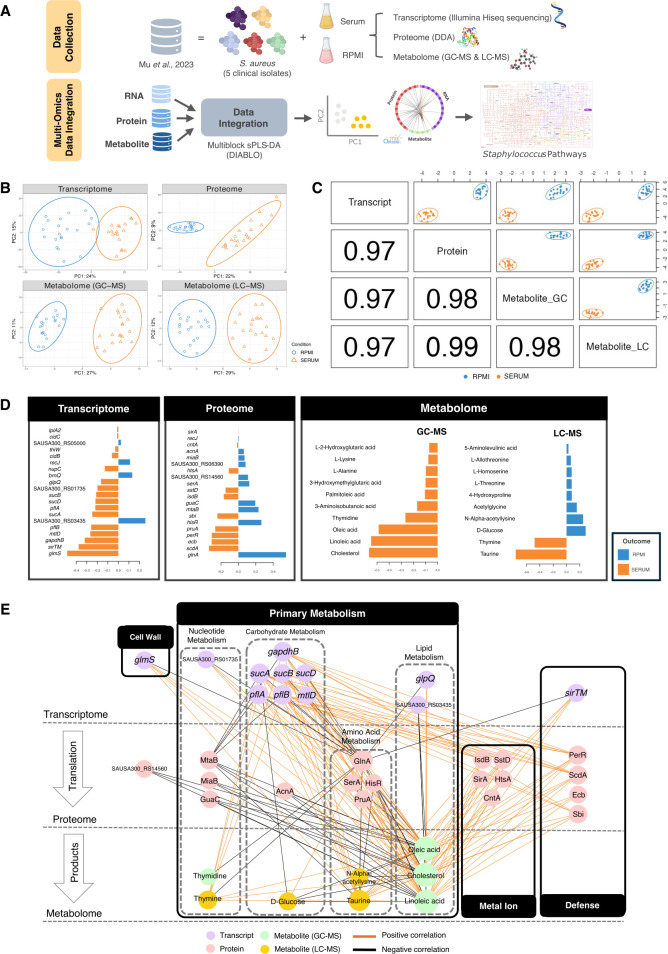 Figure 1
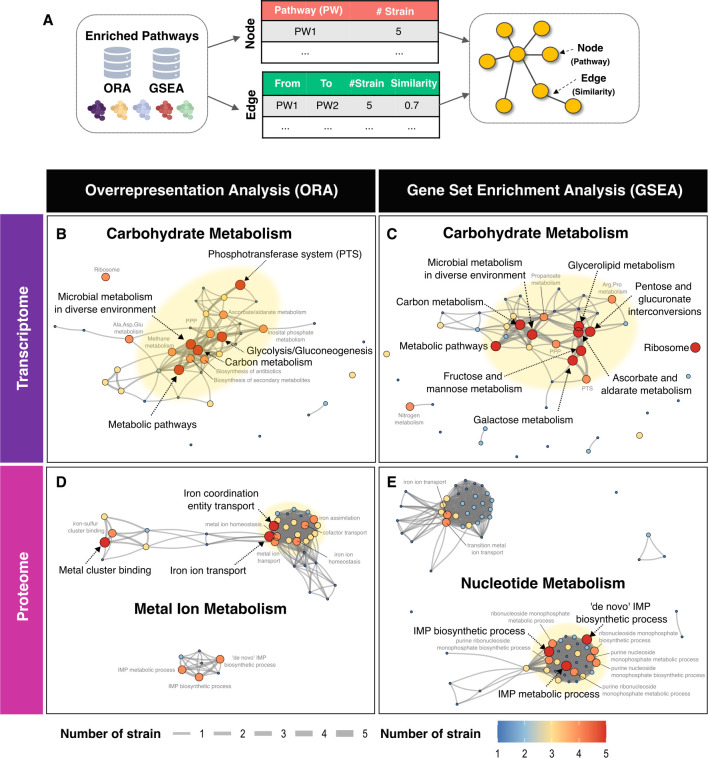 Figure 2
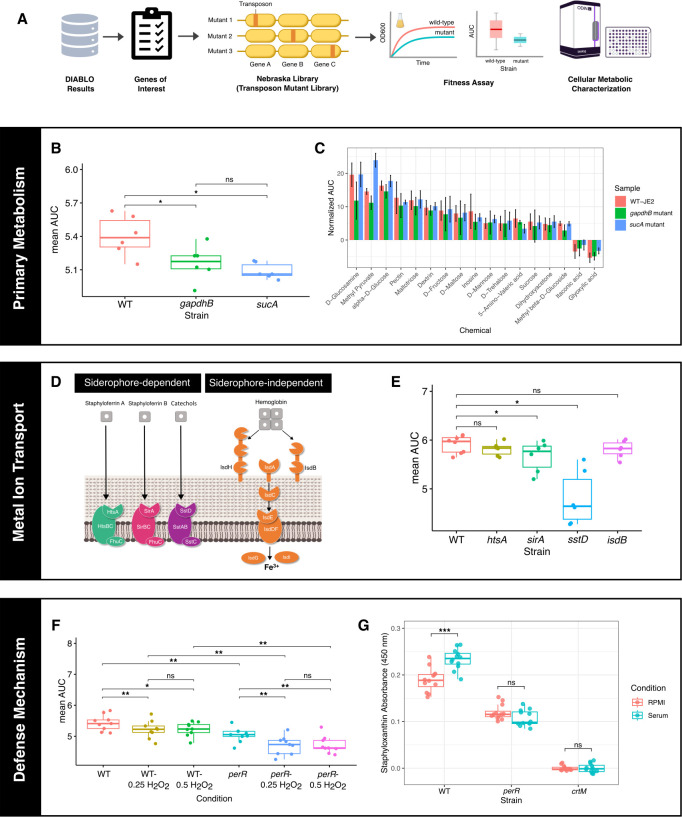 Figure 3
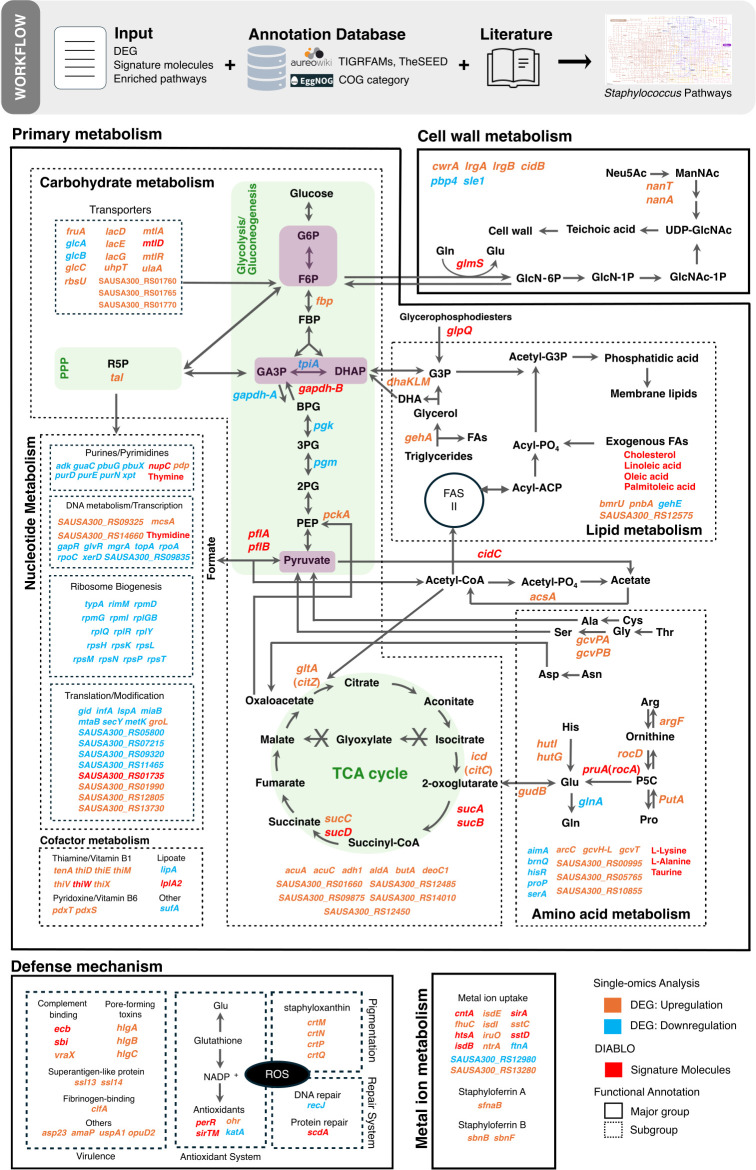 Figure 4
Peer Reviews
No public reviews on file for this paper yet. If you reviewed it on a platform where reviews are public (OpenReview, ICLR, NeurIPS, ICML), you can paste yours below so the community can read it here.
Videos
No videos yet. Explain this paper in a talk, walkthrough, or lecture? Add one.
Taxonomy
TopicsBacterial Genetics and Biotechnology · Trace Elements in Health · Bioinformatics and Genomic Networks