Gut microbiome signatures associated with depression and obesity
Carlos Mora-Martínez, Gara Molina-Mendoza, María Carmen Cenit, Eva M. Medina-Rodríguez, Ana Larroya-García, Yolanda Sanchez-Carro, Leticia Gonzalez-Blanco, Julio Bobes, Pilar Lopez-Garcia, Mercedes Zandio-Zorrilla, Francisca Lahortiga-Ramos, Margalida Gili, Mauro Garcia-Toro

TL;DR
This study finds gut microbiome patterns linked to depression and obesity, suggesting potential for new diagnostic tools and treatments.
Contribution
The study identifies novel bacterial taxa and metabolic pathways associated with depression, independent of BMI and lifestyle factors.
Findings
Depressed individuals show reduced levels of Butyrivibrio hungatei and Anaerocolumna sedimenticola.
Faecalibacterium prausnitzii is significantly decreased in depression and linked to key metabolic pathways.
Microbiome differences include altered tryptophan degradation and queuosine synthesis, affecting neurotransmitter availability.
Abstract
Depression and obesity are highly comorbid and likely involve common risk factors and pathophysiological mechanisms, which could crosslink to gut microbiome dysfunction. Here, we performed a case-control study with a total of 105 subjects, 43 with major depressive disorder (MDD) and 62 non-depressed controls free from psychiatric comorbidities, to identify gut microbiome signatures associated with MDD and dissect its relation to body mass index (BMI) and lifestyle (diet and exercise). We performed shotgun metagenomics, followed by taxonomic and functional annotations. Using different machine learning methods, we were able to classify subjects into depressed and non-depressed controls with a balanced accuracy of 0.90 and into depressed or non-depressed and normal weight or overweight with a balanced accuracy of 0.78 based solely on taxonomic profiles. We identify novel bacterial taxa…
Genes, proteins, chemicals, diseases, species, mutations and cell lines named across the full text — each resolved to its canonical identifier and authoritative record.
Click any figure to enlarge with its caption.
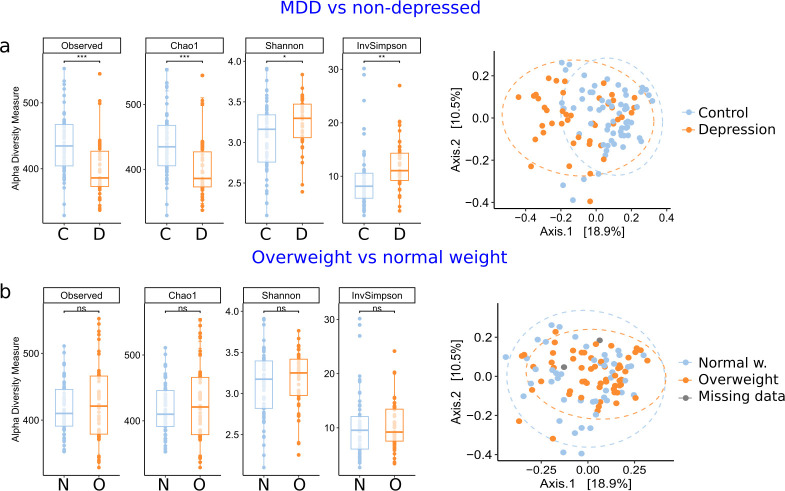 Figure 1
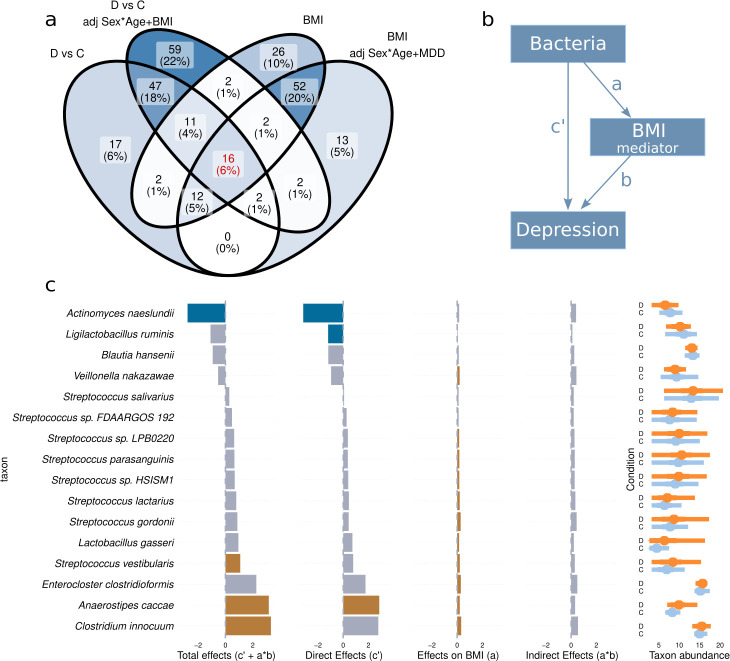 Figure 2
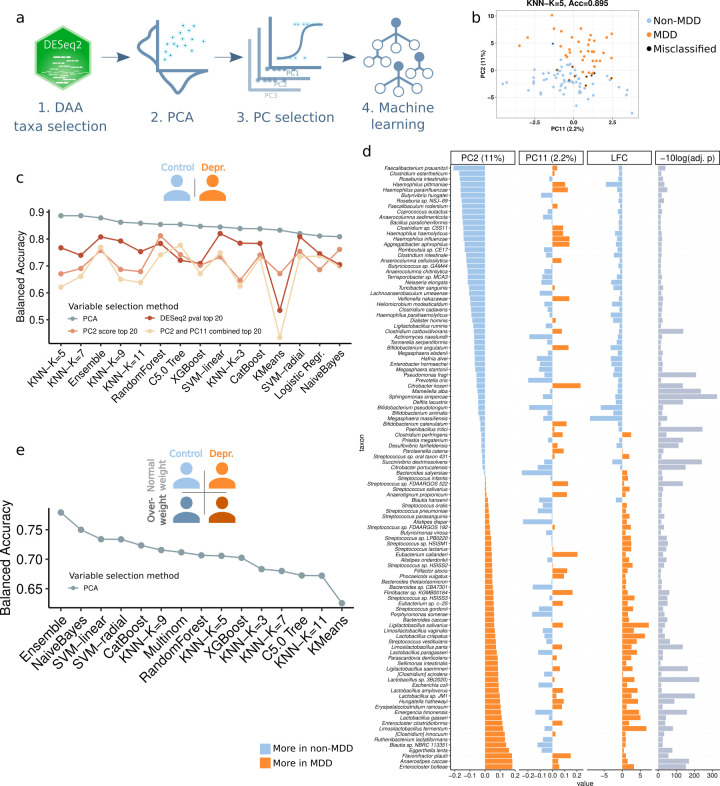 Figure 3
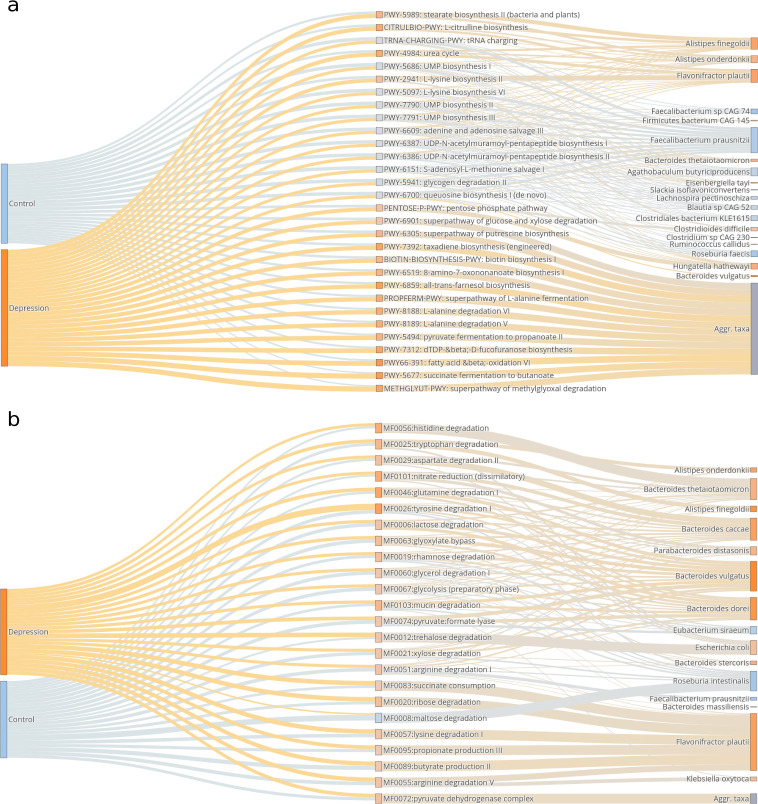 Figure 4
 Figure 5
 Figure 6
 Figure 7
 Figure 8
Peer Reviews
No public reviews on file for this paper yet. If you reviewed it on a platform where reviews are public (OpenReview, ICLR, NeurIPS, ICML), you can paste yours below so the community can read it here.
Videos
No videos yet. Explain this paper in a talk, walkthrough, or lecture? Add one.
Taxonomy
TopicsGut microbiota and health · Tryptophan and brain disorders · Metabolomics and Mass Spectrometry Studies