Group I introns in tRNA genes of Patescibacteria
Yuna Nakagawa, Kazuaki Amikura, Kimiho Omae, Shino Suzuki

TL;DR
This paper reveals that Patescibacteria have many group I introns in tRNA genes, especially at a hard-to-detect position, suggesting a unique evolutionary adaptation.
Contribution
The study identifies and experimentally validates previously undetected group I introns in Patescibacteria tRNA genes at position 35/36.
Findings
Group I introns in tRNAAsn and tRNAAsp genes at position 35/36 are common in Patescibacteria but missed by standard tools.
In vitro splicing confirms these introns self-splice accurately despite their unusual location.
Patescibacteria and Cyanobacteriota have high group I intron prevalence (~40%), but group II introns are absent in Patescibacteria.
Abstract
Introns are generally considered rare in bacteria, yet they are frequently observed in Patescibacteria, which have highly reduced genomes. To systematically explore the diversity, roles, and evolution of introns in Patescibacteria, we first focused on the tRNA introns. Using 95 complete genomes, we identified tRNAAsn and tRNAAsp genes previously undetected by standard annotation tools due to group I introns inserted at an unusual position, 35/36, in the anticodon loop. In vitro splicing assays confirmed that these introns catalyze precise self-splicing, validating our computational approach. A large-scale survey of complete bacterial genomes revealed that intron insertions at position 35/36 are highly enriched in Patescibacteria but rare in other phyla. Subgroup classification indicated that 81% of all tRNA introns belong to the IC subgroup, whereas nearly all Patescibacteria introns…
Genes, proteins, chemicals, diseases, species, mutations and cell lines named across the full text — each resolved to its canonical identifier and authoritative record.
Click any figure to enlarge with its caption.
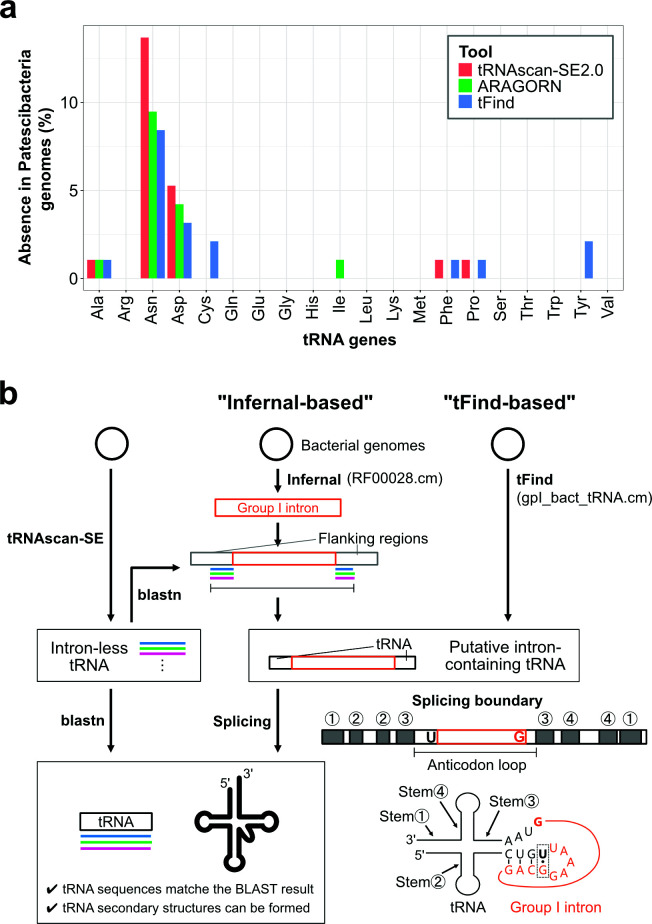 Figure 1
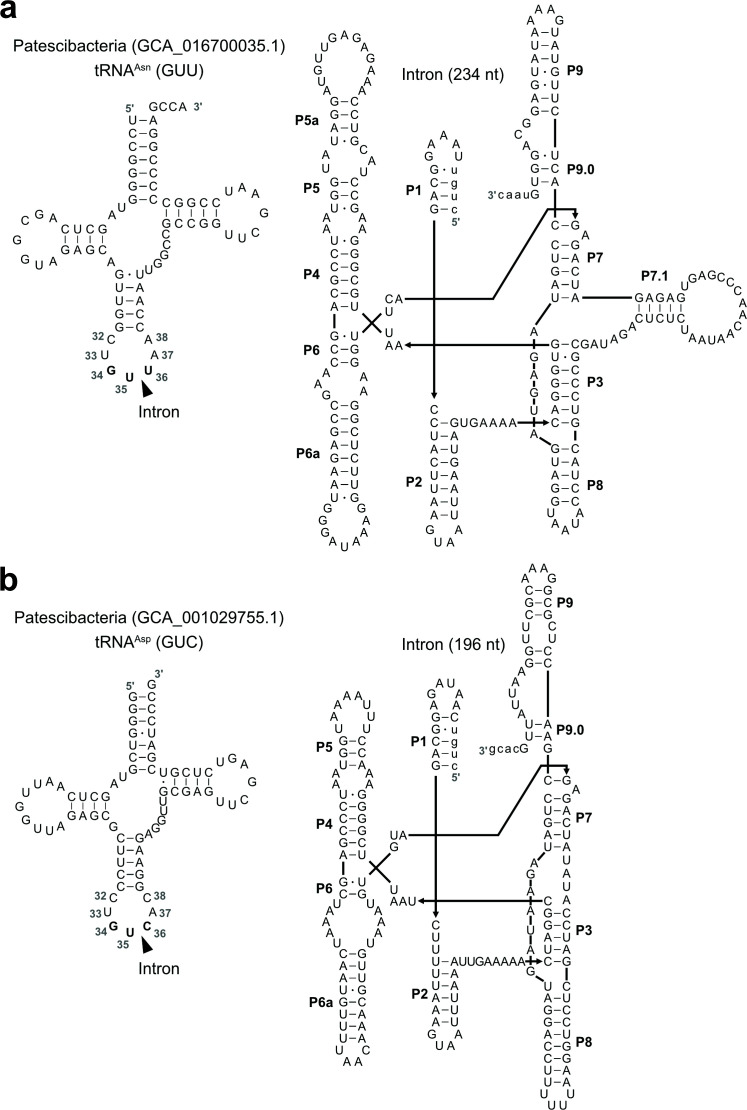 Figure 2
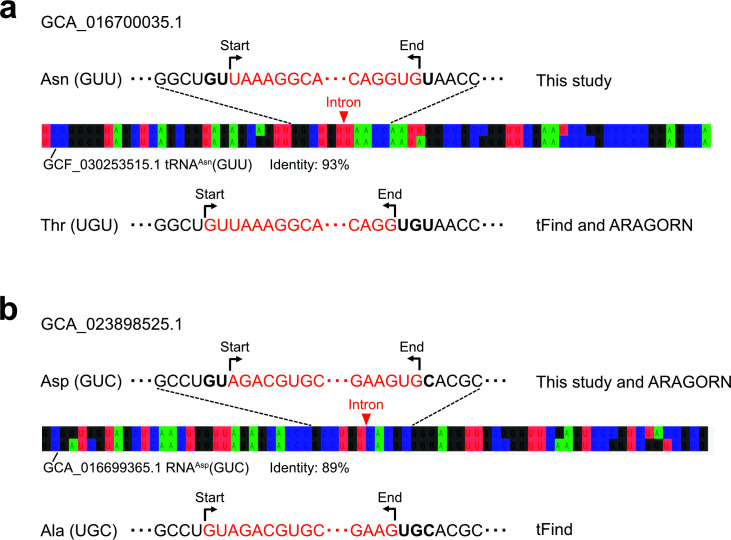 Figure 3
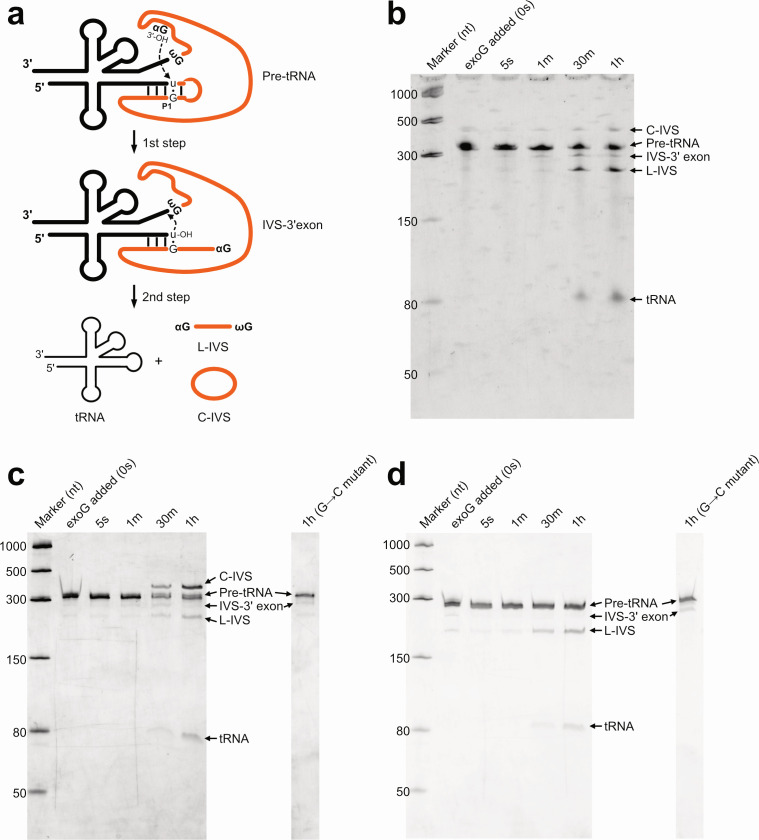 Figure 4
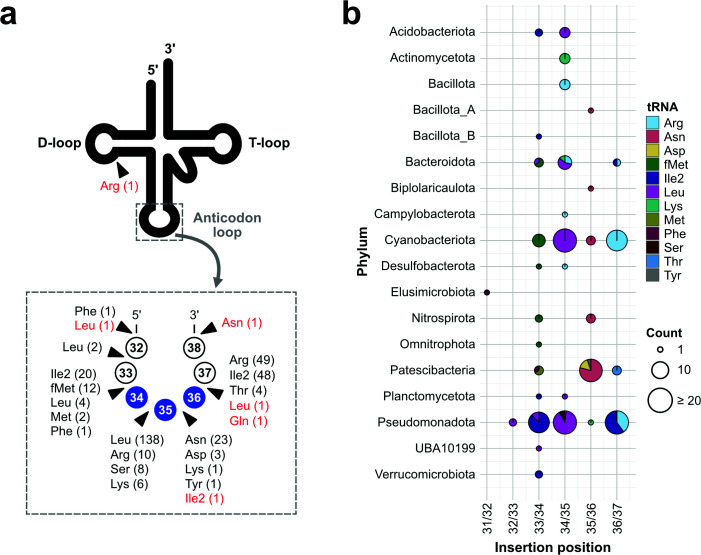 Figure 5
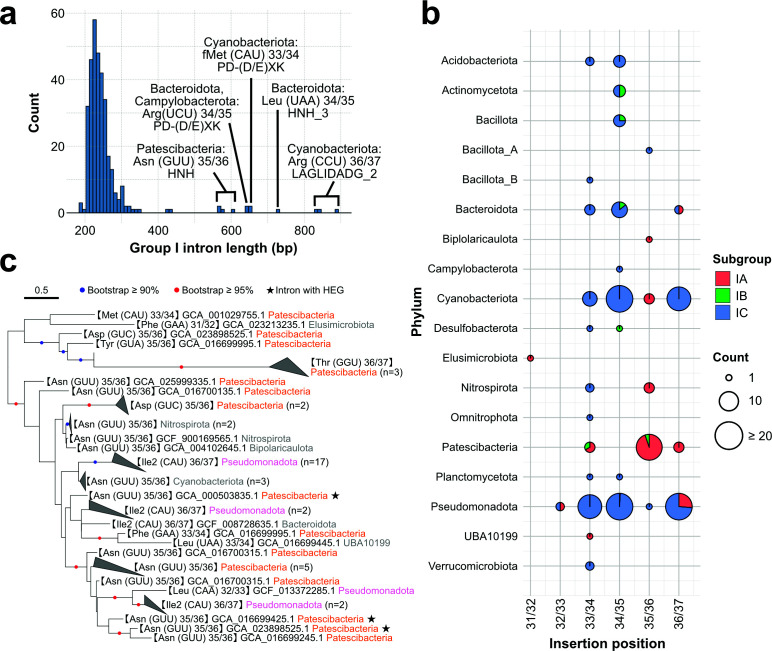 Figure 6
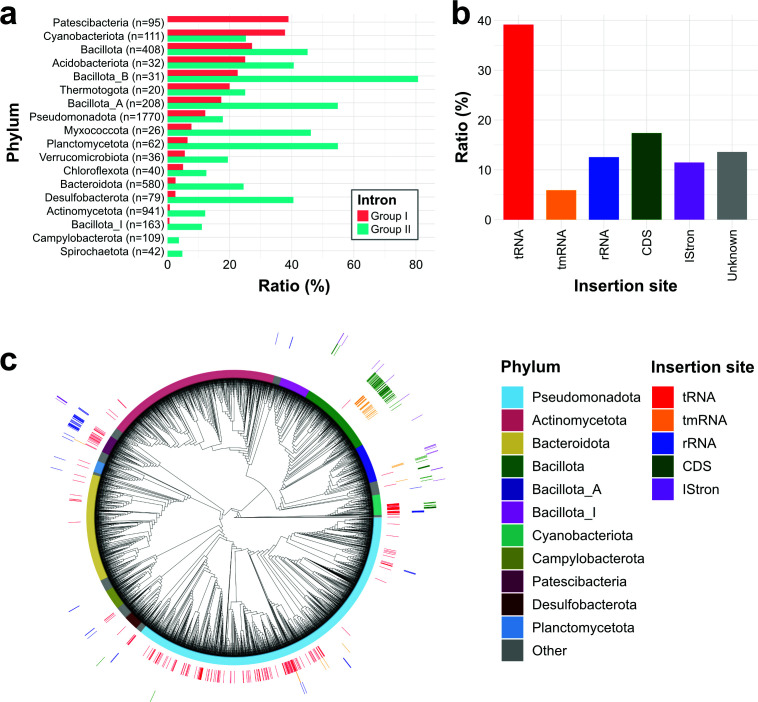 Figure 7
Peer Reviews
No public reviews on file for this paper yet. If you reviewed it on a platform where reviews are public (OpenReview, ICLR, NeurIPS, ICML), you can paste yours below so the community can read it here.
Videos
No videos yet. Explain this paper in a talk, walkthrough, or lecture? Add one.
Taxonomy
TopicsRNA and protein synthesis mechanisms · Bacterial Genetics and Biotechnology · RNA modifications and cancer