Viral lineage and mode of exposure modulate within-host spatial dynamics of influenza A viruses in a guinea pig model
Christina M. Leyson, Nahara Vargas-Maldonado, Matthew Gaddy, Vedhika Raghunathan, Lucas M. Ferreri, Meher Sethi, Kayle Patatanian, Silvia Carnaccini, Ketaki Ganti, David VanInsberghe, Anice C. Lowen

TL;DR
This study shows that the H1N1 strain of influenza spreads more deeply into the lungs of guinea pigs than H3N2, leading to genetic bottlenecks during viral dispersal.
Contribution
The study reveals how viral lineage and exposure route affect within-host spatial dynamics and genetic diversity of influenza A viruses.
Findings
H1N1 replicates in both upper and lower respiratory tracts, while H3N2 remains mostly in the upper tract.
Genetic diversity of H1N1 is maintained in the upper tract but reduced in the lungs, indicating bottlenecks during dispersal.
LRT tropism of H1N1 is consistent across intranasal, aerosol, and transmission routes of infection.
Abstract
The upper and lower respiratory tracts (URT and LRT) present distinct environments for influenza A virus (IAV) replication. Their differential features have major implications for viral evolutionary dynamics, transmission potential, and pathogenesis. To investigate the implications of differential viral replication in the URT and LRT, we assessed dispersal of IAVs throughout the guinea pig respiratory system. Guinea pigs were inoculated intranasally with a 300 μL volume to deliver inoculum to both the URT and LRT. Two strains were used to represent the circulating seasonal IAV lineages: influenza A/TX/50/2012 (H3N2) and influenza A/CA/07/2009 (H1N1). For the H1N1 virus, a genetically diverse barcode library enabled high-resolution tracking of viral dispersal. Infectious virus was consistently detected in the URT for both strains; however, only the H1N1 virus was detected in the LRT. To…
Genes, proteins, chemicals, diseases, species, mutations and cell lines named across the full text — each resolved to its canonical identifier and authoritative record.
Click any figure to enlarge with its caption.
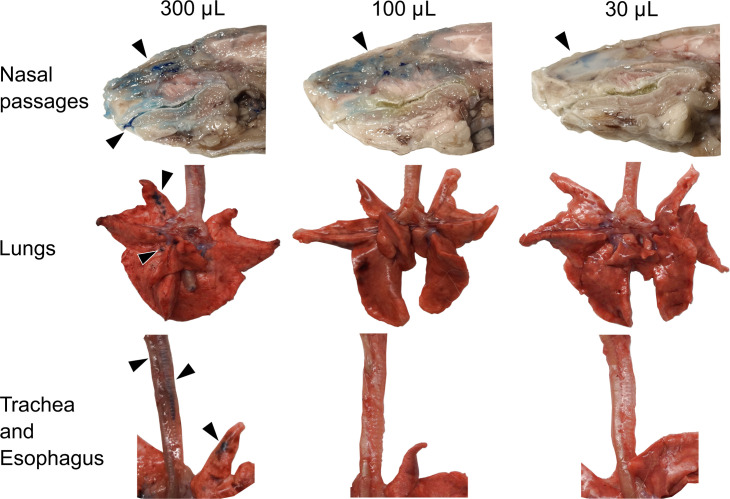 Figure 1
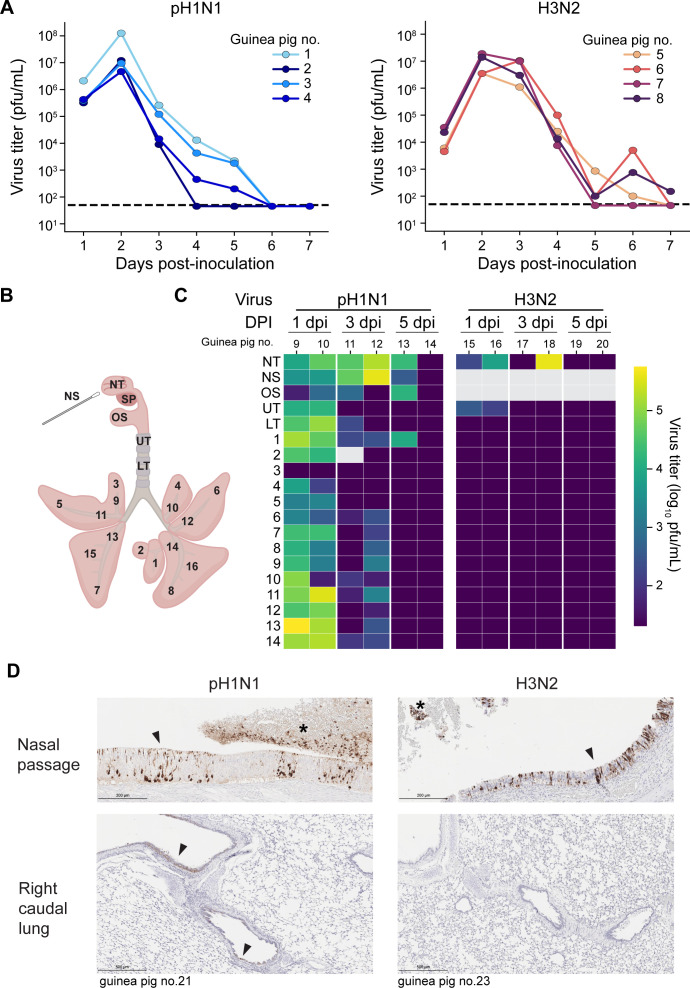 Figure 2
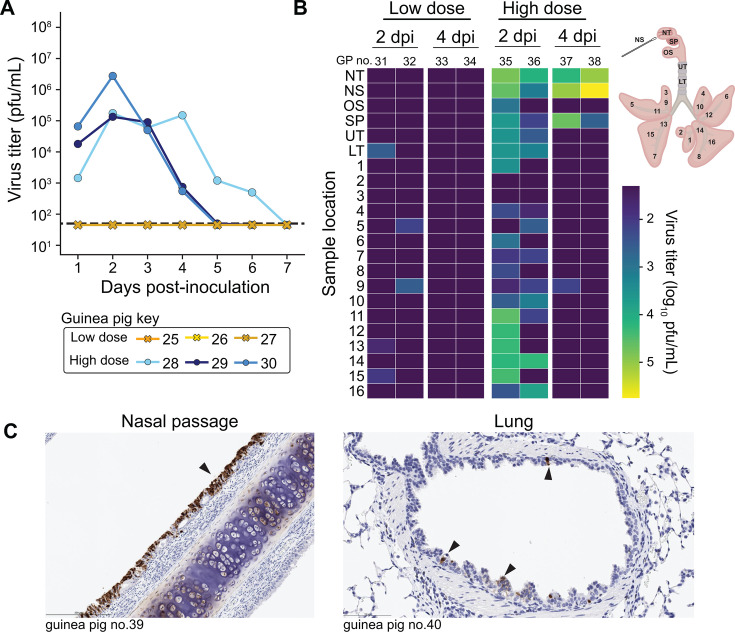 Figure 3
 Figure 4
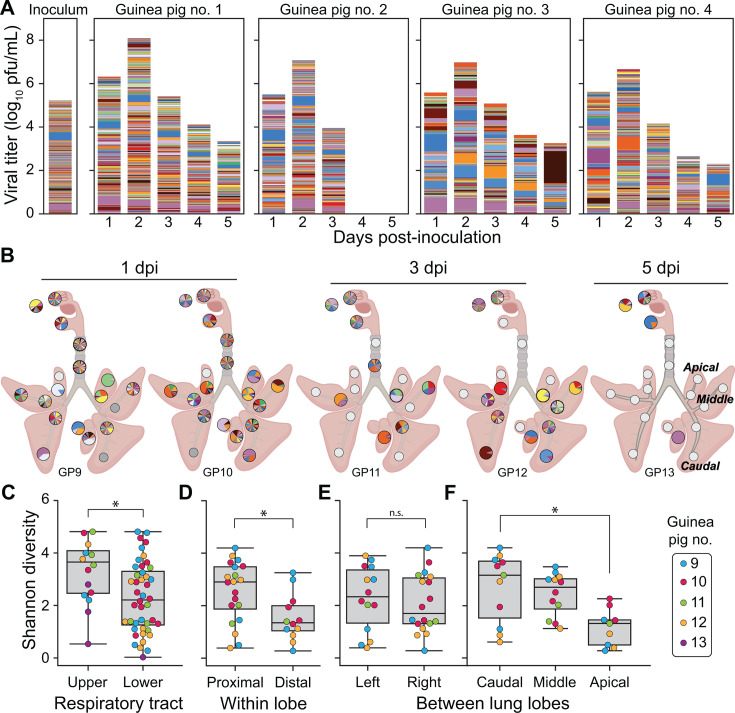 Figure 5
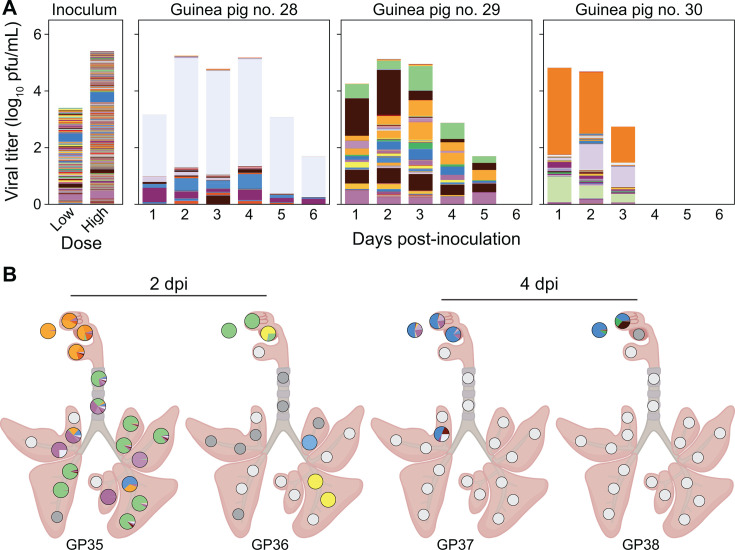 Figure 6
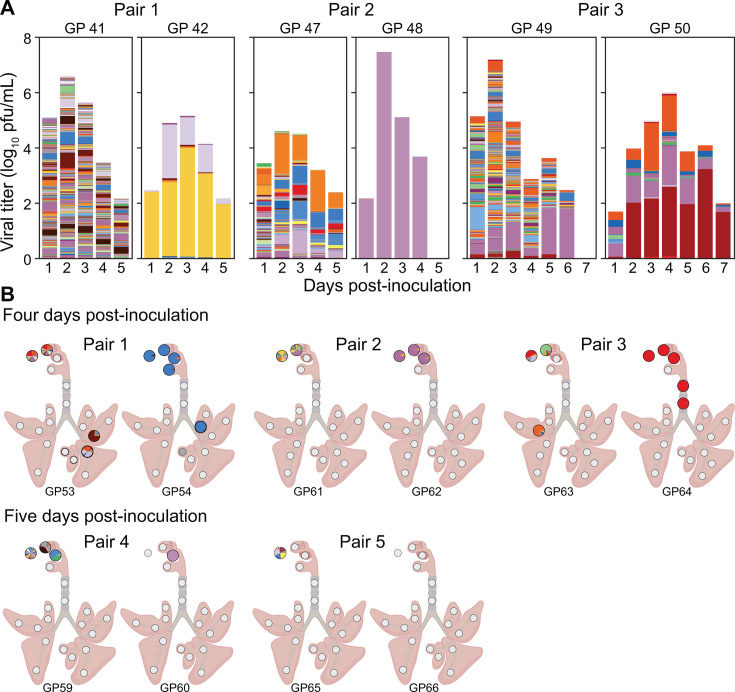 Figure 7
 Figure 8
Peer Reviews
No public reviews on file for this paper yet. If you reviewed it on a platform where reviews are public (OpenReview, ICLR, NeurIPS, ICML), you can paste yours below so the community can read it here.
Videos
No videos yet. Explain this paper in a talk, walkthrough, or lecture? Add one.
Taxonomy
TopicsInfluenza Virus Research Studies · Respiratory viral infections research · Virology and Viral Diseases