Relationship of electrochemical performance and biofilm development of Desulfuromonas acetexigens and Geobacter sulfurreducens in microbial electrolysis cells
Max Rümenapf, Harald Horn, Andrea Hille-Reichel

TL;DR
This study compares the electrochemical performance and biofilm development of two bacteria in microbial electrolysis cells, finding that D. acetexigens starts producing current faster and achieves high efficiency.
Contribution
The study introduces a novel comparison of D. acetexigens and G. sulfurreducens using OCT for non-invasive biofilm analysis in MECs.
Findings
D. acetexigens biofilms generate current faster than G. sulfurreducens under identical conditions.
D. acetexigens achieves a high Coulombic efficiency of ~96% with no detectable hydrogen utilization.
Extracellular electron transfer limitations occur at lower biofilm volumes for D. acetexigens compared to G. sulfurreducens.
Abstract
Desulfuromonas acetexigens has gained attention as a biocatalyst in microbial electrolysis cells (MECs) due to its inability to utilize hydrogen as an electron donor, which favors beneficial Coulombic efficiencies (CE). In this study, the electrochemical performance and biofilm morphology of D. acetexigens were compared with the model organism Geobacter sulfurreducens in flow cell MECs. Biofilm morphology was assessed non-invasively via optical coherence tomography (OCT), providing insight into quantitative parameters, including spatially resolved thickness, biovolume and anode surface coverage. While both species achieved similar maximum current densities when cultivated under identical conditions, D. acetexigens biofilms established faster, generating current after ~4 days, whereas G. sulfurreducens exhibited a lag phase of ~8 days. Limitations of extracellular electron transfer…
Genes, proteins, chemicals, diseases, species, mutations and cell lines named across the full text — each resolved to its canonical identifier and authoritative record.
Click any figure to enlarge with its caption.
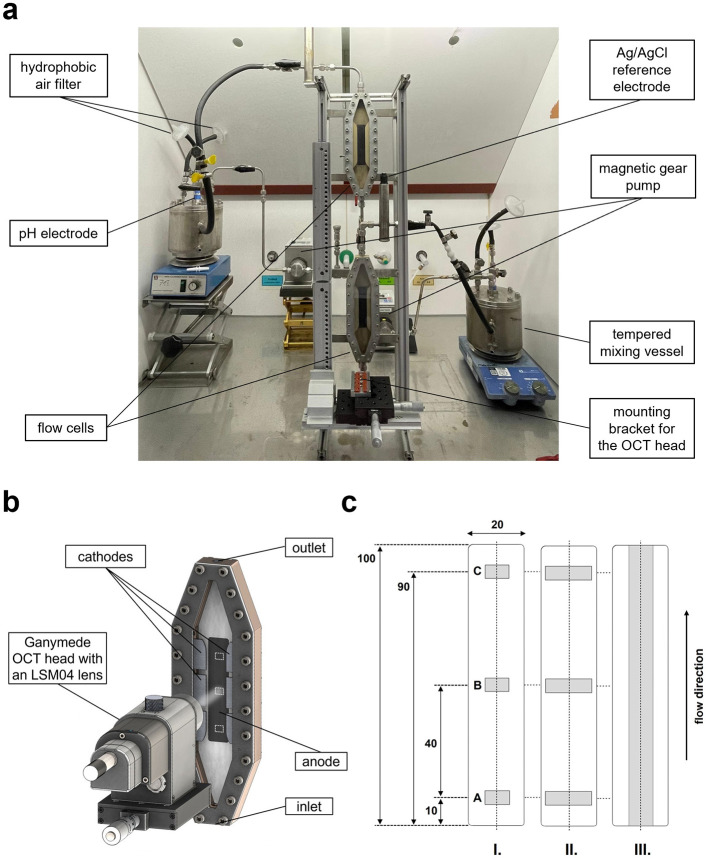 Figure 1
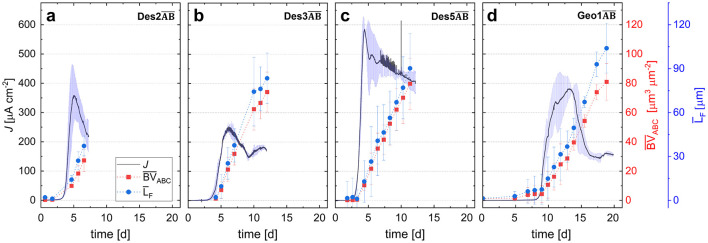 Figure 2
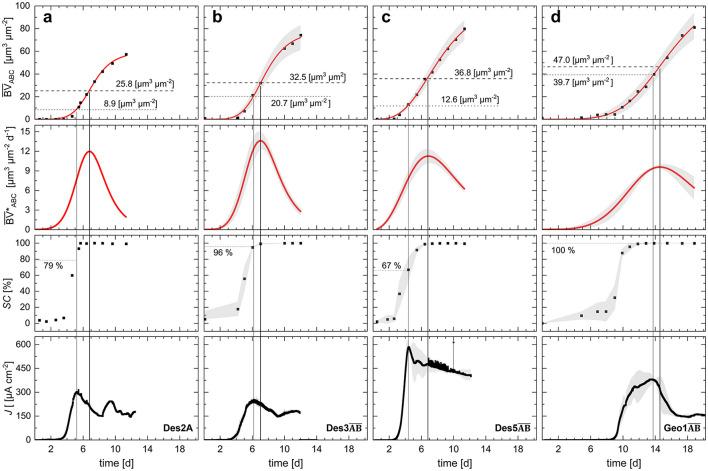 Figure 3
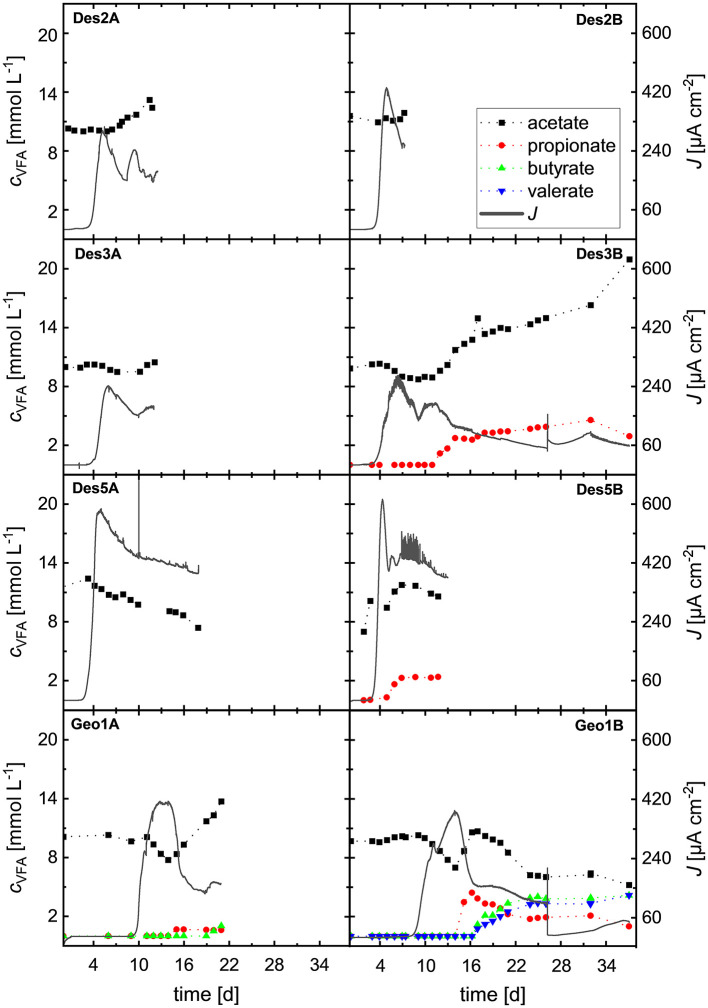 Figure 4
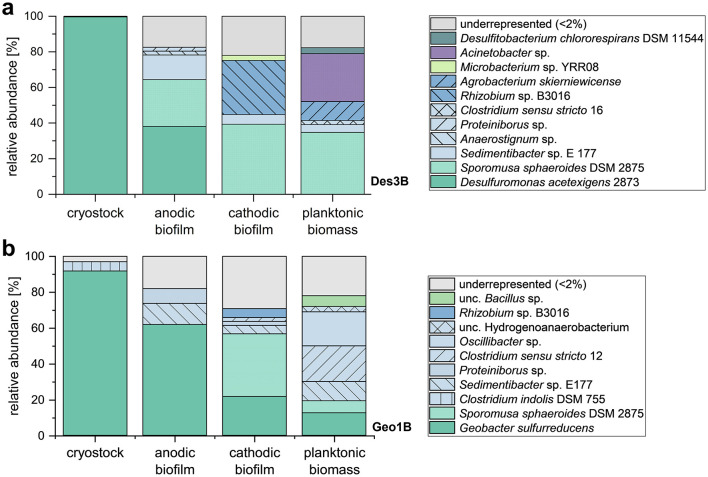 Figure 5
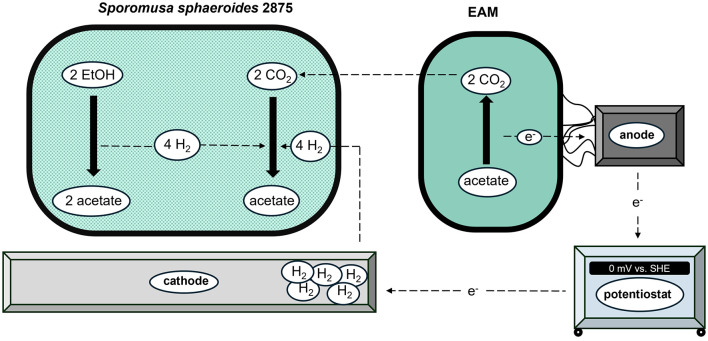 Figure 6
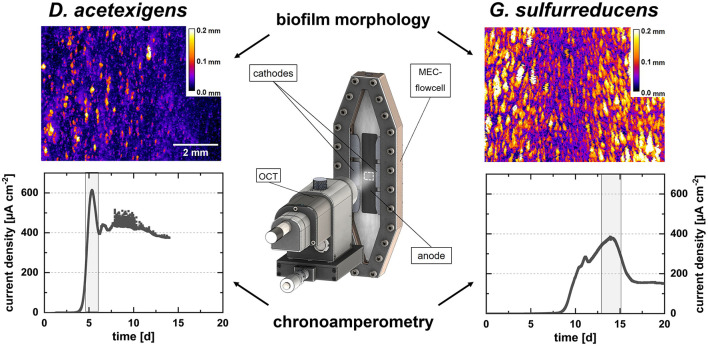 Figure 7
Peer Reviews
No public reviews on file for this paper yet. If you reviewed it on a platform where reviews are public (OpenReview, ICLR, NeurIPS, ICML), you can paste yours below so the community can read it here.
Videos
No videos yet. Explain this paper in a talk, walkthrough, or lecture? Add one.
Taxonomy
TopicsMicrobial Fuel Cells and Bioremediation · Anaerobic Digestion and Biogas Production · Metalloenzymes and iron-sulfur proteins