The bacteriophage-encoded regulator PemR attenuates Pseudomonas aeruginosa virulence by hijacking quorum sensing and metabolism
Wenbo Yan, Yingxin Yang, Jiahui Cao, Mengyao Zhang, Yiming Yang, Chao Li, Nan Zhang, Lixin Yuan, Meng Li, Lijun Liu, Yani Zhang, Shiwei Wang, Tietao Wang

TL;DR
A phage-encoded protein called PemR reduces Pseudomonas aeruginosa virulence by disrupting quorum sensing and metabolism, offering a new anti-virulence strategy.
Contribution
PemR is the first reported phage-encoded transcriptional regulator that hijacks the mvfR regulon to attenuate bacterial virulence.
Findings
PemR represses the mvfR promoter, leading to reduced quorum sensing and virulence traits like pyocyanin and rhamnolipid production.
PemR redirects metabolism from PQS biosynthesis to catechol accumulation, causing global virulence attenuation.
PemR suppresses motility and modulates bacterial interactions in polymicrobial environments via upregulation of rsmA.
Abstract
The global challenge of multidrug-resistant Pseudomonas aeruginosa demands innovative anti-virulence approaches. We characterize PemR, a novel transcriptional regulator encoded by P. aeruginosa phage PAYQ66, which orchestrates multimodal virulence attenuation in P. aeruginosa. Biochemical analyses demonstrated that PemR directly binds to the mvfR promoter, resulting in significant repression of this key quorum-sensing regulator. This repression, in turn, induces profound metabolic reprogramming by redirecting metabolic flux away from PQS biosynthesis toward catechol accumulation. PemR globally attenuates virulence phenotypes, including pyocyanin production, rhamnolipid synthesis, motility, and biofilm formation. Transcriptomic profiling further reveals that PemR upregulates rsmA to suppress the type VI secretion system, thereby potentially modulating the host’s interaction with…
Genes, proteins, chemicals, diseases, species, mutations and cell lines named across the full text — each resolved to its canonical identifier and authoritative record.
Click any figure to enlarge with its caption.
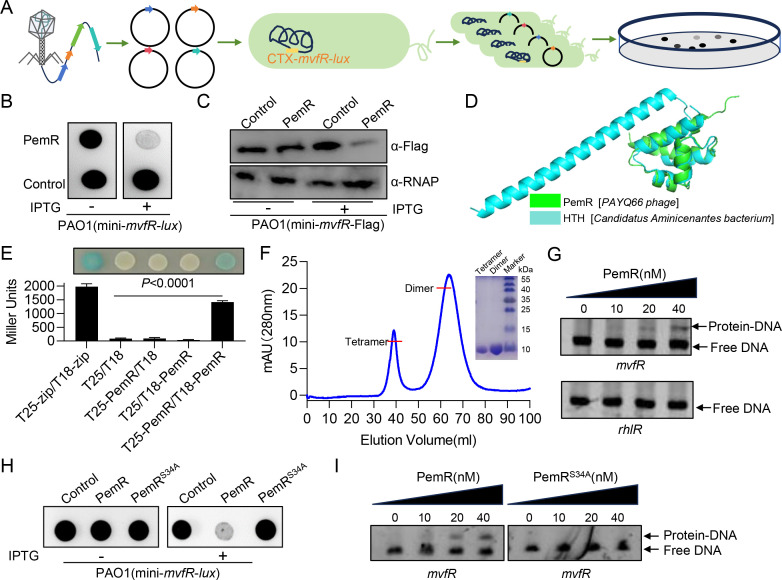 Figure 1
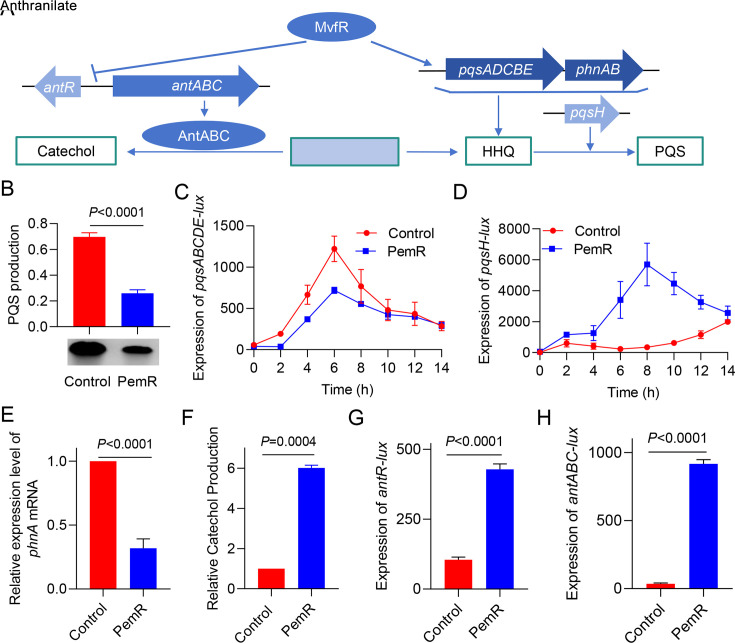 Figure 2
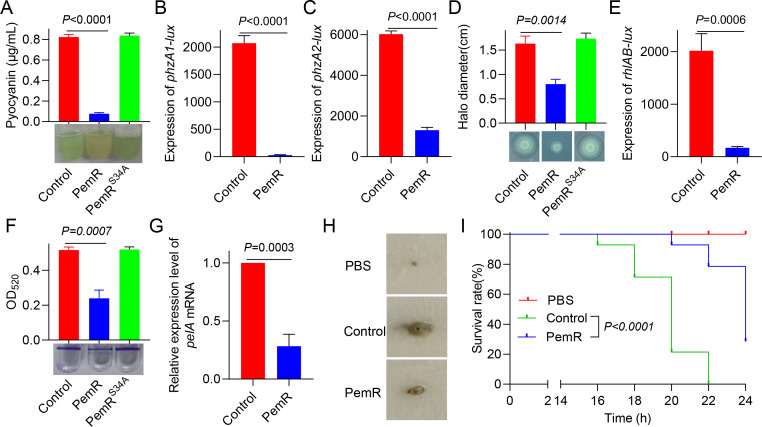 Figure 3
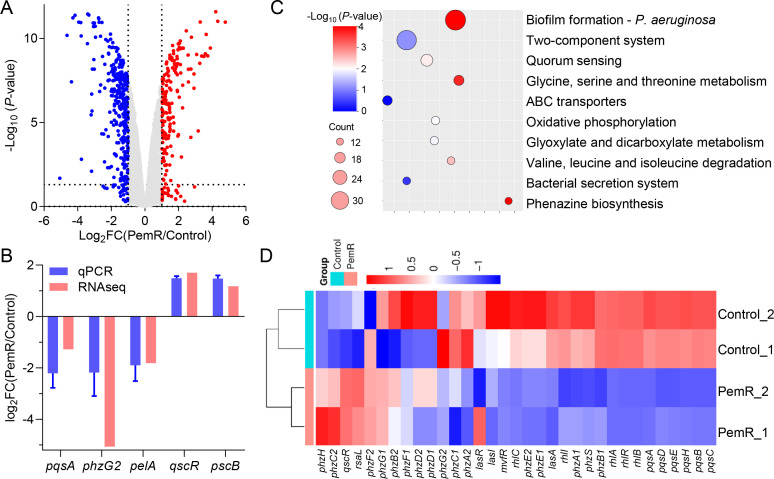 Figure 4
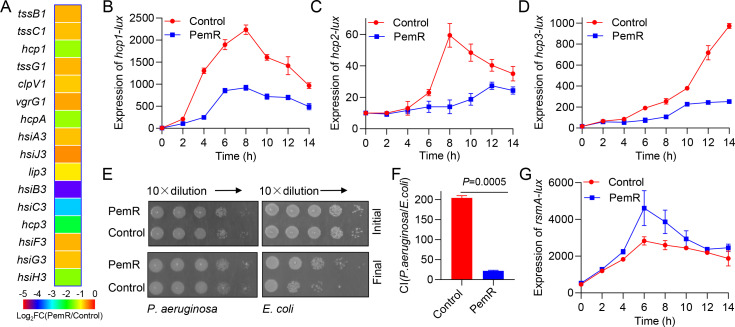 Figure 5
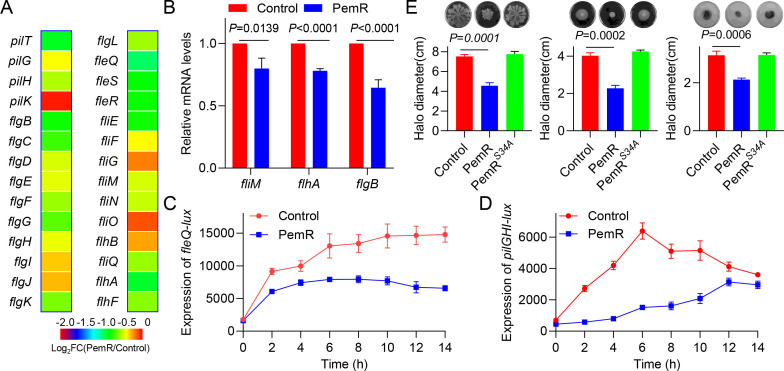 Figure 6
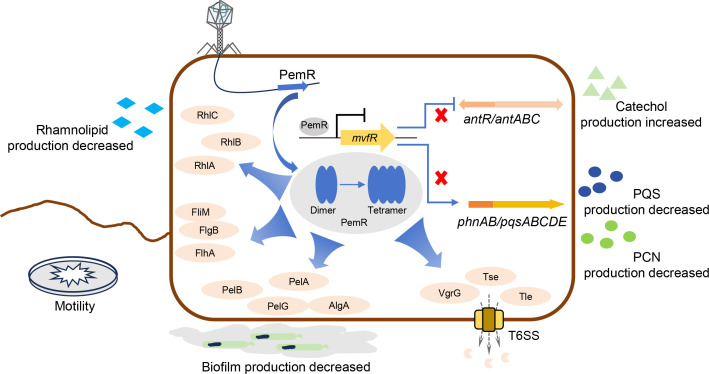 Figure 7
Peer Reviews
No public reviews on file for this paper yet. If you reviewed it on a platform where reviews are public (OpenReview, ICLR, NeurIPS, ICML), you can paste yours below so the community can read it here.
Videos
No videos yet. Explain this paper in a talk, walkthrough, or lecture? Add one.
Taxonomy
TopicsBacterial biofilms and quorum sensing · Bacteriophages and microbial interactions · Vibrio bacteria research studies