Mus musculus papillomavirus MmuPV1 resists restriction by human APOBEC3B
Xingyu Liu, Andrea Bilger, Denis Lee, Prokopios P. Argyris, Jiarui Chen, Ella Ward-Shaw, Emilia Barreto Duran, Yu-Hsiu T. Lin, Cameron Durfee, Sang H. Chun, Mahmoud Ibrahim, Joshua Proehl, Allen J. York, Paul F. Lambert, Reuben S. Harris

TL;DR
This study finds that a mouse papillomavirus is not affected by a human antiviral enzyme, suggesting viruses may have evolved ways to resist immune defenses.
Contribution
The study demonstrates that MmuPV1 is resistant to human APOBEC3B, a key restriction factor, despite no evolutionary exposure to it.
Findings
Human A3B does not impair MmuPV1 replication in primary keratinocytes.
MmuPV1 pathogenesis is unaffected by A3B functionality in vivo.
Papillomaviruses may have conserved mechanisms to escape restriction by A3B.
Abstract
The single-stranded DNA deaminase APOBEC3B (A3B) is capable of potently restricting the replication of a range of viruses, including retroviruses (cDNA) and herpesviruses (genomic DNA). However, these and likely other DNA virus families have evolved host species-specific counter-defenses that are equally potent and serve to protect viral DNA from restriction. Although high-risk human papillomavirus (HPV) infection triggers A3B upregulation, potentially as part of an antiviral response, the impact of this restriction factor on papillomavirus replication and pathogenesis has yet to be assessed. To study human A3B antiviral function in the absence of a species-specific counter-defense, here, we ask whether human A3B is capable of restricting Mus musculus papillomavirus (MmuPV1) in cellulo and in vivo. First, we created human A3B and catalytic mutant A3B-E255A expressing FVB/N mice. Second,…
Genes, proteins, chemicals, diseases, species, mutations and cell lines named across the full text — each resolved to its canonical identifier and authoritative record.
Click any figure to enlarge with its caption.
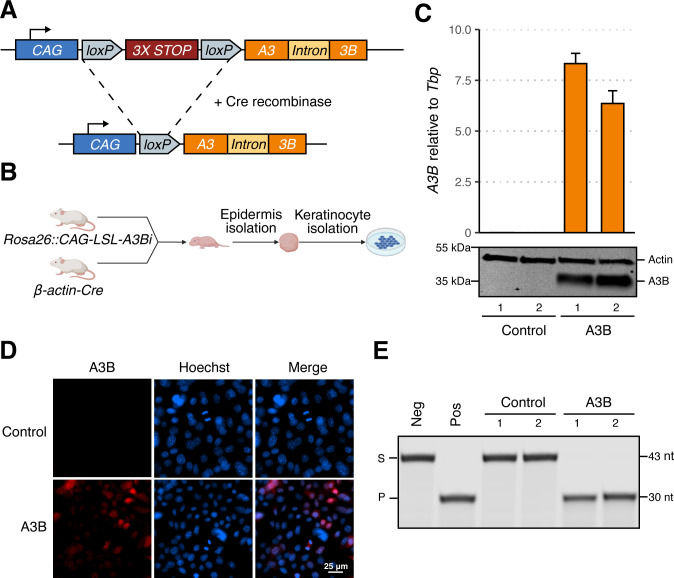 Figure 1
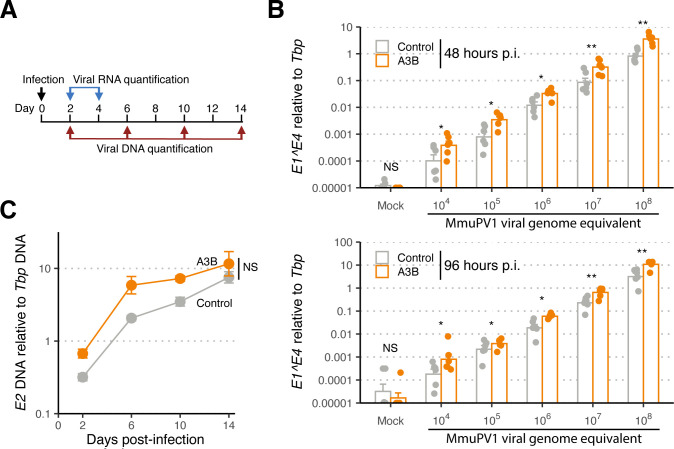 Figure 2
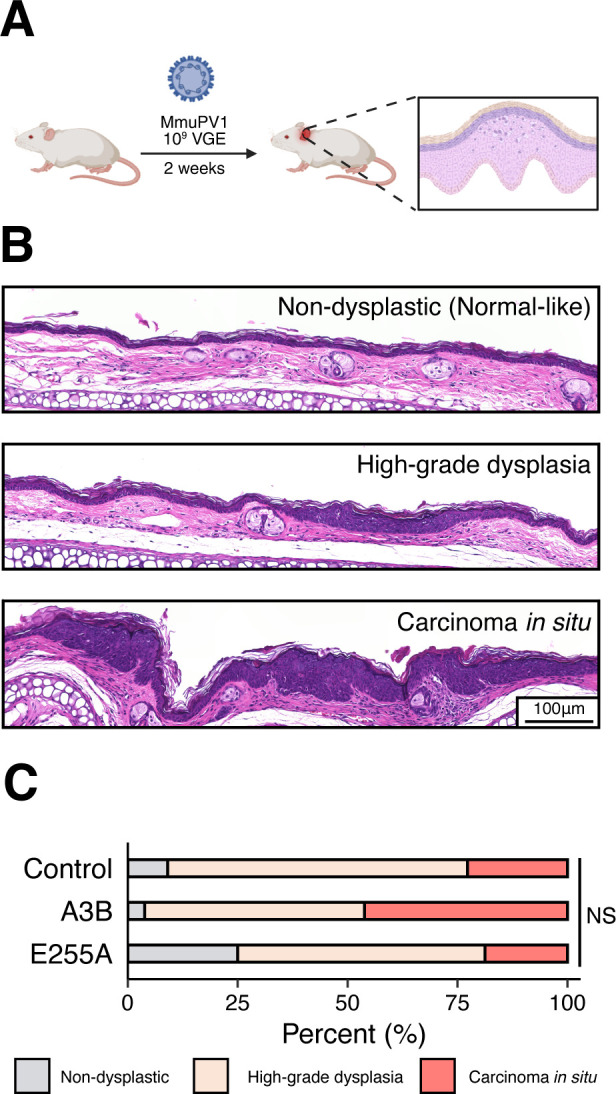 Figure 3
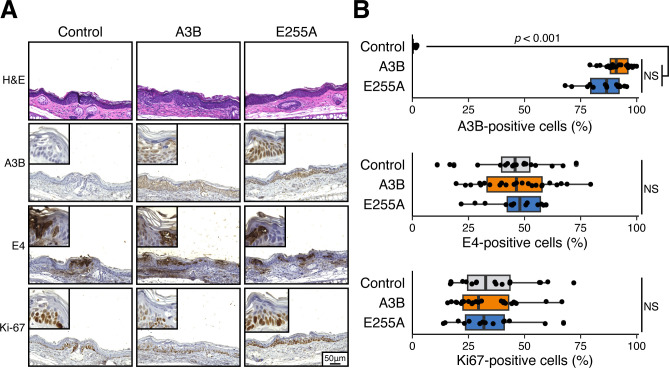 Figure 4
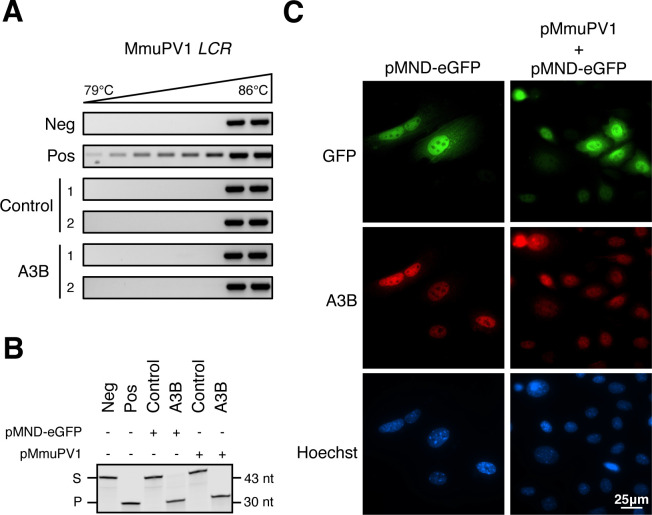 Figure 5
Peer Reviews
No public reviews on file for this paper yet. If you reviewed it on a platform where reviews are public (OpenReview, ICLR, NeurIPS, ICML), you can paste yours below so the community can read it here.
Videos
No videos yet. Explain this paper in a talk, walkthrough, or lecture? Add one.
Taxonomy
TopicsCervical Cancer and HPV Research · Virus-based gene therapy research · Cancer-related Molecular Pathways