Examining the Impact of Side-Chain Chirality on Conformation of a Helical Poly(3‑(S‑1-ethylhexyl)esterfuran)
Dhruv Sharma, Manami Kawakami, Megan Rice, Erin Smith, Soren Westrey, Yuyang Shang, Claire Gist, Leticia Maria Pequeno Madureira, Karl H. G. Schulz, Anthony J. Varni, Isabella M. Stranick, Roberto R. Gil, Stephanie Tristram-Nagle, Linda Peteanu, Tomasz Kowalewski

TL;DR
This study shows how chiral side chains affect the helical structure and stability of a specific polymer, revealing that chirality can bias helix handedness but also disrupts the overall structure.
Contribution
The study demonstrates how chiral side-chain configurations influence helix handedness and structural stability in ester-functionalized polyfurans.
Findings
S-configured side chains induce a left-handed helix bias, while R-configured side chains induce a right-handed helix bias.
The ethyl branch in the chiral side chain disrupts the formation of well-ordered helices compared to the parent polymer.
Thermal and solution studies show that the chiral conformation is lost at elevated temperatures.
Abstract
A key challenge with synthetic chiral helical polymers is the precise determination of their structure, particularly their pitch and handedness. In past work, we demonstrated that poly(3-hexylesterfuran) (P3HEF) adopts a compact helical conformation (pitch ∼3.4 Å), driven by the syn conformational preference for regioregular, α-linked furan-3-carboxylates. Chiral side chains (either R or S) were attached to the furan monomer to synthesize poly(3-(1-ethylhexyl)esterfurans) (R- or S-P3(1EH)EF) with excess helix sense, but the branched alkyl group clearly impacted the folding behavior of these polymers. Here, through combined experimental and computational analyses, we assigned helix sense in these ester-functionalized polyfurans: where the S configuration for the side chain results in a left-handed helix bias, while the opposite R enantiomer results in a right-handed helix bias.…
Genes, proteins, chemicals, diseases, species, mutations and cell lines named across the full text — each resolved to its canonical identifier and authoritative record.
Click any figure to enlarge with its caption.
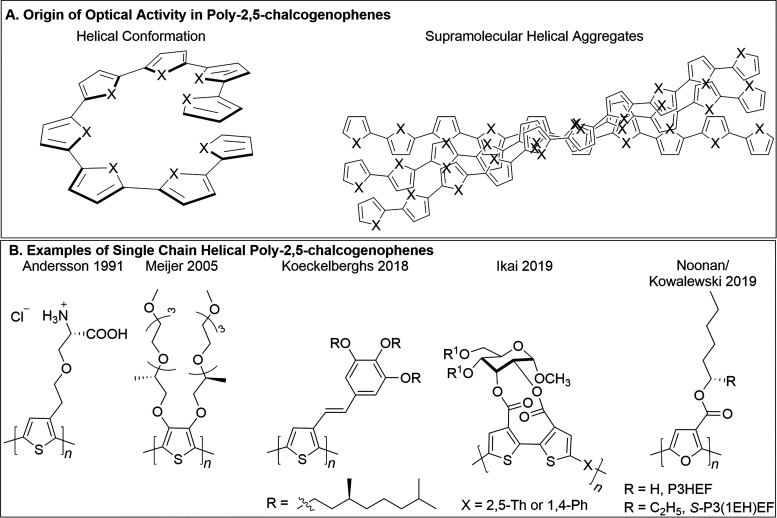 Figure 1
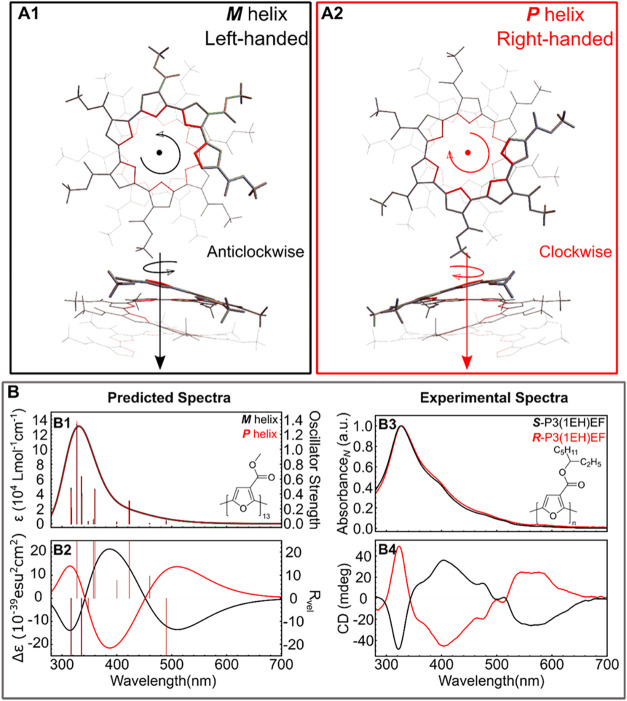 Figure 2
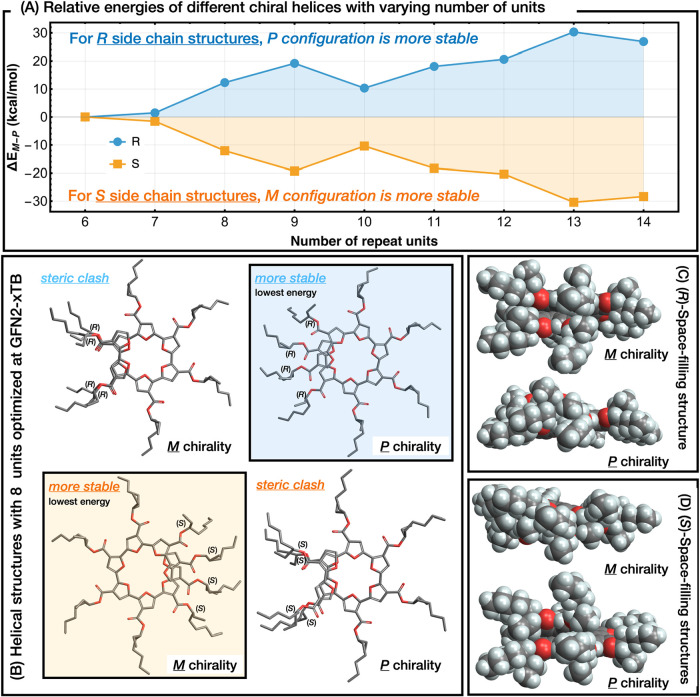 Figure 3
 Figure 4
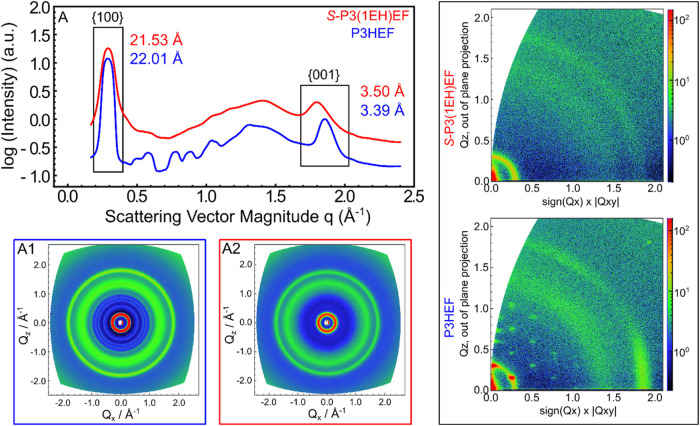 Figure 5
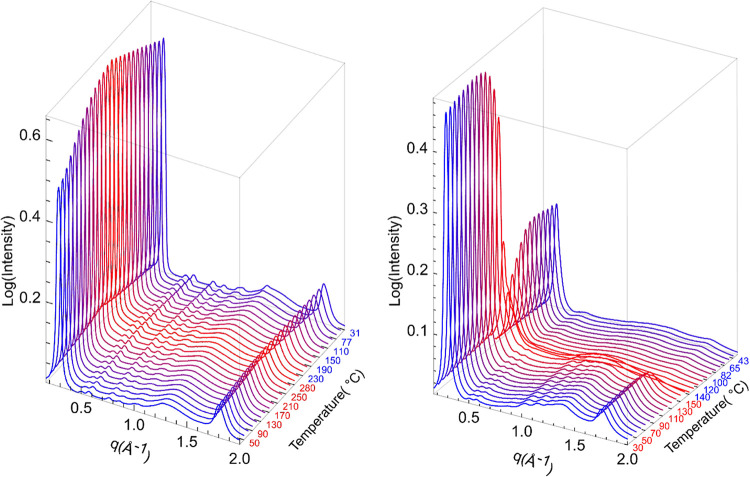 Figure 6
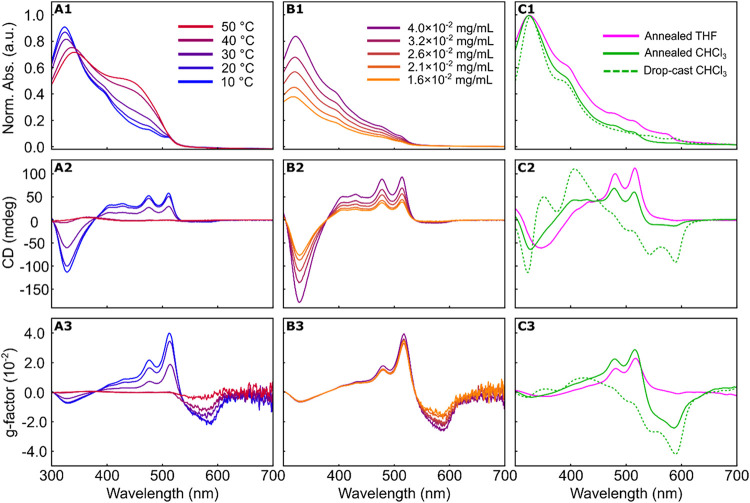 Figure 7
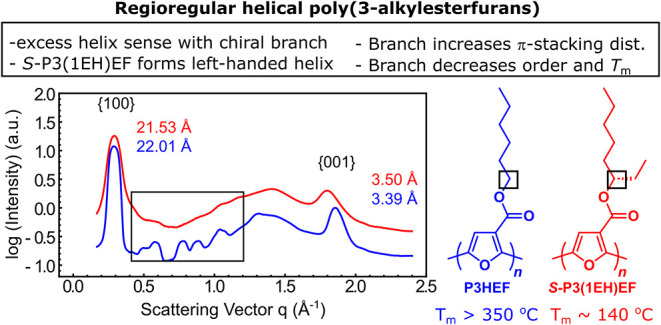 Figure 8
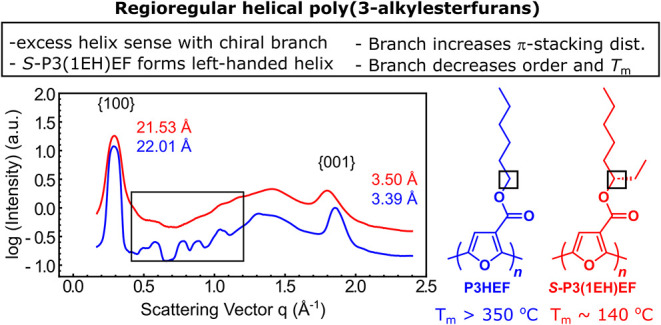 Figure 9
Peer Reviews
No public reviews on file for this paper yet. If you reviewed it on a platform where reviews are public (OpenReview, ICLR, NeurIPS, ICML), you can paste yours below so the community can read it here.
Videos
No videos yet. Explain this paper in a talk, walkthrough, or lecture? Add one.
Taxonomy
TopicsSynthesis and Properties of Aromatic Compounds · Catalysis for Biomass Conversion · Axial and Atropisomeric Chirality Synthesis