The emerging and evolving evidence supporting creatine as an ergogenic aid: history and applications
Chad Kerksick, Drew Gonzalez, Jeffery Stout, Scott Forbes, Darren Candow, Tim Ziegenfuss, Robert Marshall, René Schwesig, Richard Kreider

TL;DR
Creatine is a well-researched supplement that improves exercise performance, recovery, and health across various populations, including athletes and military personnel.
Contribution
This review synthesizes decades of research to highlight creatine's broad applications and safety across diverse groups and performance contexts.
Findings
Creatine improves high-intensity exercise performance, lean body mass, and strength through enhanced energy availability.
Emerging evidence supports creatine's benefits for endurance and team-sport athletes via improved glycogen resynthesis and recovery.
Creatine is safe, with no greater adverse events than placebo, and may offer neuroprotective and cardiometabolic benefits.
Abstract
Creatine is one of the most extensively studied ergogenic aids, with over three decades of research supporting its role in exercise performance, recovery, and health. This narrative review summarizes the historical development of creatine supplementation and evaluates evidence regarding its mechanisms, efficacy across active, athletic populations (e.g. strength, endurance, team-sport), and tactical (e.g. military, law enforcement) populations, and its safety profile. The evidence suggests that creatine enhances phosphocreatine resynthesis and cellular energy availability, resulting in consistent improvements in high-intensity exercise performance, training adaptations, lean body mass, strength, and power. Additional findings indicate that creatine may attenuate exercise-induced muscle damage and inflammation, support recovery, and improve functional outcomes following strenuous…
Genes, proteins, chemicals, diseases, species, mutations and cell lines named across the full text — each resolved to its canonical identifier and authoritative record.
Click any figure to enlarge with its caption.
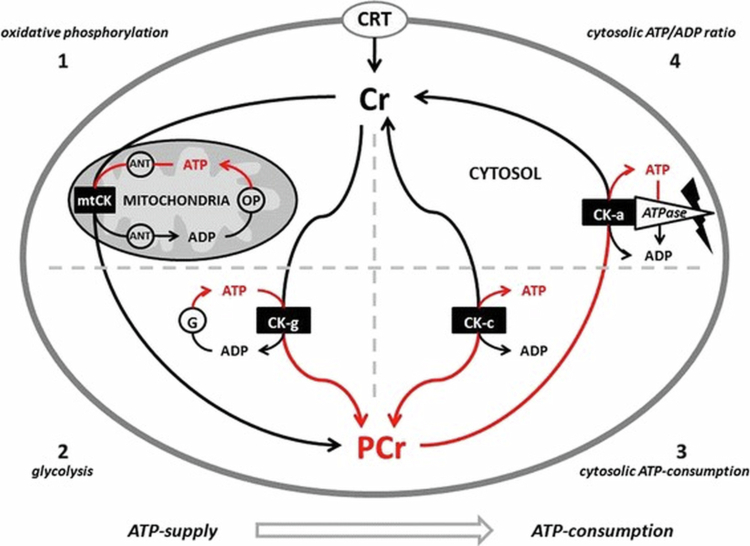 Figure 1
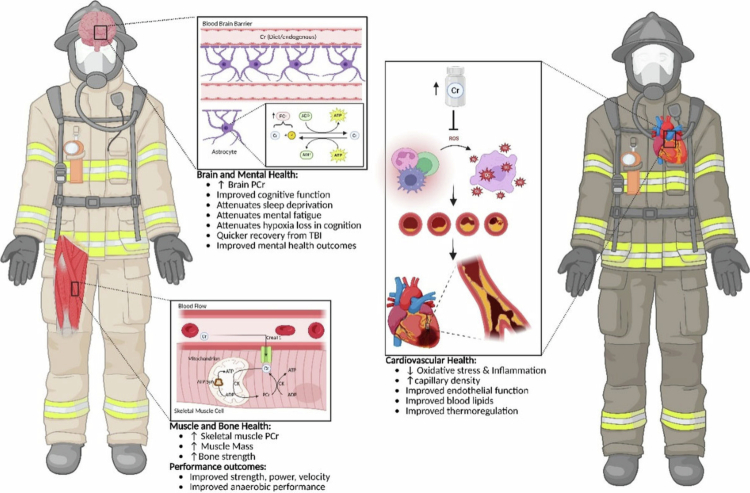 Figure 2
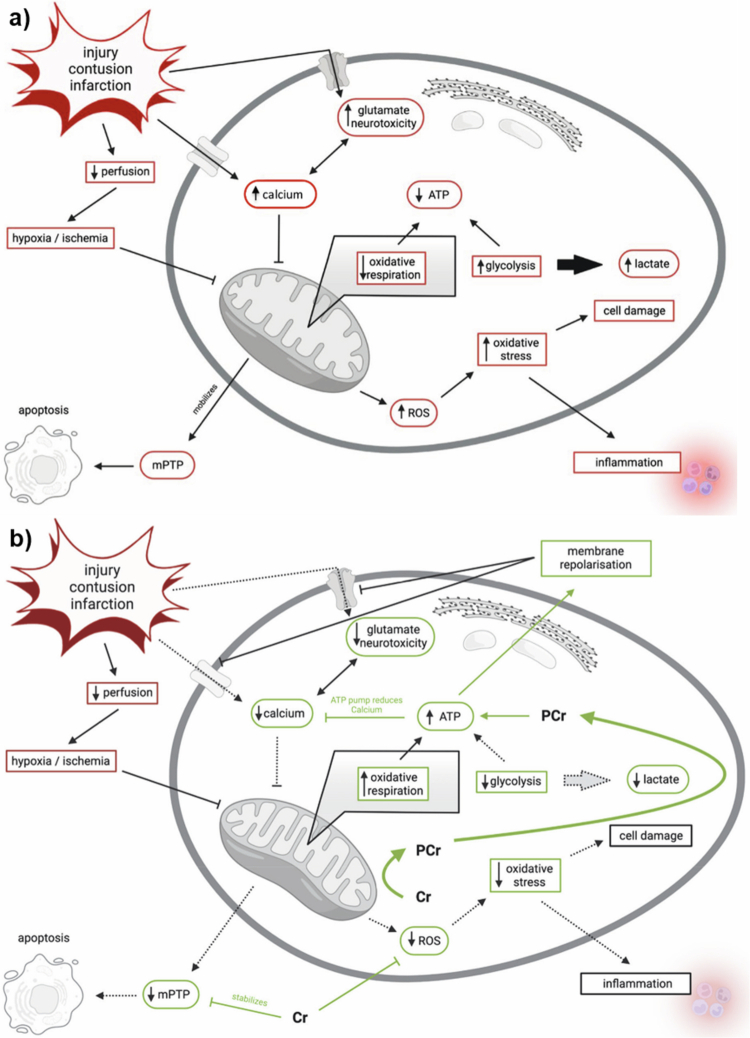 Figure 3
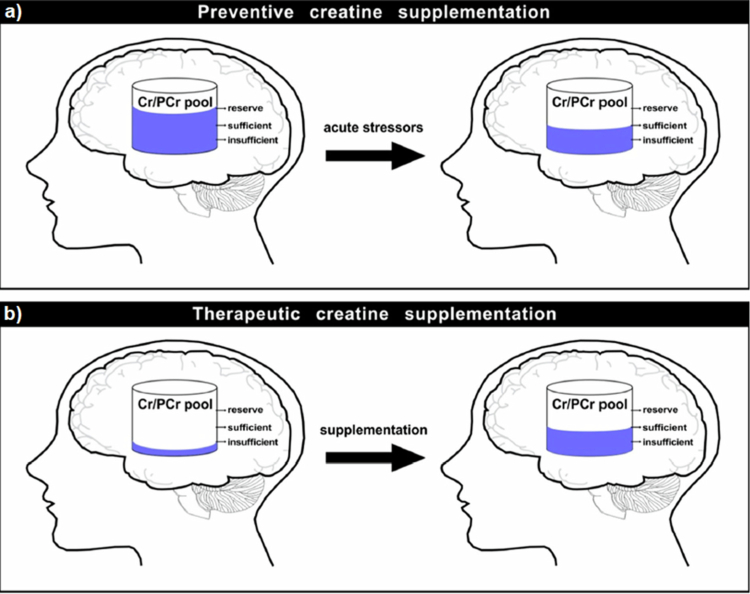 Figure 4
Peer Reviews
No public reviews on file for this paper yet. If you reviewed it on a platform where reviews are public (OpenReview, ICLR, NeurIPS, ICML), you can paste yours below so the community can read it here.
Videos
No videos yet. Explain this paper in a talk, walkthrough, or lecture? Add one.
Taxonomy
TopicsMuscle metabolism and nutrition · Attention Deficit Hyperactivity Disorder · Alcoholism and Thiamine Deficiency