Non-invasive environmental DNA sampling reveals tuberculosis risks at the human – Great Ape Interface in Africa
Ernest Kalalizi, Luis Flores, Marta Pérez-Sancho, Alberto Perelló, Carmen Herranz, Laura Herrera, Beatriz Romero, Prince Kaleme, Teresa García-Seco, Déo Kujirakwinja, Arthur Kalonji, Zacharie Kashongwe, Freddy Birembano-Machara, Daniel Baganda, Pacific Nkonzi

TL;DR
This study uses non-invasive DNA sampling to detect tuberculosis in humans and great apes in the Democratic Republic of Congo, revealing potential transmission risks.
Contribution
The study introduces non-invasive eDNA sampling to assess TB risks at the human-great ape interface in Africa.
Findings
Mycobacterium tuberculosis eDNA was detected in 26% of samples from human, gorilla, and NHP environments.
Spoligotype SIT130 was found in all three study sites, suggesting epidemiological links between human and NHP TB.
Resistance to rifampicin and isoniazid was detected in some TB-positive samples.
Abstract
The current range of African great apes includes countries with some of the world’s highest incidence rates of human tuberculosis (TB). Non-human primates (NHPs) living in their natural habitats are expected to be free of TB. However, TB represents a known threat to captive NHP communities. We applied a non-invasive sponge-based environmental DNA (eDNA) sampling to run a cross-sectional survey at the human-animal interface in a challenging setting: the East of the Democratic Republic of Congo (DRC). The study sites included a primate rehabilitation centre, the local health area, and a nearby national park with critically endangered Eastern Lowland Gorillas (Gorilla beringei graueri). Sponge samples were tested for two PCR targets, IS6110 and mpb70. Positive samples were further characterized by spoligotyping, species identification and detection of molecular resistance against…
Genes, proteins, chemicals, diseases, species, mutations and cell lines named across the full text — each resolved to its canonical identifier and authoritative record.
Click any figure to enlarge with its caption.
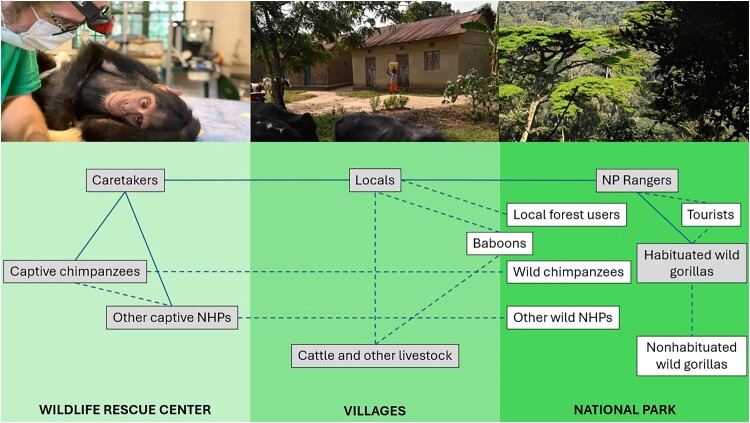 Figure 1
 Figure 2
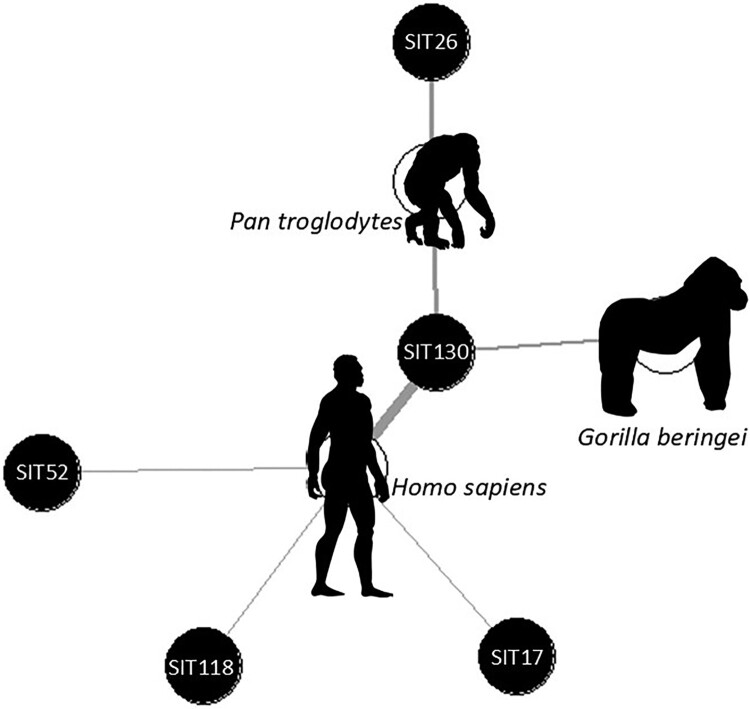 Figure 3
 Figure 4
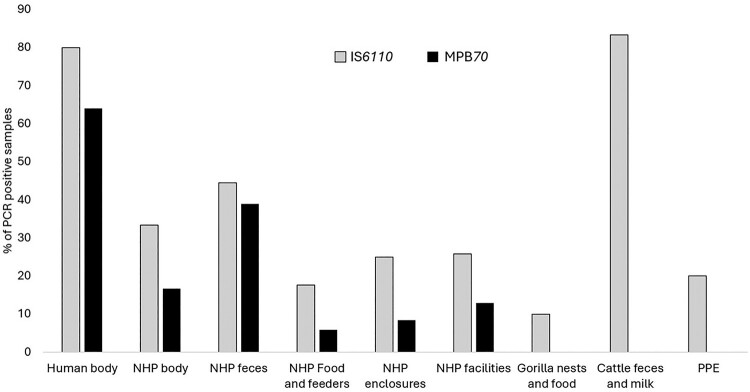 Figure 5
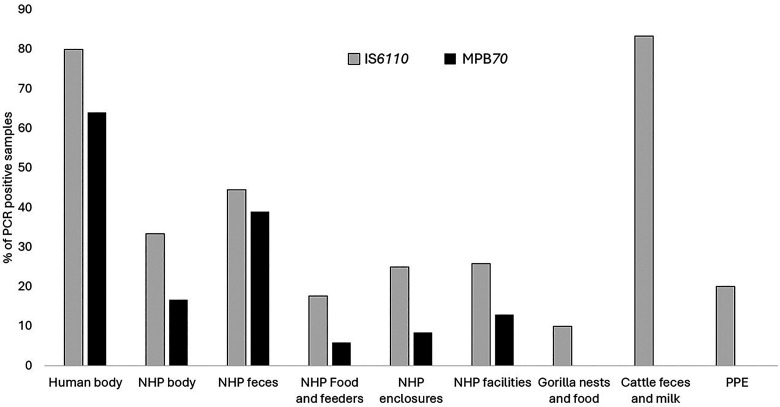 Figure 6
Peer Reviews
No public reviews on file for this paper yet. If you reviewed it on a platform where reviews are public (OpenReview, ICLR, NeurIPS, ICML), you can paste yours below so the community can read it here.
Videos
No videos yet. Explain this paper in a talk, walkthrough, or lecture? Add one.
Taxonomy
TopicsEnvironmental DNA in Biodiversity Studies · Tuberculosis Research and Epidemiology · Forensic and Genetic Research