Advances in vehicles for in situ delivery: From classical vectors to biologically inspired structures
Hengyi Wang, Xiaoyan Tang, Xinyao Pan, Hongjie Tang, Jie Gao, Qi Li

TL;DR
This review explores recent developments in delivery systems for proteins and nucleic acids, comparing viral and non-viral tools and highlighting new biologically inspired approaches.
Contribution
The paper systematically reviews novel delivery systems like Arc, SEND, and Coacervate, offering insights into their mechanisms and potential for synthetic biology and gene therapy.
Findings
Viral vectors like lentivirus and adeno-associated virus have high delivery efficiency but face challenges in immunogenicity and manufacturability.
Non-viral tools such as lipid nanoparticles and exosomes offer safer alternatives but often lack sufficient delivery efficiency.
Novel systems like Arc and Coacervate show promise due to their biologically inspired structures and functional versatility.
Abstract
The emerging fields of synthetic biology and gene therapy rely on delivery systems to introduce the nucleic acids and proteins into recipient cells. Hence, the development of delivery tools with high specificity, strong manufacturability, and low immunogenicity can advance these fields. In this review, we summarize recent advances in the development of delivery systems for proteins and nucleic acids. First, we outline viral vector-based delivery tools, including lentivirus, adenovirus, and adeno-associated virus-based delivery technologies, discussing their advantages and limitations. Next, we summarize the advantages and disadvantages of non-viral vector-based delivery tools, including delivery strategies based on lipid nanoparticles, polyethyleneimine, exosomes, cell-penetrating peptides, virus-like particles, gold nanoparticles, and mesoporous silica nanoparticles. Lastly, we examine…
Genes, proteins, chemicals, diseases, species, mutations and cell lines named across the full text — each resolved to its canonical identifier and authoritative record.
Click any figure to enlarge with its caption.
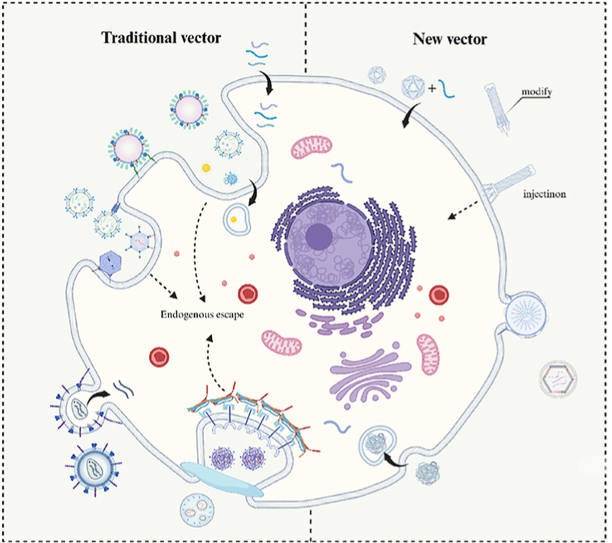 Figure 1
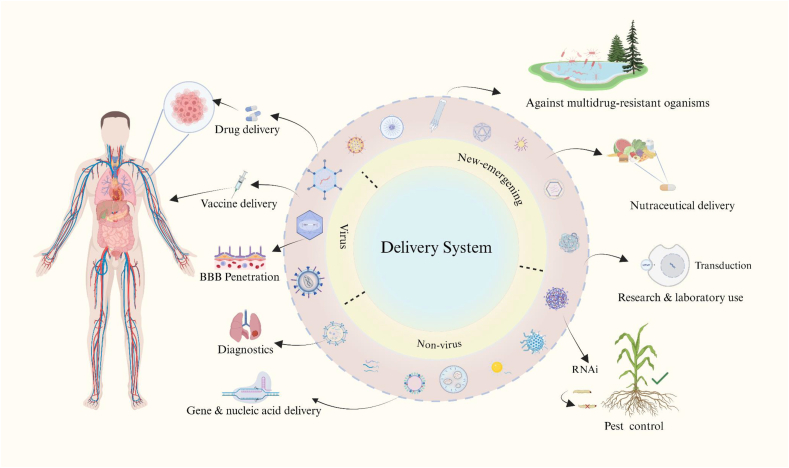 Figure 2
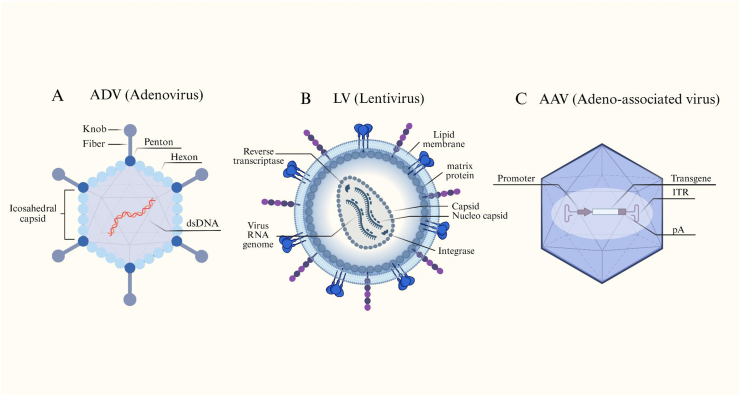 Figure 3
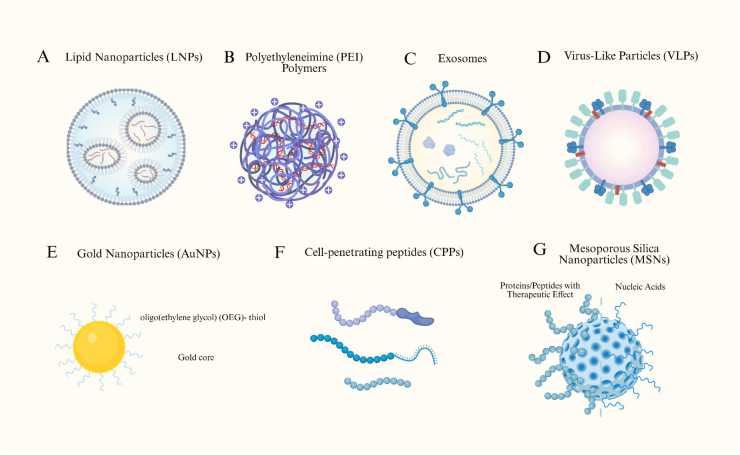 Figure 4
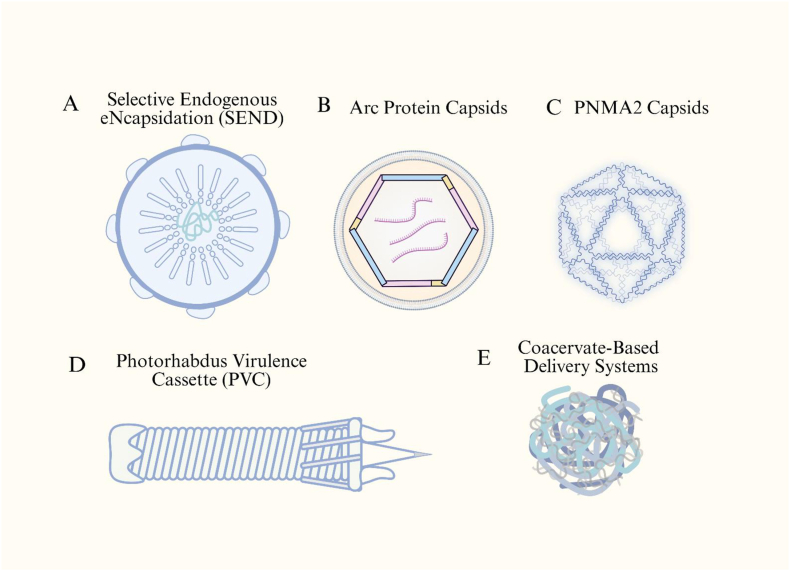 Figure 5
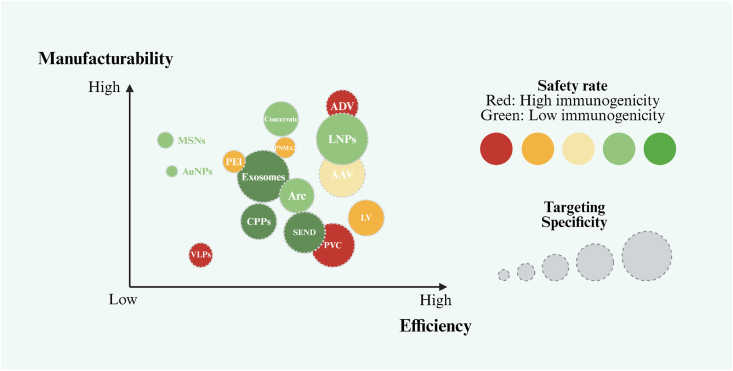 Figure 6
Peer Reviews
No public reviews on file for this paper yet. If you reviewed it on a platform where reviews are public (OpenReview, ICLR, NeurIPS, ICML), you can paste yours below so the community can read it here.
Videos
No videos yet. Explain this paper in a talk, walkthrough, or lecture? Add one.
Taxonomy
TopicsRNA Interference and Gene Delivery · Micro and Nano Robotics · Silk-based biomaterials and applications